
Zakat for Education: Islamic Charitable Giving for Students

Think of a child with ambitions to attend school, study hard, and create a future for himself, yet is unable to continue due to the family’s inability to pay fees, buy books, or even procure basic supplies. This is the reality faced by millions of students. In such cases, zakat for education means more than charity; it’s a lifeline. It helps students stay in school, acquire key skills, and move toward self-sufficiency while honouring a major religious work. Communities are increasingly noticing that education-focused zakat can transform lives. It is not just about paying the child’s fees, it’s about giving dignity, opportunity, and hope for those who are in need. If you’ve ever wondered how zakat-eligible education projects connect with education, this blog will explain it all in simple, actionable terms. What Is Zakat for Education and How Does It Work? Zakat for Education refers to using zakat funds to assist students who meet specific eligibility criteria under Islamic law, such as the poor or needy. Unlike general donations, these funds are channelled toward providing learning opportunities covering tuition, books, uniforms, devices, or transport. It unites two significant objectives: Religious fulfilment: Funds reach the deserving beneficiaries Practical impact: Students receive tangible support to achieve academic success. When you support a Zakat-eligible education project, you are not only providing funds but also equipping a child with what they need to rise to their full potential. Many donors today opt for Islamic donation education India programs in order to make sure that their Zakat creates some meaningful and measurable impact. Why Zakat for Education Matters Today Education is one of the biggest powerful tools for breaking cycles of poverty. Still, too many families struggle to pay for school fees, books, uniforms, and digital learning. This is where zakat for poor children’s education plays an important role. It ensures that a child continues learning while providing a fair opportunity for a better future. Here’s why this form of Islamic giving is increasingly important: 1. It supports the most vulnerable students Many children drop out due to financial issues. By providing zakat for education, donors help these students receive an education, focus on learning, and develop skills that will serve them for life. 2. It turns faith into action Islamic donation holds the highest value when it leads to a visible, positive impact. Choosing Islamic donation education India initiatives helps donors transform faith into practical support that changes lives. 3. It strengthens communities Donating zakat for child education programs goes beyond helping children. It also strengthens families and the entire community, all while adhering to the values of religion. Education helps build long-term independence and economic stability. 4. It addresses modern educational needs Students today often require internet access, digital devices or online learning materials. Programs that focus on Islamic charity education in India help bridge the gap by ensuring that students take full advantage of modern education. How Zakat-Based Educational Support Works A responsible zakat-eligible education project ensures that funds are utilised effectively to reach out to students in desperate need. The usual procedure includes: Clear Eligibility Checks Students are screened to ensure they meet Zakat eligibility requirements, which include financial need or poverty. The proper verification process is used to ensure that donations are made according to Islamic principles. Assessing Educational Needs Students may need uniforms, school supplies, books or other tools. Based on the requirements of the students, Zakat donations will be a positive and targeted impact. Direct and Transparent Distribution The funds are directly given to guardians or students to ensure dignity and prevent any type of fraud. Programs focusing on zakat for poor children’s education emphasise transparency, which means that donors know exactly how the funds are utilised. Ongoing Support Continuous follow-up ensure that students benefit most from the zakat, whether for online learning, tuition, or other skill-building programs What are the Core Principles of Zakat for Education Zakat for education is guided by three key principles 1. Preserving Dignity Support should empower students, not make them feel dependent. Respectful handling allows children to focus on learning and growth. 2. Accountability and Transparency Donors and recipients should cross-check the fund usage. Proper documentation and monitoring are essential in a zakat eligible education project. 3. Long-Term Empowerment Zakat for poor children education is about more than temporary relief. The goal is lasting learning and skill development, ensuring children have the best chance of success. Practical Examples of Zakat for Education Funds are given to students from low-income families for tuition, books, and necessary devices. Online learning access is supported for continuous education. Programs in line with Islamic donation education India use structured approaches in monitoring the students’ progress. People who opt for donate zakat for child education often observe long-term improvements in children’s confidence and academic outcomes. By focusing on actual needs, zakat contributions can ensure that students not only are in school but are successful academically. Why Zakat for Education Matters for Donors Through Zakat for Education, every rupee is used to create meaningful change in a way, which helps students to learn and grow. Your donation can be used to: Cover the tuition fees of a child if the child is dropping out of school Provide books and learning materials to low-income families Offer access by providing online learning tools and resources Empower the entire community through education Even small help create a large, lasting impact. By supporting Islamic charity education India, you ensure that your zakat brings about a real change not only today but also in the future Start creating a powerful impact on students’ lives by supporting meaningful educational initiatives like vidyalaya.org. Every donation enables a child to receive education and become the best version of themselves FAQs About Zakat for Education 1. Can I use my zakat for education instead of general charity? The zakat of education is indeed permissible as long as the student is qualified. It offers long-term benefits as well as helps meet the needs of learning. 2. Who qualifies
Tax Benefits of Education Donations: 80G Certificate Explained

Have you ever thought that a donation to a school trust might also be a way for you to save on taxes? It is the 80G tax exemption donation that makes this possible. Quite a few donors are giving generously but are losing the opportunity of getting a considerable tax benefit just because they don’t know how to go about it. By simply figuring out its correct usage, you can be a part of the solution to the education crisis and, at the same time, have a lower taxable income. In this blog, you will understand what 80G is, how tax benefits education donation works, and how to make your donations both socially impactful and financially smart. Why Donating to Education Matters Today Education expenses increase every year. Besides tuition, fees, books, and uniforms, digital learning tools have also become a considerable burden for the students. For underprivileged children, even a modest donation can make a significant difference However, donors often overlook the financial benefits of donating to education. If you know about the donation tax deduction in India well, your donation can reduce your taxable income while helping children access education. This is what tax saving through education donation means: giving in a way that makes a difference while being financially prudent Understanding Section 80G Section 80G of the Income Tax Act allows donors to claim a deduction from their taxable income to approved charitable organisations, including those focused on education. Here’s how it works: Contributions may be eligible for a 50% or 100% tax deduction, depending on the nature of the organisation. Donations must be made via cheque, bank transfer, or online payment. Cash donations exceeding ₹2,000 are not eligible for deductions Only monetary donations qualify. Donations in kind (books or other goods) are not eligible, meaning donors cannot claim tax savings. For example, in case you contribute ₹50,000 to an educational trust, which is eligible and offers a 50% deduction, then ₹25,000 will be deducted from your taxable income. This makes the donation tax deduction in India tangible Who Benefits from Education Donations under 80G Students Donor contributions are used to cover tuition, books, uniforms, and digital teaching tools. Many students with families that have low earnings can attend schools because of these contributions. Educational Institutions Educational institutions and charitable organisations that support schools by providing long-term financial support to upgrade school structures, find top-quality teachers, and establish scholarship programs. Donors With tax benefits for education donations, you can reduce your taxable income while generating a positive social impact. It benefits everyone involved as students receive education, institutions are stable, and donors get financial relief. How to Claim 80G for Education Donations It’s easy to claim the deduction by following these steps Choose a certified institution: Make sure the school or NGO is registered under 80G and is eligible for deductions. Contribute through approved methods: Pay with a cheque, bank transfer, or online payment. Do not give cash more than ₹2,000. Get the 80G certificate: This is the document that shows what you donated and that the institution is eligible. Report your donation in your tax return: File under the old tax regime and mention your donation under Section 80G. Keep records safely: Maintain receipts and certificates for verification if required. If you follow these steps, you will understand how to claim 80G for education donations. Understanding the Deduction: 50% vs 100% Not all donations qualify equally. 50% deduction: Most schools and charitable trusts fall under this category are the type that follows this type. Half of your donation is deductible from your taxable income 100% deduction: A few organisations, such as government-approved funds or specially formed educational trusts, allow the full donation to be deducted. Caps on deduction: There may be some donations that have limits based on a certain percentage of adjusted gross income. It is always better to check the 80G status before giving. Knowing the exact type of deduction enables you to make a donation plan which gives you maximum benefit. Realistic Savings Example Assume that your taxable income annually is ₹10,00,000 and you donate ₹40,000 to a school, which is eligible for a 50% deduction. Deduction claimed: ₹20,000 New taxable income becomes: ₹9,80,000 This reduces your tax liability, while the full amount of ₹40,000 goes to the school or trust for the use of students. Even small donations, such as ₹5,000 or ₹10,000, make a difference and show how effective tax saving through education donation works. Common Mistakes Donors Make Donations to non-approved organisations, only schools that are registered with 80G or trusts can be eligible. Cash transactions that exceed Rs2,000 over a limit on deduction. Without the certificate, you cannot claim the deduction. In the absence of this certificate, it is not possible to be eligible for the deduction. The new tax regime, Section 80G deductions, will only be valid under the previous tax system. Avoiding these mistakes will ensure that your contribution benefits both you and your students. Why Education Donations Are More Important Than Ever Rising costs of education: Costs for tuition, subscriptions for online learning, and the cost of learning materials are increasing slowly. Donations can help bridge the gap for students who are in need. Social impact: Every donation is an opportunity to improve the future of human civilisation by providing children with access to high-quality education. Double benefit: By donating to funds that qualify for Section 80G tax exemption, which reduce the tax burden while simultaneously making a positive contribution to society. Supporting education has a lasting impact on students’ lives, communities, and the person who makes the donation Conclusion Donating to education through Section 80G offers both social and financial benefits. If you plan well, give to the right institutions, pay by the right mode, and keep your certificates safe, you can support students while reducing your taxable income. Your donation becomes an investment in a child’s future and a strategic financial move. By blending generosity with knowledge of tax
How Corporate Social Responsibility Is Funding Education in India
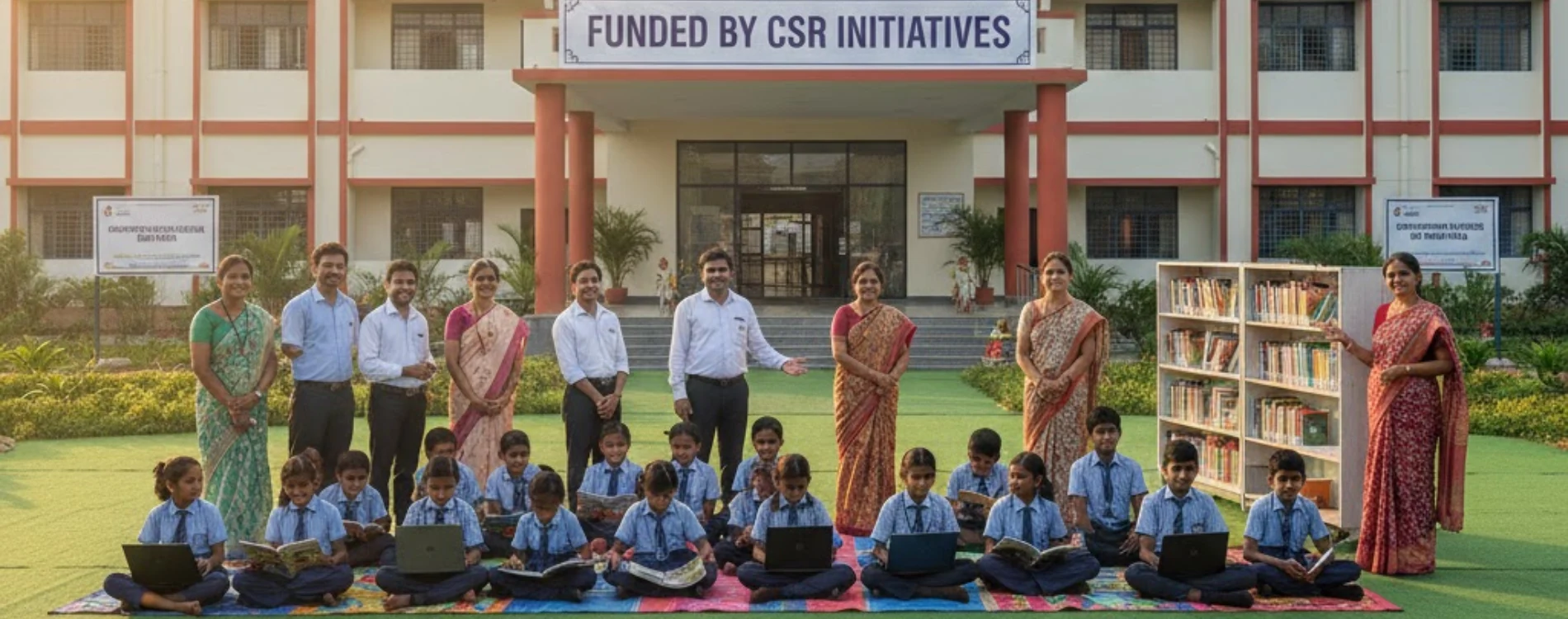
India’s education system is being transformed, yet millions of students still struggle with bad infrastructure, old materials, and limited access to technology. As CSR education funding grows every year annually, companies are placing education at the centre of their social goals. However, the real solution lies in long-term CSR investments that don’t just support classrooms but create opportunities for the entire communities. This blog explains that Indian corporates are leading the way for a meaningful social change, why this shift matters today, and how understanding these initiatives will help you appreciate will make you realize the real influence of CSR in educational development. What CSR Education Funding Really Means Today CSR in India is strictly regulated. As per the Companies Act, 2013, eligible companies have to mandatorily invest 2% of their average net profits in social development, including education. Hence, CSR education funding refers to financial support that companies direct toward improving learning outcomes, building infrastructure, facilitating digital access, and sponsoring student support programs. And the numbers speak for themselves. According to the Ministry of Corporate Affairs, CSR spending over the years on education by 30–35% of total CSR spending, thus being the single largest sector for almost a decade. This shows a clear priority: corporate India considers education as a bedrock of economic and social development. Why Corporate Education Initiatives in India Are Growing So Fast Businesses today have come to realise that education isn’t just charity, but rather a long-term investment in the talent pipeline. This is the main reason behind the rise of corporate education initiatives in India across various states. Companies are participating in programs such as: Building and upgrading government schools Providing smart classrooms Funding digital learning tools Supporting teacher training Creating mentorship and scholarship pathways The reason is very straightforward. An educated society is one that eventually leads to the creation of stronger markets, better talent, and healthier economies. As India has one of the world’s largest school-age populations, corporate involvement creates real, measurable impact. How CSR Education Projects Solve Real Problems A majority of CSR education projects are centred around the immediate needs of the classroom, such as books, uniforms, and basic school repairs, but a new wave of projects brings systemic improvements. Here’s how they are solving the most critical gaps: 1. Digital Accessibility Few rural households have access to digital devices. CSR programs are now providing tablets, smart classes, digital libraries, and online platforms to bridge this divide. 2. Teacher Upskilling To raise the quality of education, India needs continuous teacher training to improve learning outcomes. Many CSR programs collaborate with academic institutions to facilitate teacher accreditation, e-learning, and leadership courses 3. Infrastructure Development Improved sanitation, clean drinking water, hygienic classrooms, and electricity are basic facilities that many schools still lack. CSR steps in to upgrade these facilities, making a measurable difference in student attendance. 4. Skill Development for Youth Many CSR programs enhance the job-readiness of students with coding labs, spoken English training, financial literacy, and vocational workshops. These programs help students prepare for higher studies and employment. These CSR education projects directly touch millions of students, creating a wider ripple effect in local communities. How Business Education Partnerships Create Smarter Learning Models The most vibrant and engaging change we can talk about is the rise of business education partnerships a collaborative model where corporates work with NGOs, EdTech providers, and government schools to deliver structured, long-term solutions. These partnerships allow companies to: Employ EdTech tools for distance learning Lead the creation of content that meets curriculum goals Support schools for multi-year development Establish local learning centres Sponsor outcome-based education programs The transition from short-term charity to strategic collaboration is improving accountability and enhancing learning outcomes. One example is the rising trend of using digital content in the classroom. It allows students to learn at their own pace and gives teachers access to better teaching material. When companies team up with experts, education becomes more consistent and inclusive. The Role of Private Sector Education Support in Rural and Urban India India’s education problems are different in each place. Rural schools lack adequate buildings and facilities, while urban schools face overcrowding and a lack of personalised learning. That is the reason why private sector education support is necessary. Corporations bring money, proper planning, and technology-based solutions to both settings. Few significant data-backed changes demonstrate the effectiveness of this support: CSR spending on education has grown by more than 35% over the last five years. More than 70% of CSR-supported schools report better attendance after the upgrade of the infrastructure. Digital learning initiatives funded by corporates have raised learning levels by 15–20% in several state-led pilot programs. These outcomes show how private sector involvement is strengthening India’s education system in measurable ways. Why CSR Education Funding Will Matter Even More in the Future As India’s demographic becomes younger, the necessity for quality education is escalating. Corporate Social Responsibility can be instrumental in facilitating the government’s endeavours, creating digital access and ensuring that students from the less privileged communities have the same opportunities as others Companies are not only handing over the money; they are building ecosystems. This includes digital content, smart classrooms, specialised training, and data-backed models to measure student growth. Therefore,CSR education funding is now one of The most significant and engaging change is. Conclusion CSR should not be viewed as merely a business requirement; rather, it is a major factor in the transformation of the Indian education system. When companies invest in classrooms, teachers, digital tools, and infrastructure, they unlock opportunities that change lives. These developments have been made possible by the increasing corporate education interventions in India, carefully planned CSR education programs, deepening business-education collaborations, and steady private sector education funding that in turn, have opened the doors of quality education to millions of students. If you wish to support accessible digital education, explore platforms that make learning reachable for every child. Join the change at vidyalaya.org FAQs How does CSR education funding improve learning outcomes?
The Importance of Early Childhood Education in Rural Development
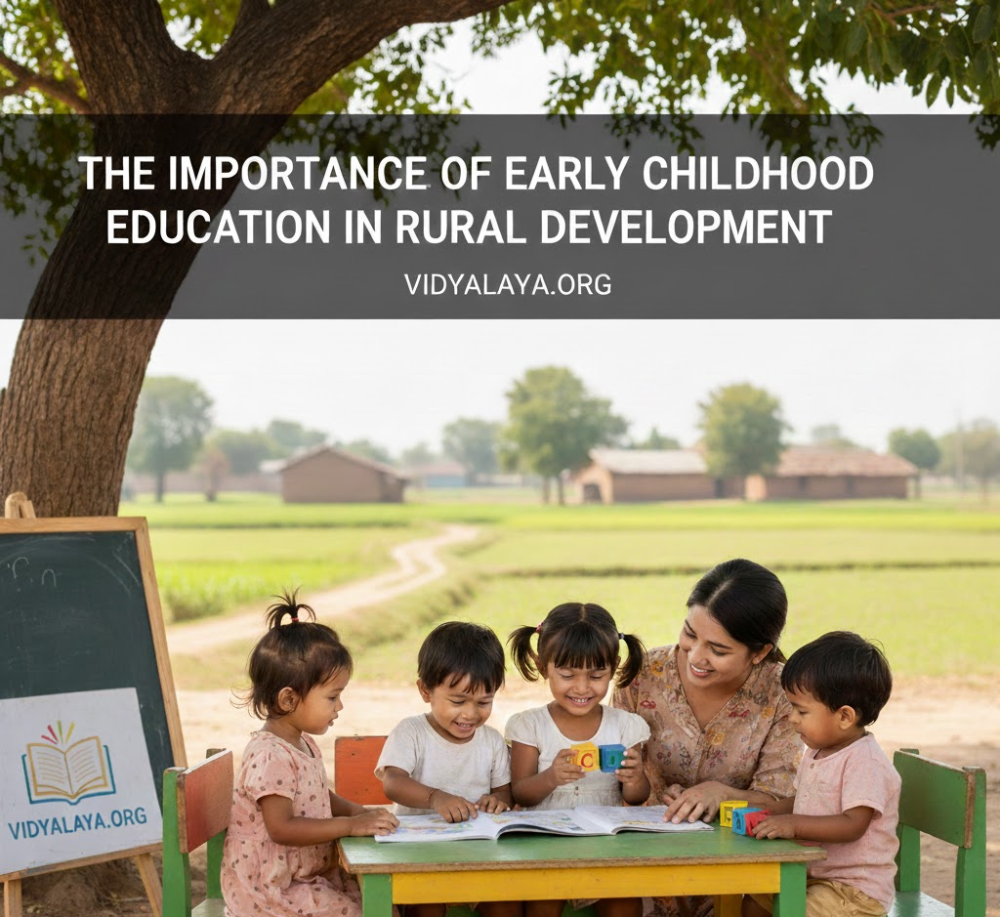
Growing up in rural India often means that children attend school for the first time without having the necessary skills, confidence, and social familiarity. Many spend time in an unorganised environment without structured learning, an opportunity to develop curiosity, language, and basic problem-solving skills. That’s where early childhood education in India becomes essential. The kids going to preschools or Anganwadi centres in rural areas gain foundational learning, social skills, and confidence. By reading this blog, you will comprehend how preschool education, rural programs, child development programs, and ECCE importance shape rural growth and provide children with a strong start in life. What is Early Childhood Education India and ECCE? Early childhood education in India is the formal education system for children aged 3-6 years before they are enrolled in primary school. It includes preschool education, play-based learning, and basic health provisions. Such programs offer children activities that strengthen cognitive, social, emotional, and physical skills. ECCE means Early Childhood Care and Education, which combines education, care, health, nutrition, and early stimulation for children. ECCE ensures that children develop naturally, preparing them for school and life. These kinds of experiences are crucial for the development of strong foundational learning, thus providing children with the necessary tools for their academic and social success. For example, a child participating in group storytelling or interactive counting games will receive language and numeracy skills, as well as cooperation and attention skills. These situations are the basics of lifelong learning. How Does Preschool Education in Rural Programs Improve Child Outcomes? Preschool education rural programs is extremely important to children living in less advantaged areas, as they provide Early Academic Readiness: Play-based learning introduces children to letters, numbers, shapes, and simple concepts, thus becoming school-ready. Children who attend these programs are often more confident reading simple words and doing basic math problems in Grade 1 Health and Nutrition Support: Many rural centres provide meals, health check-ups, and hygiene awareness services, helping children become healthy and strong. This also reduces absenteeism caused by illness. Social and Emotional Development: Children are taught to cooperate, share, and communicate, making them socially confident and emotionally mature. These skills help them adjust better in school and social environments. Equal Opportunity: Child development programs are designed in such a way that they open up the possibilities of early learning for children from different socio-economic backgrounds, reducing the gap and helping to promote rural development Just a few hours per week in preschool education rural programs can create a big difference in the level of school readiness and early learning outcomes. Children who receive solid foundational learning are likely to perform better Why ECCE’s importance matters for rural growth The ECCE’s importance cannot be overlooked. It is the first step where children understand about learning, social-emotional skills, and cognitive abilities that are essential for lifelong learning. In India, over 80 million children are enrolled in ECCE and early childhood programs across rural and urban areas. Children get to learn through structured learning, group activities, and guided play help children develop critical skills early. For example, through interactive activities such as counting with beads, building blocks, or storytelling, children enhance their memory, attention, and problem-solving skills. ECCE importance extends beyond academics: it makes children healthier, develops better social skills, and makes them more confident. Kids learn cooperation, patience, and empathy, which are traits that help not only them but also their families. Strong ECCE programs in rural areas can reduce school dropouts and improve learning outcomes for years to come. How Early Childhood Education India Shapes Rural Communities When children have access to early childhood education in India, the benefits extend to the entire community: Better School Readiness: Children enter school confident, reducing dropout rates and minimising early learning gaps. Healthier Growth: Nutrition and early health monitoring lead to stronger, healthier children who are more attentive and active in school. Social Skills and Community Values: Group learning promotes cooperation, empathy, and communication skills, which children carry into adulthood. Economic and Social Development: Educated children grow into capable adults, contributing productively to rural communities. A strong early childhood education system also reduces inequality. Children from disadvantaged families gain the same early learning opportunities as those from better-off households, creating long-term social equity. Over time, this strengthens rural economies and community resilience. What Are the Current Trends in Rural Preschool Education? Modern rural preschool programs focus on: Multi-Functional Learning Spaces: Facilities efficiently combine learning, play, and nutrition, ensuring that every hour that a child spends contributes to his/her growth. Community Engagement: Parents and local leaders are actively involved in supporting child development programs, thereby sustaining learning and accountability. Technology and Story-Based Learning: Even simple digital devices, storytelling, and interactive charts help children to understand concepts quickly and make learning enjoyable. Emphasis on Foundational Learning: Teachers focus on literacy, numeracy, and life skills to prepare children for primary education. These trends make early childhood education in India make it possible for more children from rural areas to benefit from the system. Engaging learning activities keep children motivated, thus lifelong curiosity and love of school are developed. How to strengthen rural preschool education programs To expand access and quality: Make sure that every village has at least one early learning centre Train teachers to deliver interactive, child-centred education that prioritises foundational learning Help parents understand the value of ECCE and involve them in learning activities. Ensure child development programs have clear and measurable learning outcomes. Promote inclusive access so every child benefits, regardless of socio-economic background. Even a series of small, consistent changes can have a significant impact on early learning experiences and help children become successful both academically and personally. Conclusion Early childhood education in India is not just schooling but a major part of the foundation for rural development. When children attend preschool education rural programs, take part in child development programs, and get the benefit of ECCE, they, in fact, develop the abilities, self-assurance, and inquisitiveness that are necessary for their survival. Investing in foundational learning
Why do Teachers Thrive with Digital Classrooms?
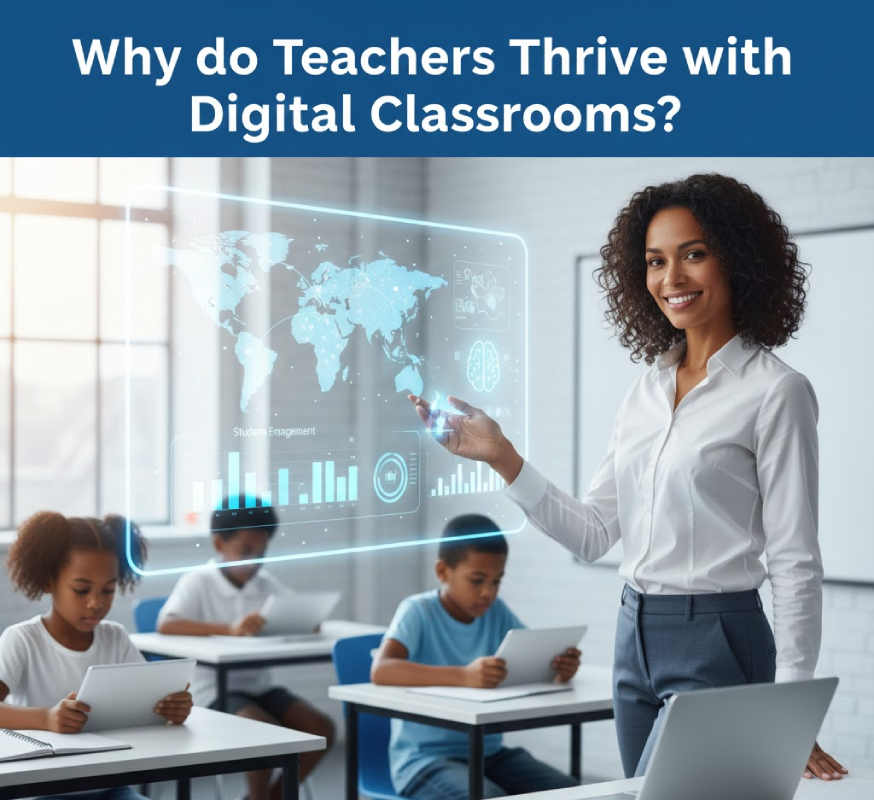
Education has undergone a rapid transformation, and right at the heart of this change lies the rise of digital classrooms. Gone are those days when technology was viewed as an addition; today, it forms the basis for vibrant, interactive, and effective teaching. But why do teachers thrive in digital classrooms? In this blog, we will see how this evolution empowers educators, enhances learning, and creates a more connected educational experience. Embracing Flexibility: The Core of Digital Classrooms One of the biggest advantages of the digital classroom is its flexibility. Teachers don’t need to follow strict plans or physical classrooms. With digital platforms, teaching plans, and sharing resources, as well as interactions with students go effortlessly. Digital classrooms enable teachers to: They should plan classes that are appropriate to their requirements and the requirements of the students Instantly share resources, such as videos, interactive tests, and other resources. Track student progress in real-time. This makes it simple to adjust lessons according to your needs This flexibility does more than just save time, but allows teachers to concentrate on what is crucial in their teaching, as well as mentoring and inspiring. Personalised learning for every student Digital classrooms allow teachers to accommodate different learning styles and paces. Teachers can make use of interactive tools to design distinct lesson plans, making sure that students are not uninvolved. Instead of one-size-fits-all, all digital platforms permit teachers to: Give tasks that are individualized in accordance with the strengths of the student and weaknesses Utilize multimedia tools to engage learners of auditory, visual, and Kinesthetic learners Follow each student’s progress and provide prompt feedback Teachers who have personalized instruction can improve engagement and outcomes, allowing every student to achieve their full potential. Streamlined communication and collaboration Communication is the basis of an effective education. Digital classrooms make teacher-student, parent-teacher, as well as teacher-teacher collaboration more efficient than ever before. Through chat rooms, messaging platforms and video calls, everybody stays in touch. Teachers are thriving by being able to: Respond to student inquiries immediately Group projects can be organized easily Inform parents about how things are going and about upcoming events. This atmosphere of connection creates a sense of belonging and the ability to support each other and both are crucial to a flourishing classroom. Effortless resource management The days of shifting papers as well as carrying large textbooks. Digital classrooms facilitate resource management, which makes the teaching process less stressful as well as organised. Here’s how: Keep all lesson plans, assignments and grades in one location Explore a wealth of online materials Make sure to share updates or any new resources with students in a matter of seconds Teachers will be able to spend less time on administration and spend more time on creativity and teaching. More engagement through interactive tools Traditional classrooms can be difficult to keep students’ attention. Digital classrooms permit lessons to be made more engaging. Teachers can make use of: Interactive surveys and quizzes Gamified lessons Virtual labs and simulations, and simulators Real-world problem-solving activities These tools transform the experience of learning into active participation and make each lesson memorable and effective. Supporting professional growth Digital classrooms do more than aid students. They also assist teachers in improving their skills. These platforms offer instructors the opportunity to take professional education courses, webinars, as well as an international community of educators. Teachers can: Discover new ways to teach Keep up-to-date on the most recent trends in education. Share your experience and the best practices with your colleagues. This kind of development keeps educators engaged and at the top of their game. Overcoming Barriers: Making Education More Inclusive Perhaps one of the most beneficial advantages in digital learning classrooms is the inclusion. This means that teachers are able to reach out to areas that are not accessible as well as accommodate students who have disabilities, and provide the accessibility of high-quality education. Teachers are thriving because they bring about a positive change in the lives of their students, regardless of the location of their students. If you are passionate about inclusive education, join an education NGO in India like Vidyalaya.org, working to bridge educational gaps and promote digital learning in every community Nurturing Global Ties Digital classrooms break geographical boundaries, allowing students and teachers to talk with experts around the world. This global exposure helps learning through diversity and cross-cultural experiences. Encouraging Lifelong Learning Access to online resources, webinars, and global communities encourages both students and teachers to become lifelong learners. Digital tools present new opportunities for exploring interests, developing additional skills, and staying up-to-date with knowledge that evolves. FAQ’s 1. Why do teachers thrive with digital classrooms? Digital classrooms work for teachers because they offer flexibility, personalized learning, and efficiency in resource management. They make teaching more engaging and less stressful, hence improving the experiences of both teachers and students. 2. How do digital classrooms support personalized learning? Digital classrooms let teachers adapt lessons to each student their strengths, needs, and learning styles. This leads to better learning outcomes and engagement for every student. 3. Are digital classrooms efficient in all disciplines? Yes, digital classrooms can be adapted to accommodate an array of topics, ranging from mathematics and sciences to languages. Many interactive methods and tools can help students understand even the most difficult questions in a comprehensible and engaging manner for students. 4. How can NGOs help promote digital education in India? NGOs like Vidyalaya.org make a difference by providing resources, training, and support for teachers and students in underserved communities. They bridge the digital gap and ensure quality education for all. Digital classrooms work for teachers because they offer flexibility, personalized learning, and efficiency in resource management. They make teaching more engaging and less stressful, hence improving the experiences of both teachers and students. Digital classrooms let teachers adapt lessons to each student their strengths, needs, and learning styles. This leads to better learning outcomes and engagement for every student. Yes, digital classrooms can be adapted to accommodate an array
Education Cafes vs Traditional Schools: A Comparative Study of Learning Outcomes
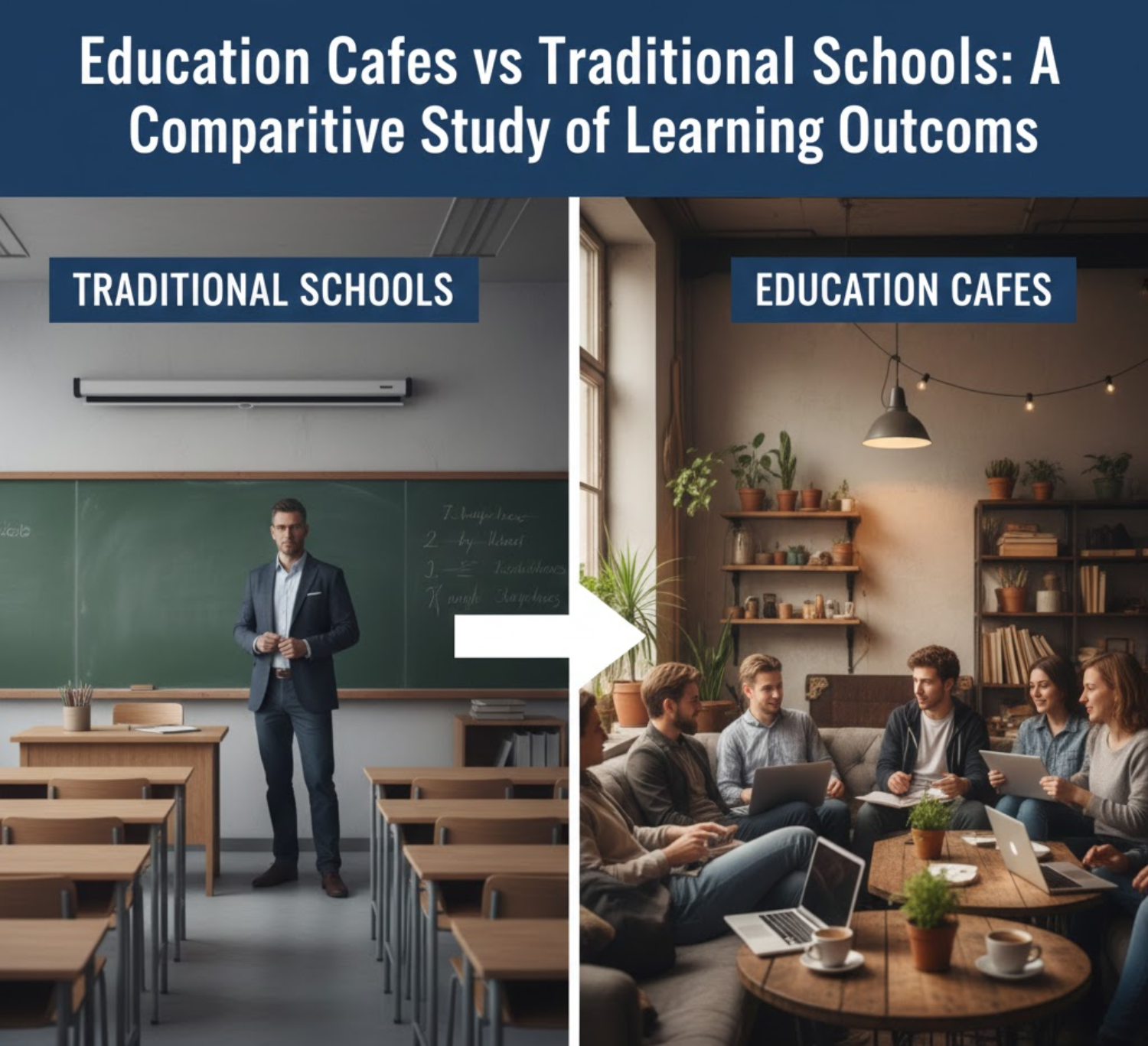
Education is advancing rapidly as new teaching techniques and learning methods are being developed to meet the needs of each student. Most likely to be among about alternatives to traditional schools, ie, educational cafes, which provide an alternative to the traditional school system. With the growing number of questions from parents, students, and educators about the effectiveness of a one-size-fits-all education, comparing learning outcomes between these two models is essential. This blog discusses how traditional schools and education cafes influence students’ performance, engagement, and ability to make informed choices about the future. Understanding Education Cafes: A Modern Approach to Learning Educational cafes are creative spaces that encourage learning and community outside the classroom. Picture a welcoming cafe where students gather in small groups to complete projects and have relaxed conversations with instructors over coffee or food. The atmosphere is casual, yet organized, providing opportunities for learning, life skills development, and creative exploration. At an educational café, learning is shaped by each individual’s needs instead of a predetermined program. Students often participate in workshops, discussions, and projects that help them improve classroom skills and develop academic knowledge. Traditional Schools: Structure, Stability, and Academic Rigor Traditional schools have served as the basis of formal education for a long time. The structure of traditional schools is familiar, and students attend classes in accordance with a predetermined timetable and advance through a prescribed curriculum taught by qualified teachers. Academic performance is assessed by exams, assignments, and grades, along with clearly defined benchmarks for success at every scale. This approach gives security and stability, aiding in the development of the ability to manage time and organize. Traditional schools also provide additional curricular sports, extracurricular events, and a clear path for higher learning. The emphasis on tests and rote learning may restrict creativity and apprehension, particularly for students whose abilities are not related to academics. Education Cafes vs Traditional Schools: Key Differences at a Glance Here’s a side-by-side comparison to highlight the main differences in learning outcomes and experiences: Feature Education Cafes Traditional Schools Learning Approach Student-driven, hands-on Teacher-led, structured Environment Relaxed, collaborative, informal Formal, classroom-based Curriculum Flexible, customized to student interests Standardized, government-set Assessment Methods Project-based, ongoing feedback Exams, standardized testing Social Interaction Peer learning, community involvement Peer groups, limited collaboration Technology Integration Digital tools, online resources Varies, often limited Schedule Flexible, self-paced Fixed, time-bound Learning Outcomes: What Do Students Really Gain? Engagement and Motivation One of the most significant differences between traditional and education cafe schools is the degree of involvement from students. In education cafes, students can decide on subjects and techniques that interest their interest, resulting in greater interest, higher comprehension, and greater retention rates. Students are more likely to be proactive and ask questions, as well as go into the subject more deeply. In contrast, many traditional schools fail to engage all students, particularly those who are excluded from the school curriculum. Pressure to pass tests and earn good grades or marks deters the student’s curiosity and imagination. Personalization and Individual Growth Education cafes shine in personalizing education. Each student’s journey to education is influenced by their passions as well as their strengths, and their speed. Mentors offer individual feedback to help students overcome their difficulties and recognize their accomplishments. This approach leads to greater self-awareness, confidence and readiness in the workplace. At a traditional institution, every student progresses equally regardless of their unique requirements. Some students are successful while others are left behind or are ignored. The system doesn’t allow plenty of time to concentrate on certain strengths or learning obstacles. Skill Development: Beyond Academics Educational cafes are not only focused on academic subjects, but on the fundamental life skills. They are focused on collaboration as well as problem-solving, teamwork, and adaptability skills that are highly sought-after by the workplace of today. Through tackling real-world challenges and working in various groups, students develop their capabilities. Traditional schools give students the chance to enhance abilities through extracurricular activities, but the main emphasis is still on academic achievement. Students may be left out of opportunities that promote the holistic development of students. Why Education Cafes Are the Future of Learning The popularity of education cafes is growing because they overcome the limitations of traditional education and adapt to the demands of modern times. What makes them different: Flexible learning: Students learn at their own pace, which allows the to learn the subject instead of learning it by heart. Innovative and creative projects that are open-ended stimulate imagination and creativity. Collaboration between community members, Partnerships with local organisations and companies can improve learning experiences. Students who are high-engagement are more enthusiastic and engaged about their studies. Relevance to real-world situations: The lessons are based on the real world, making learning pertinent. The Role of Technology and Community Education Cafe embraces technology through the integration of online tools, digital courses, and international resources. This method bridges the gap between accessibility and gives students the digital literacy that they need to be successful in the future. It also encourages participation from the community through the involvement of parents as well as professionals and local organisations to the process of learning. Although traditional schools are working to adopt technology, the pace of change may be slow. Classroom technology is usually dependent on training and resources, so a student’s experience may differ. Nonprofits Leading Change in Education A lot of education cafes and progressive schools work with groups like education NGOs in India, such as Vidyalaya.org. These non-profits help both models by offering grants, resources, and new programs. Through empowering educators and students, they help to bridge the gap between innovation and tradition and ensure that students of all backgrounds can succeed. FAQs 1. How do education cafes improve learning outcomes compared to traditional schools? Education cafes offer individualized learning and hands-on experiences that improve the students’ engagement and comprehension. This can result in better attainment rates than traditional education offered in traditional schools. 2. Can education cafes prepare students for exams and higher education? Yes,
How Education Cafes Are Building Learning Communities, Not Just Classrooms
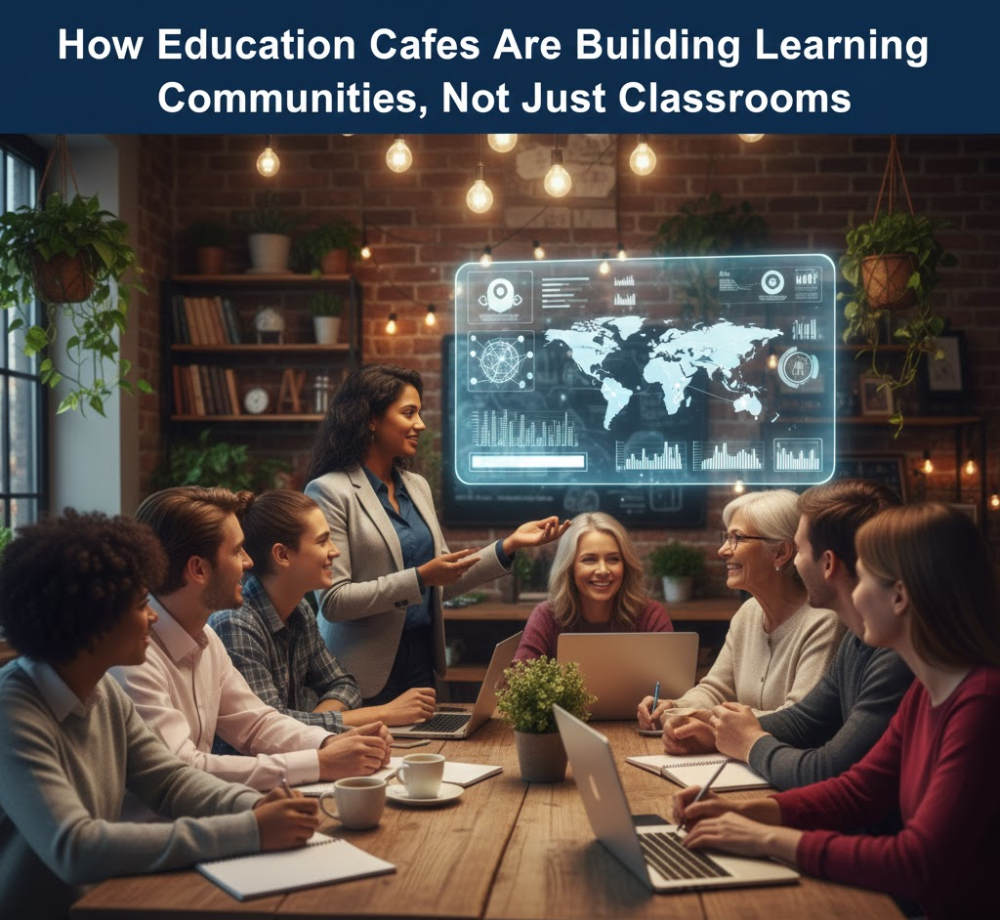
Education is among the fastest-growing sectors of our times. The traditional classroom with formal seating and hard desks is being replaced with something more modern and dynamic cafes that focus on education. These modern cafes aren’t only about drinking coffee while reading textbooks. In reality, they are transforming the entire method of learning by forming vibrant communities instead of isolating classrooms. This blog will explore how educational cafes are transforming the way we learn. We will also explore the distinctiveness of these places and how they create connections that extend beyond the classroom walls. What Are Education Cafes? Education cafes are places that provide education as part of the community. Imagine a relaxing space with interactive books and boards with comfortable seating, as well as the sound of conversations. The cafe at the educational level isn’t quite as traditional as the classroom. The Education Cafe is a place for teachers, students, and lifelong learners alike to come together to share ideas, discuss topics and support one another’s improvement. Creating a Sense of Belonging: The Community Approach The primary benefit of an education café is that it provides a genuine sense of belonging. Instead of lecturing in a classroom, an education cafe promotes interaction, collaboration, and mentorship. People from all kinds of backgrounds gather to discuss, learn, and form networks. This helps break away barriers and make every participant a contributing member. Cafes for education can grasp the social aspect of learning. When students feel respected and valued, they’re more likely to be engaged in the learning process. Study groups, friendships, as well as peer-to-peer learning thrive in these open spaces. How Education Cafes Encourage Collaborative Learning Collaboration is the basis of all cafes that offer education. Learning isn’t just one-way. Teachers serve as facilitators, rather than traditional instructors. The focus shifts from traditional learning to critical and creative thinking. Group discussions can replace the need for silent reading. Problem-solving exercises encourage collaboration. Workshops and guest lectures provide fresh perspectives. Mentorship programs assist students of all age groups. Open mics and project days give students a chance to showcase their skills. By making learning fun, educational cafes enable students to take control of their education, asking questions and experimenting with new ideas without hesitation. Beyond the Curriculum: Real-World Connections Educational cafes stand out because they are connecting the academic curriculum with real-world problems. The curriculum is flexible and often designed by the students themselves. From programming to entrepreneurship, art, and social issues, topics are relevant and applicable. Students are presented to entrepreneurs, professionals, or activists who provide their experiences and knowledge. This enriches the learning process and motivates students to think beyond the classroom. For example, at the education cafe, a biology lesson might lead to discussions about environmental sustainability, and the math class could discuss budgeting for small businesses. Technology and Flexibility: The Modern Edge Educational cafes are using modern technology to help make learning more adaptable and accessible. Online workshops, digital resources, online classrooms, and interactive apps are seamlessly joined. This allows learning to happen anytime, anywhere. This flexibility lets you choose from a range of learning styles and speeds. If you are an early riser or an early riser at night, the model of education cafes allows you to access community resources and support that suit your preferences. How Education Cafes Build Lasting Networks In the education cafe, you are not just an individual student, but part of a vibrant community. The friendships you build in this program extend beyond the walls of the classroom. Alum networks, community events and regular mentorship keep the excitement for learning in high gear. These networks are highly valuable and offer a variety of benefits, from advice on career development and business opportunities to lasting relationships and a constant source of inspiration. Thus, education cafes can be seen as platforms to help you grow professionally and personally. The Role of Education NGOs in India The rise of education-focused cafes is closely linked to the work of a range of organisations, especially in India. Some of the most prominent education NGOs in India are currently setting up community-run facilities. They aim to provide an excellent education for all and make it an enjoyable experience for everyone. For instance, platforms like Vidyalaya.Org is helping to connect students with mentors, resources, as well as a vibrant community of teachers. These organisations ensure that the cafes in schools aren’t only for those with a wealth of resources, but they are available to adults and children of diverse backgrounds. For more information or to join the cause, go to the educational NGO within India. The Benefits of Education Cafes What are the reasons why educational cafes are gaining an enormous amount of interest? These are the significant benefits: Inclusionary Ambience: All are welcome regardless of race or background. Individualized Learning: Students can choose what and how they would like to learn. Skills Development: Focus on the real-world aspects of career and life skills, not just academics. Better Motivation Support from the community keeps learners motivated and accountable. Emotional well-being: social aspects reduce isolation and increase confidence. Education Cafes vs. Traditional Classrooms The education cafe differs from the traditional classroom in several ways. The primary difference lies in how they approach learning and community formation. Learning can take place in a linear and teacher-directed manner in a classroom setting, or in an education cafe, where learning is open, flexible, and focused on the learner. The cafe encourages curiosity and diversity, and helps create a space where questions are more important than the answers. The shift from authority to facilitation can affect how people learn and develop. Future of Learning: Why the Education Cafe Model Works The concept of the education cafe is more than a trend; it’s a glimpse into the future of education. As technology advances and our societies change and evolve, the need for education to remain relevant. By combining academic learning with social interaction, educational cafes are helping create resilient, imaginative people. You could
What Impact Do Digital Classrooms Have on Students?
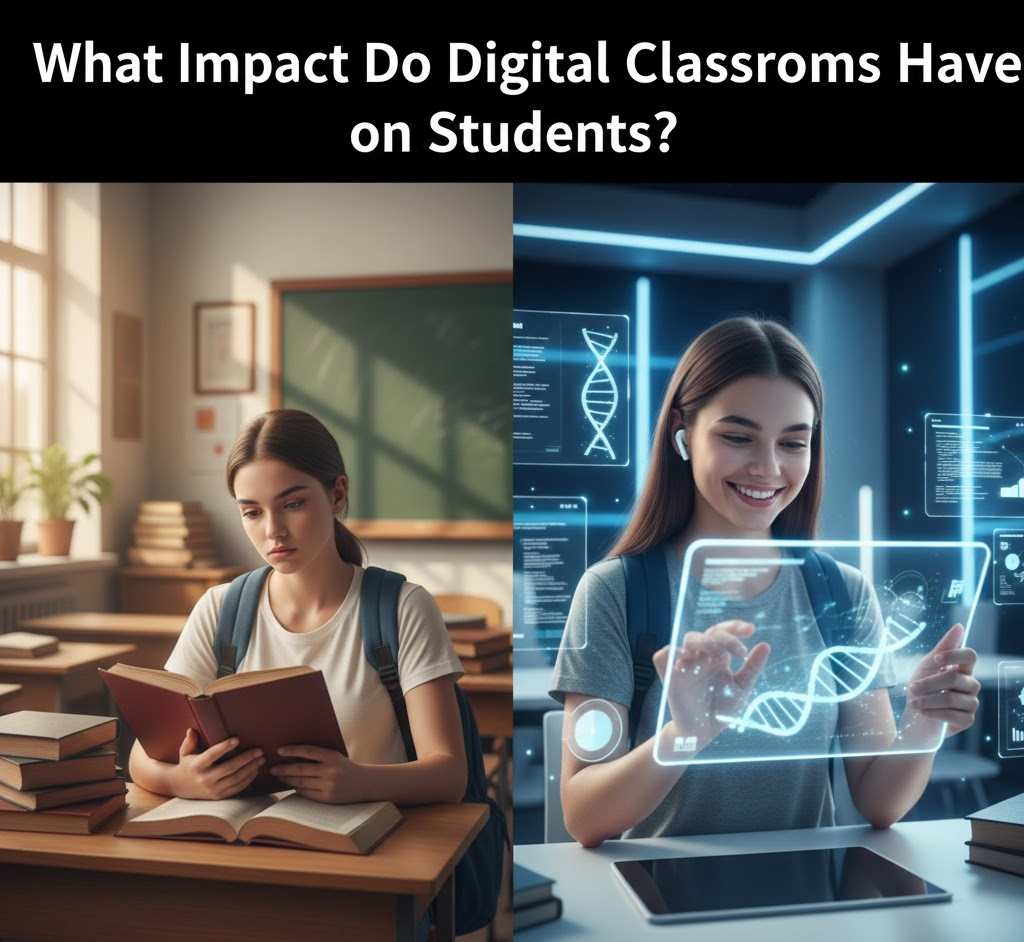
The way in which education is developed in this age of digital technology is revolutionary. The days of learning were conducted via chalkboards and textbooks. Digital classrooms today have changed the way that students develop, interact, and learn. What can digital learning offer students? Let us have a look and learn how digital classrooms can impact how students learn to comprehend concepts, stay focused, remain motivated, and perform better academically. Understanding the Impact of Digital Classrooms on Students The digital classroom is powered by technology, allowing students to access their lessons, lesson materials, notes, and even the materials they need online. Digital classrooms are having a significant impact on students, transforming the learning environment and opening new possibilities. This is the guideline for everything, from the process to the extent of student involvement. How Digital Classrooms Improve Student Engagement Engaging students is an essential aspect of every class. Interactive tools such as videos or quizzes, as well as live polls, can make learning more enjoyable. Chat boxes, for instance, offer instant feedback and collaborative capabilities, while virtual classrooms encourage students to be involved in the learning process. When students are engaged in the virtual classroom, their enthusiasm and interest are enhanced. Engagement is not just about having fun; it is also about creating an environment that fosters learning. Accessibility and Flexibility: Making Learning Available to All However, one of the most significant impacts digital classrooms have made on students is accessibility. Digital classrooms break down barriers. No matter if a student is in a remote area or a modern city, all they need is an Internet connection. Flexibility is an additional benefit. Recorded lessons can be replayed multiple times, allowing students to pause and review sections they do not understand at their own pace. This lets students learn at different paces and keep their progress on track without feeling they are lagging. Personalized Learning: Tailoring Education for Every Student Every student is not the same. Digital classrooms recognize this and provide individualized learning experiences. Students can choose items that meet their needs and their strengths and areas to improve. The benefits of digital learning classrooms for children are evident when they take adaptive assessments and receive personalised feedback. Teachers can track their pupils’ progress and provide support when needed. This type of support is usually individualized and can lead to better academic performance and more confidence among students. Bridging the Gap Between Teachers and Technology The effectiveness of digital classrooms depends not only on students but also on teachers. Teachers are adapting to the latest technology, and the effects of digital classrooms on students are becoming increasingly evident. Digital tools can help teachers monitor their progress, offer instant feedback, and make learning more fun. Training and online resources help teachers stay up to date and create a better learning environment for all. Challenges Faced by Students in Digital Classrooms Although the benefits are impressive, the effect of digital classrooms on students can be detrimental. There are a few issues that need to be addressed Technical issues: Slow internet or outdated devices can hinder learning. Distraction: The web is awash with distractions: social games on the internet, as well as notifications and games. Students may be isolated. Some students are not interested in face-to-face interactions or aspects of social interaction in traditional classrooms. The Digital Divide is that students are unable to access technology in the same way or to find a quiet place to work. The identification and resolution of these issues are essential to maximizing the positive impact on students in digital classrooms. Real-World Skills: Preparing Students for the Future It is not only about convenience, but it is also about helping students prepare for the world of work. The effects of digital classrooms on students extend beyond the classroom to crucial life skills, such as navigating the digital age, managing time, and developing self-control. Students are taught to use online platforms and collaboration tools, and to manage their time. These abilities will be helpful in the future for further learning and, beyond that, for making digital classrooms not just a trend but, in actuality, the next step in the new learning environment. The Role of Education NGOs and Community Support The effect of a digital classroom on students depends on the community’s work. There are organizations, such as educational NGOs in India, that help fill gaps in digitalization and provide the resources needed so that no child is left behind. To learn more about their programs, visit vidyalaya.org. Their dedication to equal access and high-quality education enables thousands of students to benefit from online learning environments Key Takeaways: The Impact of Digital Classrooms on Students Learn actively using engaging learning instruments. Provide flexibility and accessibility to make education more inclusive. Personalized learning can be tailored to your individual requirements. Training students for the digital future. Essential life abilities Be prepared for challenges such as interruptions in access, distractions, and fatigue from online use. FAQs 1. What are the differences between digital classrooms with traditional ones? Digital classrooms offer more flexibility and personalization of learning than traditional classrooms. Digital classrooms are a great way to build students’ skills, not only those related to their subjects but also in engaging with digital media. 2. What are the challenges students face in digital classrooms? Students may face technology-related issues or distractions. They may also feel isolated. It is crucial to tackle these issues to improve the positive impact of digital classrooms on students. 3. Are digital classrooms equally beneficial to all students? The effect of digital classrooms on students varies depending on technological capabilities and internet access. Education-related organizations can fill in the gaps to ensure that every student is benefiting. 4. How do digital classrooms support students’ future careers? The effect of digital classrooms on students is observed in the development of digital skills, including time management, and in the acquisition of the abilities needed to succeed in today’s workplace. Digital classrooms offer more flexibility and personalization of learning
Donate To the Top 10 Education NGOs in India

Education is not just a basic right; it’s also a way to achieve freedom, growth, and opportunity. In India, where millions struggle to get a quality education, NGOs play a vital role. These organisations strive to close the gap in education, empower communities and give every child the opportunity to dream. Donating to one of the top 10 NGOs in India that are dedicated to education could be the answer. These organisations are creating a more equal and brighter future, one classroom at a time. Why Education NGOs are Important India’s educational landscape is diverse, vast and uneven. Although the government has made great progress, issues like poverty, inequality between men and women, and a lack of infrastructure still limit children’s ability to access quality education. Education NGOs in India can help. They bring digital learning tools into rural classrooms and train teachers. They also introduce programs that focus on gender equality and life skills. They go beyond the textbooks to change how children view learning and opportunities. These initiatives help lift communities and families out of poverty by educating children. By donating money for education to organisations, you are investing in India’s long-term future. The criteria for selecting the top 10 NGOs of India How can we choose the best NGOs out of hundreds that are registered and working in education? The top 10 NGOs in India stand out for their transparency, measurable outcomes, accountability and lasting community impact. These organisations are focused on models that can be scaled up, such as digital learning, teacher education, girl empowerment, and skills-based education, which create long-term solutions instead of quick fixes. Each organisation below has a proven track record and a mission that is aligned with real educational transformation. Top 10 Education NGOs of India This list includes trusted and inspirational education NGOs that have transformed the way India teaches. Vidyalaya.org Vidyalaya.org, a pioneer in rural education transformation, is well-known for its smart classrooms and digital infrastructure. It also empowers underprivileged children with technology. Its programs improve engagement between teachers and students, while bringing quality education to remote villages. It is recognised as the best NGO for child education in India for its work with children’s education. Teach For India This movement brings together passionate young professionals to teach in schools with low incomes, so that every child gets the education they deserve. The fellowship program creates a new generation of leaders who are determined to eliminate educational inequality. Pratham Education Foundation Pratham is known for its Read India campaign. It focuses on early literacy and foundational learning. Millions of children have improved their reading skills thanks to its innovative teaching methods. Smile Foundation Smile Foundation’s “Mission Education Initiative” provides free education, health care, and skills development programs for children from disadvantaged backgrounds. Its holistic approach fosters both academic growth and emotional development. Akshaya Patra Foundation Akshaya patra makes sure that no child is left hungry to study. It feeds two million children a day through its mid-day meals program. This improves both attendance and concentration. Bhumi Bhumi, one of India’s biggest youth-volunteer organizations, focuses on changing education through mentoring, STEM learning and English-language instruction. The model is based on volunteers, which empowers youth to actively contribute to society. Save the Children India This NGO has been active for more than a century. It advocates for the rights of children, especially access to a quality, safe, and inclusive education. The community outreach programs of this NGO help thousands of children return to the classroom every year. Room to read India Room to Read, a non-profit organization that promotes literacy and gender equality in schools, helps girls to stay in school, get a higher education and become confident leaders. Millions of students have benefited from their reading rooms and mentoring programs. Make a Difference (MAD), MAD mentors children who live in shelters, providing them with education, career advice, and life skills. Building emotional resilience, and practical skills will prepare them for independence as adults. CRY- Child Rights and You CRY is one of the top 10 NGOs in India and advocates for the right of every child to education, health care, and protection. It ensures that children are not only able to attend school, but also thrive in it. How Your Donation Creates Real Impact Donating to one of these education NGOs in India not only fund textbooks and uniforms, but it also fuels hope. Each rupee can have a ripple impact that can change a child’s life. Your support can make a real difference. Reduces the dropout rate and helps children to stay in school. Spending on digital tools, libraries and teacher training programs. Encourages girls’ education and community involvement. Improved learning outcomes and skills development. Promotes an independent generation that is ready to take the lead. Even a small donation, made regularly, can transform classrooms and empower teachers. It will also make education more accessible to everyone. How to Select the Right NGO for Support Donating money is a noble thing to do, but you want your money to reach those in need. Check for the following before contributing: Transparency reports and impact reports Verified donation channels. Results that are tangible and measurable. Trusted platforms, such as Vidyalaya.org, provide evidence on how donations are used. This includes supporting rural teachers or setting up smart classrooms. Your donation will create sustainable educational progress when you donate through credible initiatives like education NGOs in India. Final Thoughts Education is the basis for progress. Supporting any of the top 10 NGOs In India is more than just a donation. You’re giving dignity, opportunity and a brighter future. India’s future is dependent on how its children are educated today. Your donation can spark dreams, close gaps and transform countless lives. Visit Vidyalaya.org to learn more about their initiatives and join the movement. One act of generosity can be the key to tomorrow’s success. FAQ on Top 10 Education NGOs in India 1: How do top NGOs support children’s education in India? The top
How Educational Scholarships Are Changing Lives in Rural India

Education has long been the cornerstone of empowerment. But for millions of rural Indian children, it is often a distant fantasy. Access to quality education is a daily battle due to limited resources, poor infrastructure and economic constraints. In the face of these challenges, education scholarships in India are a lifeline that helps bright students overcome their circumstances and reach their potential. The promise of education scholarships in rural India Many students in rural India walk long distances to get to school. They study under dim light after helping out their families on the farm. Financial aid education gives hope to such children. Scholarships can cover tuition, books, uniforms and even transportation, so that children can continue learning without burdening the rest of their family. The increasing network of education funding opportunities has changed the way rural education is perceived. No longer is it about privilege, but rather about potential. Each scholarship is a step towards building a more literate and stronger nation. Understanding educational scholarships in India Education Scholarships India includes a wide range of initiatives that are designed to help students who come from less privileged backgrounds. Governments, private foundations and NGOs offer them. These scholarships have multiple purposes: they recognize talent, provide financial stability and encourage students to remain in school. These schemes, which range from national-level initiatives like the National Means-cum-Merit Scholarship down to state-based and NGO-based programs, play an important role in nurturing the future generation of leaders and thinkers. Through education funding opportunities programs, rural students get the same exposure to academics as their urban peers. This narrows the education gap which has existed for decades. Why scholarships matter for rural students Education is often pushed aside by rural families who are struggling to survive on modest incomes. That’s where merit scholarship for rural students can make a difference; they not only help remove financial barriers but also boost motivation and confidence. Scholarships allow deserving students to continue their education without having to drop out because of poverty. They also show the community that education is a powerful tool that can transform lives and inspire others. It’s not just about the individual; it’s also about generations. One child who receives scholarship support can lift an entire family from poverty. Scholarship programs making an impact Numerous initiatives in India are changing the rural education narrative. In order to bridge the gap, government schemes such as the PM Scholarship Scheme and Inspire Scholarship have played a key role. Organizations like Vidyalay.org, of the most important education NGOs in India play a crucial role in connecting students to resources. They focus not only on funding, but also on community involvement, mentorship and awareness. The growing support network for the positive Scholarship programs’ impact shows how positive it is on individuals and communities. How financial aid education transforms rural lives Financial Aid Education is more than just a way to fund education — it also creates equal opportunities. Aiding a student reduces the economic burden on parents and makes them more confident in their education as an investment. Scholarships are a great way to protect girls from early marriage and child labor. Scholarships open the door to higher education and vocational training that lead to sustainable income and independent living. Scholarship recipients have transformed entire villages when they return to rural communities as teachers, engineers, or social workers. This is a testament to the impact of scholarship programs can have on rural society. The role of NGOs and community participation NGOs such as Vidyalaya.org recognized as the best NGO for child education in India work to provide scholarships at the local level. They help identify students who deserve scholarships, raise awareness, and streamline the application process. These organizations work with schools and governments to ensure accountability and transparency in the distribution of funds. They also encourage leadership, self-confidence and social responsibility in young learners. The reach of education funding opportunities increases when local communities are involved. This ensures that the help reaches those who need it most. How to apply for educational scholarships in India Students and parents can find the best scholarship for them if they know where to search. A quick guide for getting started. Search verified education scholarships India at government and NGO portals. Early collection of documents related to income and academics is important. Apply early to maximise your chances. Keep track of updates through local education offices, NGO initiatives and other sources. Students from remote villages can benefit from these education funding opportunities with persistence and awareness. Challenges and the road ahead Many students are still unaware of scholarships, despite visible progress. This is due to a lack of connectivity or awareness. Rural schools are often faced with obstacles like poor internet access and inadequate documentation systems. For these issues to be overcome, it is essential that we have ongoing awareness campaigns, workshops in schools, and digital literacy programs. Inclusion is the key to the future of scholarship programs’ impact. No talented student should be left behind because of geography or background. Conclusion The real power of education scholarships India lies in their ability to quietly but profoundly change lives. When a student from a village receives financial aid to earn a degree, that’s a win for the whole community. The initiatives of NGOs such as Vidyalaya.org that support education NGOs in India remind us that education, unlike charity, is a human right. The first step to building a more educated and empowered India is to support and promote scholarship programs. FAQs On Educational Scholarships 1. What are the top education scholarships in India for rural students? Several education scholarships in India, such as NMMS and Inspire, or NGO-led initiatives, help rural learners. They provide financial assistance, mentorship and resources for talented students who come from poor backgrounds. 2. What does merit scholarships for rural students support mean? Merit Scholarships reward rural students reward academic excellence and motivation. Children from families with limited financial resources can continue their education without interruption. The