
The Role of Community Participation in Improving Local Schools
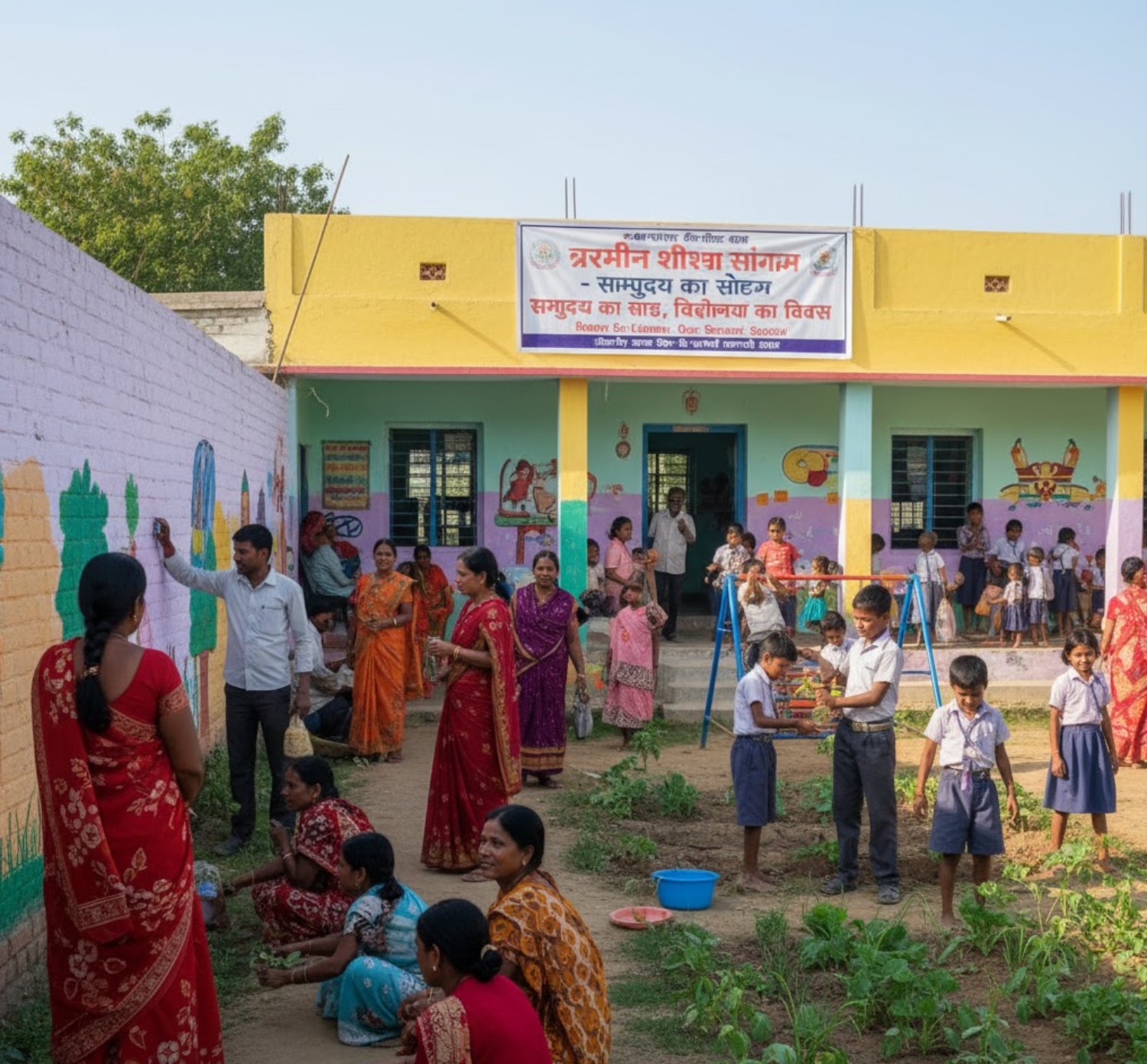
In one small village in Maharashtra, a government school was losing students. The classrooms were empty, attendance by teachers was poor, and most children had abandoned the school. All of this changed when volunteer parents, teachers, and volunteers got together to revive the school. In a matter of months, attendance picked up, the classrooms were renovated, and children looked forward to learning again. This is a compelling tale of community involvement in education, in which individuals unite to enhance access, quality, and results in schools. Throughout India, communities are demonstrating that when education is everyone’s responsibility, change results. The Power of Community Involvement in Education Education is most effective when it involves the community. Community involvement education helps support a network that surrounds schools to ensure children receive quality resources and instruction. Parents, local leaders, and volunteers who actively participate in schools make them more accountable to their students and more responsive. Community involvement can complement the gaps in government support, particularly in rural and semi-urban areas. Programs such as mentoring, fundraising at the local level, and volunteer-led classes see that education goes beyond the conventional classroom. Kids learn academic as well as social skills when education is included in the community. Importance of Parent Participation in Schools The Parent Participation Schools encourage parents to be active participants in their children’s education. Parents who attend school meetings, take part in activities and monitor their child’s academic progress are more likely to motivate and inspire students. Parents who are actively involved in their children’s education can help them achieve better academic results and improve the well-being of students. Engaged parents help teachers better understand the needs of each student, resulting in more personalized learning. In essence, parent participation in schools fosters a collaborative atmosphere where children flourish both academically as well as socially. The Role of Village Education Committees In rural areas, the village education committees play an important role in shaping schools. Parents, teachers and community leaders make up these committees, which oversee school operations and ensure accountability of teachers. They also advocate for the needs of students. VECs ensure that schools are safe and consistent by monitoring infrastructure, enrollment and mid-day meals. They ensure that schools can function efficiently even when resources are limited by implementing grassroots education initiatives. VECs that are active strengthen local education support and bridge the gap between educational institutions and communities. How Local Education Support Shapes Success Local Education Support includes contributions from parents and NGOs as well as volunteers and local leaders. This support is aimed at improving teaching, learning and school infrastructure. Examples include: Set up community libraries with reading corners. After-school tutoring and mentoring programs are available. Donating uniforms, books or digital learning materials. Organising workshops to develop skills for students. Many education NGOs in India are crucial in channeling expertise and resources to schools. Platforms such as Vidyalaya.org link communities with teachers and volunteers, ensuring local efforts are translated into measurable improvements. Local support can make schools thriving, proud centers of learning. Grassroots Education Initiatives Driving Real Change Grassroots education initiatives are locally-led programs that address the challenges faced by local schools. These initiatives are often small and focus on finding creative solutions to immediate problems. These programs may include women-led literacy campaigns, digital classrooms, and mentorship by volunteers for students. These initiatives improve local education support by ensuring that children remain in school and can access quality learning materials. Benefits of grassroots education: Increased literacy rates and retention rates. Teachers are held more accountable. Include marginalised children more. Community ownership of schools is stronger.By empowering local communities to lead, grassroots initiatives can make education inclusive, sustainable and adaptable to local needs. Bridging Communities and Institutions for a Better Future Schools, communities and NGOs need to work together for a long-term effect. Teachers, village education committees and non-profits such as the best NGO for child education in India can form partnerships to ensure that their efforts are measurable and effective. These collaborations give schools access to digital tools, training for teachers, and mentoring programs they would not otherwise have. Students benefit from enhanced learning opportunities, while communities gain a greater sense of ownership. Education becomes a collective effort when everyone participates. Conclusion When communities are responsible, education is successful. Community involvement, education, Parent participation in schools and Village education committees all show how schools thrive when people take part. Parents, teachers, and members of the community can all make a difference by volunteering, mentoring, or supporting initiatives. Organisations such as Vidyalaya.org show how collective action can transform the education system. Investing in the future of India by investing time, knowledge, and resources in local schools makes sense. We can give every child the chance to grow and learn by strengthening local education support. FAQS On Community Participation in Education 1. What is community involvement education, and why is it important? Community involvement education is a term used to describe the active participation of local leaders and parents, as well as volunteers at schools for improving learning outcomes. It improves accountability, increases student engagement and ensures holistic growth. Engaging communities can help create sustainable improvements to education at the grassroots level. 2. How can parent participation in schools improve learning outcomes? Parent participation schools encourage parents to work with teachers, monitor their child’s progress and support them in their learning. Active involvement improves academic performance, attendance and confidence. Parents who are actively involved in their children’s education see improvements over time, both in terms of student performance and community trust. 3. What role do village education committees play in local schools? Village education committees act as local governing bodies that monitor teacher attendance, school infrastructure, and enrollment. They bridge the gap between communities and schools while implementing grassroots education initiatives. Their work ensures that local education support is consistent and effective. 4. How can grassroots education initiatives enhance local education support? Grassroots education initiatives involve community-led programs like after-school tutoring, digital learning, and mentorship schemes. They strengthen local education support
What Is the Highest Literacy Rate in India?

Literacy is a cornerstone for development. It’s a tool to empower individuals and strengthen nations. Literacy in India is more than just reading and writing. It’s also about access, awareness, opportunities, and knowledge. India has made great progress in spreading education to rural and urban areas. One question remains: What is the highest literacy rate in India, and what does that reveal about the progress of the country? Explore how literacy is defined and which states are leading the way. Also, learn why it’s important to understand this number. Understanding the definition of literacy rate It is important to understand how to define the definition of literacy rate prior to entering the ranking. In India the country, anyone who is seven and over who is able to write and read in any language that is understood is considered to be literate. The literacy rate is a measure of how many people are educated in a group of people aged seven and over. The literacy rate represents the education level of an entire nation, and also the efficiency of the education system and the policies of the government. What Is the Literacy Rate in India Today? According to the most recent data from the national census, the total literacy rate in India is about 80.9 percent among those aged seven and over. This is an impressive improvement, especially in rural areas, which were not able to catch up with urban areas. The breakdown: Literacy among women is about 74.6% Literacy of males is about 87.2% Literacy rate in urban areas is around 88.9% The literacy rate of rural areas is around 77.5% The figures, though positive, do not eliminate the gap that remains in the urban and rural communities and between females and males. India’s primary goal in education is to close the gaps. States with the Highest Literacy Rate in India The northeastern region and the southern region have consistently had the highest literacy rate in India. These states have heavily invested in education, teacher-training, and community involvement. Here’s a look at the frontrunners: Mizoram 98.2%Mizoram, a small but progressive state in India, now has the highest rate of literacy. This success was made possible by community-led initiatives in education, dedicated teachers and an equal focus on men and women. Lakshadweep – 97.3%Union Territory’s high rate of literacy can be attributed in part to a strong education infrastructure and the local participation. Nagaland 95.7%Nagaland’s high literacy rate has been maintained by a combination of focused educational reforms, strong missionary schools and strong education. Kerala – 96.3%Kerala’s inclusive and accessible educational system continues to be hailed by many as a benchmark. It has inspired literacy movements in India. Meghalaya – 93.5%Meghalaya has moved up to the top five thanks to the government’s and community’s efforts. On the other side of the spectrum are states such as Andhra Pradesh and Rajasthan, where literacy rates remain below 75%. There, factors like poverty, social standards, and lack of infrastructure continue to impact educational outcomes. Why Some States Excel in Literacy This high rate of literacy is not just a result of statistics. It’s a mindset. The states that prioritize education as a shared responsibility and not only a government-run program are leading the way today. The following are key contributing factors: Implementation of effective school enrollment drives. Adult education and strong female literacy programs. Participation of the community through self-help groups, NGOs and other organizations. Early adoption of digital learning in rural and semi-urban areas. Kerala, Mizoram and Lakshadweep provide excellent examples of how small populations can achieve universal literacy when they are supported by strong policies. Challenges Faced by Low-Literacy States A few states are still struggling to catch up despite progress. The growth of literacy is slowed by large populations, rural settlements scattered across the country, and socioeconomic barriers. The following are the major challenges: Gender disparity and school attendance. Teachers in remote areas are short of qualified teachers. Financial constraints are a major cause of early school abandonment. Access to digital learning resources is limited. How we address these challenges in the next few years will determine whether or not we reach our goal of nationwide literacy, especially in economically-weak regions. The Role of NGOs and Social Organisations Civil society and non-profit organisations play an equally important role in raising literacy levels. Government programs are essential, but they’re not the only ones. NGOs that focus on education reach communities where the formal system often fails to penetrate. Organizations such as Vidyalaya.org provide resources, training and community-based programmes to help support the education of children in underprivileged areas. Many education NGOs in India helped to bridge learning gaps, improve attendance and empower women with literacy. The best NGOs for child education in India focus not only on basic reading and writing, but also on holistic teaching helping children to dream beyond the classroom. Why Knowing the Highest Literacy Rate Matters It’s not just trivial to ask which state has the highest literacy rate in India. This is a reflection on what works and what doesn’t in education policy. These high literacy states serve as benchmarks to show how investments in infrastructure, teachers and social inclusion can have a lasting impact. These models can be used to guide national strategies and help low-performing areas design more effective literacy campaigns. Literacy is about more than just a percentage. It’s also the foundation of equality, innovation and empowerment. Key Data Insights India’s total literacy rate: 80.9% Highest literacy: Mizoram (98.2%) Urban literacy: 88.9% | Rural literacy: 77.5% Male literacy: 87.2% | Female literacy: 74.6% States needing focus: Andhra Pradesh, Bihar, Rajasthan The Road Ahead India’s journey to complete literacy is not yet over, but its progress is impressive. The combination of policy reforms and digital inclusion as well as community involvement is helping to create a nation that is more educated and equitably distributed. Collaboration is key to achieving the dream of 100% literacy. This collaboration will be between governments, non-governmental organizations, and those
School Infrastructure in Rural India: Current State and Solutions
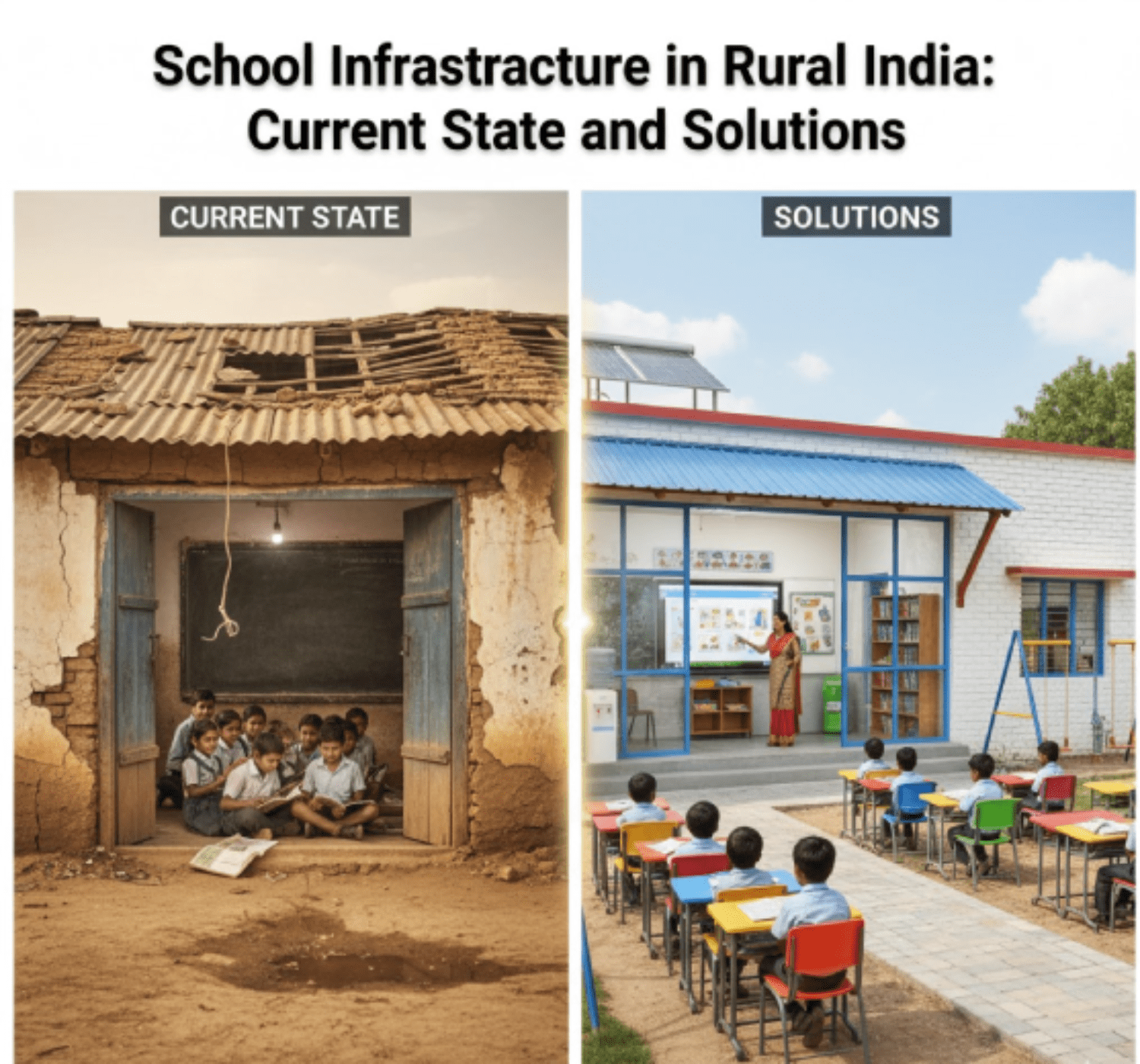
India’s education system is often described in terms of policies, reforms, and technological advancements. Rural school infrastructure India is one factor that affects learning. Schools without toilets or classrooms without roofs directly impact learningInfrastructure is more than cement and bricks . It is the foundation upon which millions of rural children’s dreams rest This article examines the current status of rural school infrastructure.It highlights the gaps in school building conditions and suggests practical solutions for school development needs. Current State of Rural School Infrastructure in India India has made significant investments in education over the past two decades.The government has increased enrollment rates through schemes such as Sarva Shiksha Abhiyan and Samagra Shiksha Abhiyan. However, infrastructure remains unevenly distributed. Some schools have upgraded classrooms and digital laboratories, but many still lack the basic facilities rural schools need, such as safe drinking water, toilets with electricity, and appropriate flooring. The Ministry of Education has revealed that more than 30 percent of schools in some states are in poor school building conditions. This makes it difficult for students to learn in an environment where they feel safe and motivated. The education infrastructure problems that rural India faces are highlighted by the lack of libraries and overcrowded classes, as well as leaking roofs during the monsoon season. School Building Conditions: Ground Reality The state of the school buildings speaks volumes about neglect and inequality. In rural areas, temporary classrooms constructed with tin or mud are still common. There are many schools that do not have boundary fences, exposing children to danger. School building conditions have a direct impact on attendance and dropout rates. Children in classrooms that are poorly constructed often miss class during the harsh summer or when it rains heavily. When the infrastructure is not adequate, teachers also find it hard to teach. In rural education, improving structural stability, ventilation, and space are among the most urgent school development needs in rural education Basic Facilities Rural Schools Should Provide Infrastructure is not just the classroom. It is an ecosystem of facilities which facilitates effective teaching and learning. The following are some of the most important basic infrastructure rural schools should have: Toilets that work for both girls and boys. Lack of sanitation is a major factor in the higher dropout rates for girls. Rural schools are concerned about the safety of drinking water. Many rural schools rely on hand-pump systems or don’t have clean water available at all. Electricity and Lighting: Without electricity, digital education or simple evening study sessions are impossible. Playgrounds and activity zones – Recreational activities are essential to physical and mental development. Children’s curiosity and practical skills are developed in libraries and laboratories. Education Infrastructure Problems: Holding back Progress In rural areas,education infrastructure problems persist despite policy initiatives. Inadequate funding, delays in implementation, and a lack of community participation are the main causes for many issues. The situation is made worse by teacher absenteeism, high student-to-teacher ratios, and teacher absences. Some states have space problems, and schools are forced to share buildings or operate multiple shifts within the same facility. Rural children are also unable to compete in a world increasingly dominated by technology because of a lack of digital infrastructure. These gaps highlight the urgent school development needs that must be addressed to prevent further inequality. Community participation and local solutions Participation of the community is a powerful tool to overcome challenges in rural school infrastructure India. Villagers and local panchayats can play an important role in maintaining and upgrading buildings and facilities. The success stories of Kerala and Himachal Pradesh show that when communities are involved, school building conditions significantly improve. Smaller interventions, such as rainwater harvesting or low-cost digital classes, can help transform the basic facilities rural schools need. These examples show how ground-level projects, combined with government assistance, can have a long-term effect. Policy Measures to Strengthen Infrastructure Government intervention remains crucial. It is not enough to fund the construction, but policies must also include maintenance and monitoring. By strengthening schemes under the Samagrashiksha Abhiyan and encouraging private partnerships as well as ensuring that every rupee spent is transparent, education infrastructure problems can be addressed more effectively. Sustainability is also a key issue in policy. Solar power, energy-efficient materials, and designs that use solar power can help reduce costs in rural areas and promote long-term infrastructure development. Only by aligning policies to school development needs can rural children feel included. The Road Ahead India must prioritize school development needs in both terms of size and depth. Not only should we build new classrooms, but also ensure that the infrastructure is safe. It is important to create a child-friendly environment where learning can be inspiring and not burdensome. By upgrading school building conditions and providing clean drinking water, modern sanitation, as well as digital tools, the rural-urban divide could be bridged. The investments we make today will determine if future generations see education as a right or continue to struggle against physical barriers to learning. Conclusion Rural school infrastructure in India is at a crossroads.. The condition of School conditions reflect deep inequalities, despite increased access to education. Poor school building conditions and the lack of basic facilities rural schools should have threaten to undermine progress. However, solutions exist.India can meet its urgent school development needs through stronger policies, community involvement, and sustained investment.This requires not grandiose promises but concrete action to make classrooms safe, inspiring, and inclusive FAQS 1. What is the state of rural education infrastructure in India today? In state of rural school infrastructure in India is not uniform. Some schools have upgraded their facilities but many lack electricity, safe classrooms and sanitation. This creates barriers to learning. 2. Why is it important to have school buildings in rural areas? School Building conditions have a direct impact on attendance, safety, and learning outcomes. When it rains or is hot, poorly constructed classrooms can disrupt the lessons. This discourages children from regularly attending. 3. What are the basic needs of rural
The Role of Teacher Training in Improving Rural Education Quality
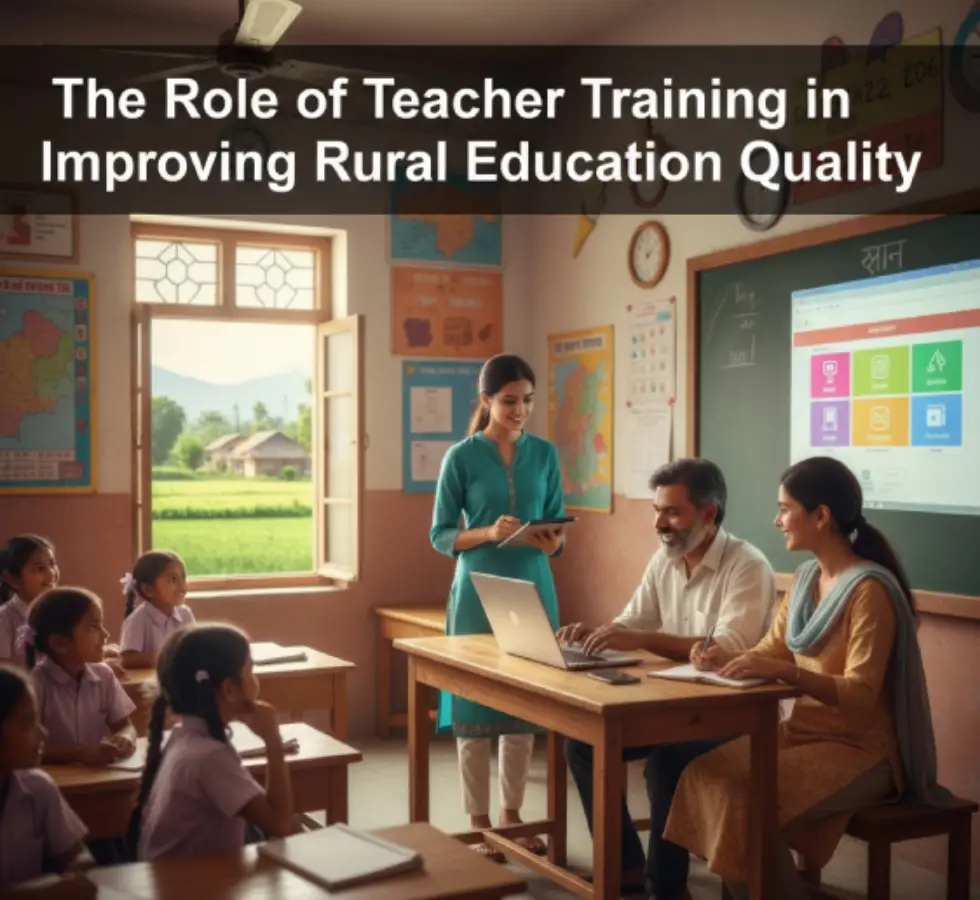
Rural education is crucial to shaping India’s destiny despite government initiatives, many schools.Rural areas struggle due to underqualified staff, poor facilities, and a lack of exposure to modern teaching techniques. To strengthen the education system, one step is essential: teacher training in rural India: Teacher training in rural India. Without the development of skilled teachers, efforts to achieve education quality improvement will not be successful. The quality of the teacher has a direct impact on student results. Well-trained educators don’t simply deliver lessons; they also inspire.This is why teacher development programs are the foundation of reforms aimed at improving rural education standards. Why teacher training is important in rural India Teachers act as a bridge between students and policies. The classroom experience is defined by the teacher’s ability to innovate, adapt, and connect with the children. Many rural schools are facing a shortage of qualified educators. The value of teacher training in rural India lies in its ability to change not only teaching methods but also community trust. When parents see teachers who are capable of guiding their children, , parents feel more confident about sending their children to school. This leads directly to improving education quality at the grassroots level Common Rural Teacher Challenges Teachers in rural areas face challenges that are very different from those of their urban counterparts. Rural teacher challenges include: Modern teaching methods are not being used by teachers Large classrooms with limited materials Balance administrative and teaching tasks Access to refresher or training courses is not adequate Lack of libraries and science labs Even the most dedicated teachers can struggle in these environments. It is difficult to concentrate on improving education quality in such environments without support. Teacher Development Programs: What is their role? Investing in teacher development programs is a great way to strengthen rural schools. These programs provide teachers with the tools they need to improve their classroom management and update their knowledge. Workshops, online sessions, and mentoring programs all play a part in the transformation of rural teaching. Development programs provide educators with training in digital literacy, inclusive teaching, and life skills. They ensure that education quality improvement across regions by addressing rural teacher challenges. Rural Schools can benefit from teacher training The benefits of teacher training in rural India are immediate as well as long-term. Some of the key benefits include: Interactive teaching increases student engagement Structured lesson planning improves academic performance Students find learning fun, reducing dropout rates Strengthening community faith in schools Teachers who are empowered and feel valued will be motivated to do their best. Students succeed when teachers grow. Each step towards improving education quality has a multiplier effect on future generations. Innovative Training Approaches The traditional workshop is not enough for modern teacher training. Rural educators require flexible and context-specific teaching methods that are adapted to their local environment. Teacher Development Programs can be supported by peer-to-peer groups, mobile micro-courses, and collaborations between the government and NGO. Digital platforms are of particular importance. Online modules can be used to introduce teachers in remote areas to global teaching methods and new methods. Organizations such as Vidyalaya.org demonstrate how technology-driven solutions can improve accountability and outcomes, and support teacher management. Education Quality Improvement: A shared Responsibility Education quality improvement cannot be left to teachers alone. This requires collective responsibility by policymakers, administrators and parents. Training is more effective when there are strong monitoring systems, incentives to rural educators and upgrades in infrastructure. By creating resource-sharing hubs that allow multiple schools to access labs, libraries, and digital content, you can reduce the pressure on each institution. These initiatives are more sustainable and effective when they align with Teacher Training in Rural India. Rural Education: Practical Steps to Improve Rural Education Some actionable steps to overcome rural teacher challenges and enhance learning include: All teachers should receive regular refresher training Materials to help teach local languages Teachers in remote areas can be offered incentives to work there Blended learning is the use of both digital and offline tools Share best practices through peer mentoring networks These measures can make rural education more accessible and effective. They also pave the way to meaningful education quality improvement . FAQs 1. Why is it important to train teachers in rural India? Teachers need to be trained in modern methods and skills. Students in rural India are at a disadvantage without strong teacher training in rural India 2. What are the most significant challenges facing rural teachers? The most common rural teacher challenges include the large class size, lack of resources and training, as well as administrative burdens. All of these factors reduce classroom quality. 3. How can teacher development programs enhance education? Teacher Development Programs assist educators in upgrading skills, adopting new methods, and engaging students better. These efforts lead directly to improving quality education in rural classes. 4.What steps ensure education quality improvement in villages? In order to achieve a sustainable improvement in education quality, it is necessary to have training programs, upgrade infrastructure, involve parents, and receive community support. Collaboration with platforms such as Vidyalaya.org can also have a long-term effect. Teachers need to be trained in modern methods and skills. Students in rural India are at a disadvantage without strong teacher training in rural India The most common rural teacher challenges include the large class size, lack of resources and training, as well as administrative burdens. All of these factors reduce classroom quality. Teacher Development Programs assist educators in upgrading skills, adopting new methods, and engaging students better. These efforts lead directly to improving quality education in rural classes. In order to achieve a sustainable improvement in education quality, it is necessary to have training programs, upgrade infrastructure, involve parents, and receive community support. Collaboration with platforms such as Vidyalaya.org can also have a long-term effect. Conclusion Teachers are the backbone of India’s educational system. To improve rural schools, teacher training in rural India is essential. It must address both skills development and context challenges. By implementing continuous
How Poverty Affects Education: Understanding the Barriers to Learning
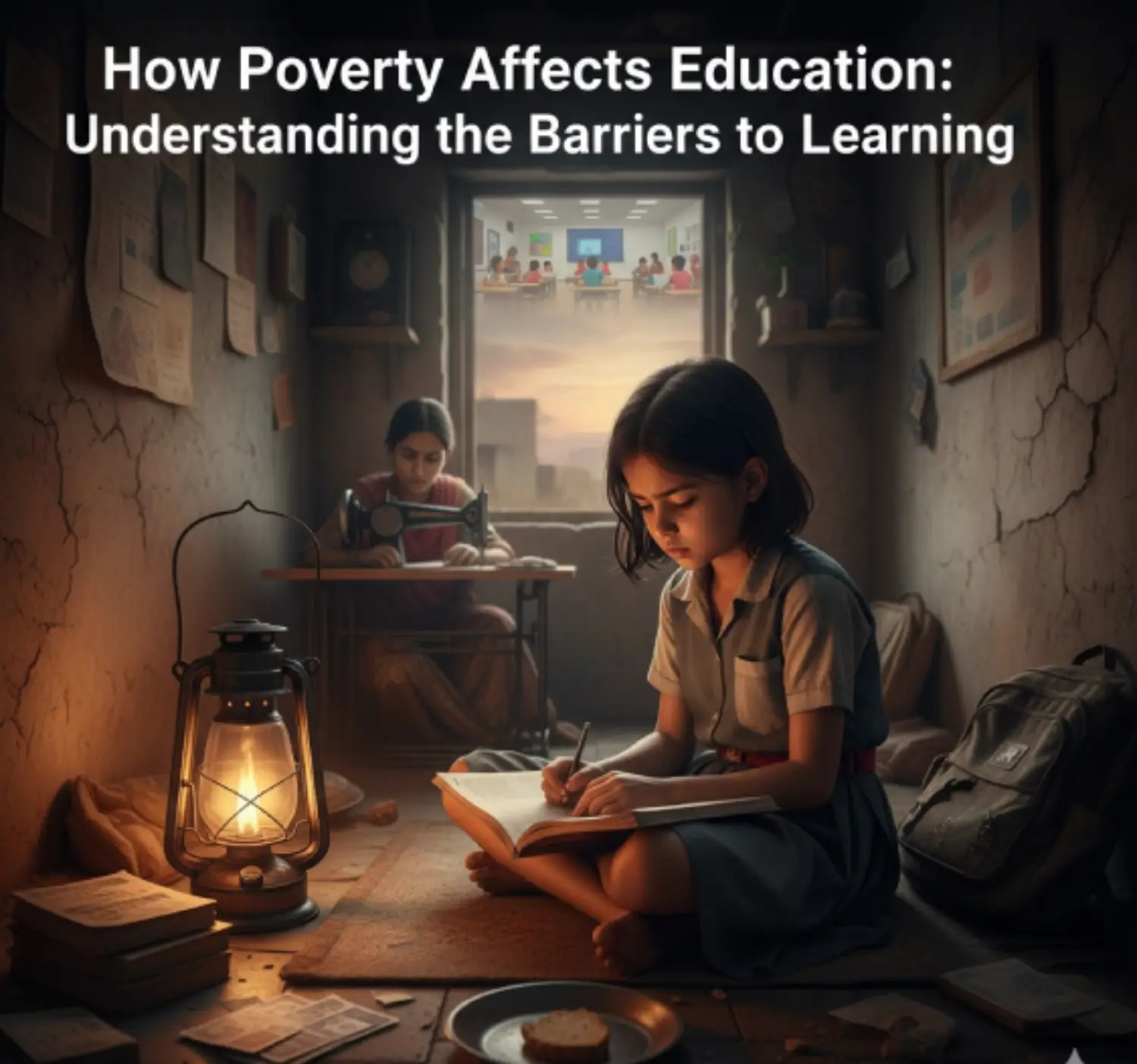
Education is often referred to as the great equalizer. However, in reality, it is not available to all. Millions of Indian children struggle to get a good education due to poverty. In India, the relationship between poverty and education is complex. Financial struggles impact every aspect of learning – from attending school to remaining motivated to complete studies It is a vicious cycle: Without education, children are trapped in low-income situations, and without financial assistance, they can’t access quality education. To create equal opportunities, it’s important to examine the barriers and challenges that exist, as well as possible solutions, to overcome the deep-rooted links between poverty and education in India. Understanding socio-economic barriers to education Socioeconomic barriers to education include all obstacles that children from low-income families face when trying to access learning opportunities. They include costs for transportation, uniforms, school supplies. Families often place immediate survival above long-term learning. Parents often pull their children out of the classroom to earn money, which is one of the main causes of education inequality. The gap between rich and poor students continues to grow Child labor and its impact on education In India, the impact of child labor on education is significant. To support their families, millions of children are forced to work in low-paying jobs. Once a child starts working, it becomes extremely difficult to return Instead of learning math, science, or reading, children spend hours in the fields, in factories, or doing domestic work. Not only are they deprived of formal education, but their chances of escaping poverty in the future are also diminished. In India, tackling child labor is crucial to breaking the cycle of poverty and poor access to education in India. Student Economics: Challenges and Opportunities Many families consider sending their children to school a luxury. The economic challenges students face are many, ranging from the hidden costs of education to a lack of digital resources. Even though public education is free, extra expenses like books, transportation, and exam fees can create financial stress.. These challenges intensified during the pandemic. Children from wealthy households were able to continue their classes online while poorer students did not have access to devices or the internet.These structural gaps highlighted and showed how education inequality keeps repeating. Hidden Costs of Learning Hidden costs are one of the greatest obstacles to bridging the gap between poverty and education in India. Indirect expenses deter many families, even though policies aim to provide free education. These costs include: Costs of uniforms, study materials, and other school supplies Exam fees and extra coaching Transportation costs for students commuting from rural areas The loss of household income when children attend school These socioeconomic barriers to education are largely responsible for the high dropout rate in India, preventing many children from completing their education. Causes of Educational Inequality The roots of inequality run deeper than money.The causes of educational inequality include poor educational infrastructure, a shortage of qualified teachers, and unequal distribution between rural and urban schools. Many rural schools lack electricity, safe drinking water, or adequate classrooms. Inadequate sanitation facilities are a major reason for female students to drop out. These systemic issues widen the gap, making rural children more susceptible to the effects of poverty and education in India. Role of government and policy Government initiatives such as the Right to Education Act and midday meal programs address these challenges. The provision of meals improved attendance, while free books and scholarships helped to reduce costs. However, the impact of these policies is limited if they do not also address socioeconomic barriers to education. For long-term success, it is essential to have stronger monitoring systems, better teacher training, and more community involvement Platforms like Vidyalaya.org can help by providing school management systems to improve transparency and access in education. Benefiting both teachers and students. Participation of the Community and Non-Governmental Organizations Government initiatives cannot solve the deep-seated issues of education and poverty alone. Local communities and NGOs play a crucial role. Community-based learning programs, vocational training, and sponsorships to help low-income kids have been impressive. By pooling resources and encouraging community involvement, grassroots initiatives combat basic educational inequalities causes They also ensure children don’t fall through the cracks. Supported by organizations such as Vidyalaya.org, many digital learning projects help to expand access in underprivileged areas. Breaking the cycle of poverty through education Breaking the cycle of poverty requires addressing child labor education impact, affordable schooling, and reducing dropouts. Education can transform families and entire communities. But this transformation requires structural and social changes. Solutions include localized teaching in regional languages, digital access, and vocational training. To have a long-term effect, it is important to empower families to view education as a positive investment and not merely a burden. FAQs on How Poverty Affects Education 1. What is the impact of poverty on education in India? Poverty limits access to education, increases dropout rates, and limits opportunities. The connection between poverty and education in India demonstrates how economic hardship directly affects learning. 2. What are the main socioeconomic obstacles to education? The most significant socioeconomic barriers to education are financial difficulties, lack of infrastructure, and hidden costs of schooling, as well as poor nutrition. All of these factors lower academic performance. 3. How does child labor affect education? The Child Labor Education Impact has a severe impact on children. They are taken away from the classroom and forced to work, preventing them from achieving academic success. 4. What are the main causes of educational inequality in India? Uneven resource distribution, teacher shortages, rural-urban divides, and inadequate facilities in marginalized areas are the main educational inequality causes Poverty limits access to education, increases dropout rates, and limits opportunities. The connection between poverty and education in India demonstrates how economic hardship directly affects learning. The most significant socioeconomic barriers to education are financial difficulties, lack of infrastructure, and hidden costs of schooling, as well as poor nutrition. All of these factors lower academic performance. The Child Labor Education
Digital Divide in Indian Education: Bridging the Gap for Rural Students
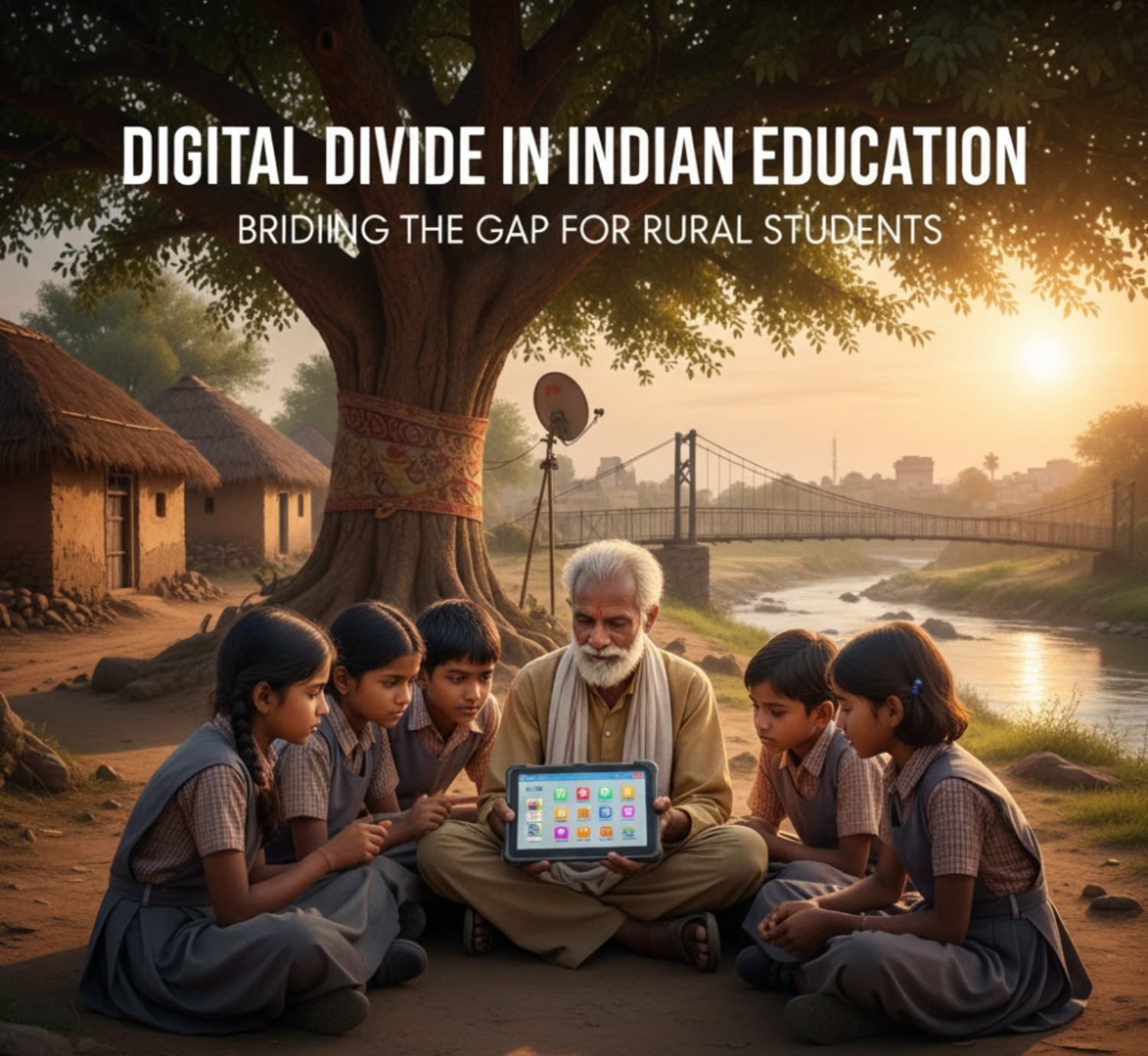
India’s rapid digital transformation has revolutionized urban education, but the digital divide in India education remains a critical challenge. While urban students access high-speed internet and smart devices effortlessly, millions of rural students face severe technology access barriers. This educational technology gap—spanning internet connectivity in rural schools, device availability, and digital literacy—threatens to undermine educational equality. The COVID-19 pandemic exposed this divide dramatically. As online learning became essential, rural students’ technology access proved inadequate, leaving millions behind. Addressing online learning challenges in India requires urgent, comprehensive solutions to bridge the gap between villages and cities, ensuring every child can participate in digital education regardless of location Understanding the Digital Divide in Education The digital divide in Indian education is the difference between students with and without access to technology. The digital divide is not just limited to devices and the internet, but includes everything. According to the National Sample Survey (2023), while 96% of urban households have access to at least one digital device, only 54% of rural households do. The educational technology gap becomes even more pronounced when examining high-speed internet access—available to 85% of urban schools but merely 25% of rural schools Quality content is available for all. Teachers are trained to use digital tools Infrastructure and electricity: Reliable power The affordability of smartphones, laptops or tablets Online classes are routine for urban families. For rural children, watching even a single educational film can be difficult. This imbalance exacerbates social inequality. Addressing these multifaceted issues requires understanding how internet connectivity in rural schools, rural students’ technology access, and the broader educational technology gap intersect to create online learning challenges in India Digital Divide: Urban vs Rural Students This comparison highlights the significant educational technology gap and explains why access to technology for rural students remains a critical policy priority. Factor Urban Students Rural Students Internet Access 70%+ households with broadband 35-40% households with any internet Device Availability Personal smartphones/laptops common One device shared by family School Infrastructure High-speed internet connectivity Poor or no internet connectivity in rural schools Teacher Training 65% digitally proficient 30% digitally proficient Learning Continuity Minimal disruption during online shifts Severe online learning challenges in India Digital Literacy High exposure from early age Limited educational technology gap understanding Rural Students’ Technology Access Challenges Rural students’ access to technology is often determined by their environment. In many villages, a smartphone is shared by multiple children within a family. Many homes lack stable electricity, making charging devices difficult. Another barrier is affordability. In 2023, a survey found that only 28 per cent of rural households were online. This is a stark contrast to urban households, where 70 percent have constant digital access. Rural learners are at risk of being left behind by today’s digitally-driven education system if they don’t get help. Improving rural students’ technology access is fundamental to closing the digital divide in India education and ensuring equitable learning opportunities Online Learning Challenges in India Online platforms have brought about flexibility, but they have also revealed gaps. Some of the key online learning challenges in India include Poor internet connectivity in rural schools The lack of affordable devices Teachers are not adequately trained to use digital tools Language barriers in digital content No dedicated study space at home can lead to distractions Rural students may also feel less confident than their urban counterparts.These online learning challenges in India disproportionately affect rural areas where the educational technology gap is widest The Educational Technology Gap Explained The education technology gap does not only concern hardware. It is a reflection of inequality in digital literacy, exposure and skills. A rural student may struggle to connect to a video conference due to poor connectivity. This imbalance impacts future employment and opportunities. Closing the digital divide in India education is not just about being fair, but also about preparing students for the digital economy. Internet Connectivity in Rural Schools Internet connectivity in rural schools is a major roadblock. UNESCO reports that inadequate internet connectivity in rural schools affects approximately 70 million students across India. Average internet speeds in rural areas (5-10 Mbps) are insufficient for video-based learning, compared to urban areas (50-100 Mbps) Some schools and villages operate without any digital infrastructure or reliable networks. The Internet is slow, expensive, and unstable, even when it is available. Schools cannot effectively adopt eLearning platforms without strong connectivity. Teachers face similar challenges when downloading resources, holding live classes or accessing digital initiatives led by the government. Rural education will continue to be behind until connectivity is stable and affordable. Initiatives to Bridge the Gap Government data shows that PM eVIDYA has reached over 25 million students since 2020, demonstrating how targeted programs can improve rural students’ technology access. However, only 40% of intended beneficiaries have consistent access, highlighting ongoing online learning challenges in India. There are several solutions to close the gap Government programs: Initiatives such as PM eVidya (Digital India) and Digital India are aimed at expanding digital learning. Low Cost Devices : NGOs, startups and other organizations are developing affordable tablets that come pre-loaded with educational material. Community Learning Centers : Shared hubs and devices with internet allow multiple students to work together. Teacher Education: Equipping teachers in rural areas with digital skills will help them better guide their students. Platforms such as Vidyalaya.org support digital education ecosystems through school management and learning tools that are more accessible. The Role of Teachers and Parents Teachers trained to work within connectivity constraints can creatively address online learning challenges in India even when internet connectivity in rural schools remains limited The issue cannot be solved by technology alone. Teachers are key to closing the educational technology gap. It is easier to adopt digital tools and blended-learning methods if they are trained. Even parents with little digital expertise can encourage students to use the tools they have. Solutions become sustainable when communities actively participate. Shared community Wi-Fi networks and group study setups, for example, can reduce the burden placed on families Practical Solutions
Government Schemes for Free Education in India – A Complete Guide
In a diverse country like India, it is important to ensure that all children have access to high-quality education. In recognition of this, the Indian government has launched multiple initiatives that make education affordable and accessible to all. Free education in India is one of the most important factors in closing the gap between privilege and opportunity. This guide examines the main free education schemes launched in the country, their goals, and the impact they have on students and the society. Why Free Education is Important Education is more than just literacy. It is empowerment. The Government of India ensures equal opportunities for children from less privileged backgrounds by providing free education. It breaks the cycle of poverty and inequality. It also prepares the younger generation with skills to thrive. Free education schemes do not just waive tuition fees; they also provide textbooks, midday meals, and scholarship funds to ensure that children remain in school. This comprehensive support increases enrollment rates and decreases dropout rates, especially in low-income and rural communities. Government of India’s Main Education Schemes India has launched several educational programs promoting free education. Here are some of India’s most important initiatives, which continue to shape the future of millions of students. 1. The Right to Education With the implementation of the Right to Education Act in 2009, education underwent significant transformation. The act established free and mandatory education for children ages 6 to 14 as a fundamental right. Private schools are required by this free education program to set aside 25% of their seats for students from underprivileged families. 2. Sarva Shiksha Abhiyan (SSA) The United States launched the SSA in 2001 with a goal to universalize education. The program offers free uniforms, textbooks, and learning materials. It also addresses infrastructure and teacher-training issues. This is one of the most important free education programs in India. 3. Midday Meal Scheme The program combines hunger and education by providing free, nutritious meals at schools. The program aims to improve attendance and malnutrition, as well as encouraging parents to send their kids to school regularly. 4. Kasturba Gandhi Balika Vidyalaya (KGBV) KGBV is an NGO that is based on the education of girls. It establishes residential schools for girls in marginalized communities. This free educational scheme promotes gender equity by ensuring that girls do not drop out of school due to social or financial barriers. 5. National Scheme of Incentive for Girls to Secondary Education This initiative provides financial incentives for girls who finish primary school and go on to secondary education. The scheme works to strengthen the ecosystem for free education in India by combining financial support with awareness. Benefits of Government Schemes Success of a Free Education Scheme is measured by the impact it has on literacy rates and gender equality. Some of the benefits include: The number of students enrolled in public and private schools has increased. Dropout rates , particularly those from marginalized groups and communities, will be reduced. Improved health and nutrition with meal-based programs Enhance opportunities for future employment and skill-building. These results show that free education is not just a social responsibility but a smart investment in the nation’s future. Enhancing Productivity and Skills through Education Free education schemes must also focus on skill development to prepare students for today’s challenges. Government schemes emphasize digital learning and practical knowledge, which help students to build confidence and productivity. Platforms such as vidyalay.org extend the reach of government initiatives by providing digital resources and tools that complement classroom learning. India’s youth can be better prepared for the workforce of tomorrow by combining free education with skills training. Challenges in Promoting Free Education in India Despite the progress made, these initiatives still face effectiveness challenges Particularly in rural areas, there is a shortage of trained teachers Inadequate school infrastructure includes insufficient toilets, classrooms, and libraries. In conservative areas, social barriers discourage girls from pursuing an education. Parents are unaware of the available schemes. These obstacles show that while free education schemes provide opportunities, it is necessary to monitor the program and involve the community in order to ensure long-term success. The role of awareness in promoting free education The success of free education in India depends on awareness levels. Many families in remote areas are not aware of the government schemes and their benefits.By spreading awareness through local campaigns, non-profits, and digital platforms, we can ensure eligible children don’t miss out Vidyalay.org and other online resources, such as , play a crucial role in raising awareness of this issue by providing information and resources to parents, educators and communities. People are more likely to support and use these programs when they understand the importance of education. The Future of Free Education in India India’s future vision includes not only enrolling children in schools but also ensuring they receive quality education to prepare them for the globalized world. The next phase of free education schemes will likely focus on: Online learning and digital classrooms are expanding. Integration of vocational training and employability Skills Better teacher training to improve educational standards Promoting inclusion for children with disabilities By addressing these areas, India can create a more robust and equitable education system Final thoughts The push by the government for free education in India is one of India’s most important steps. Each free educational scheme is only as successful as its implementation, participation of the community, and innovation. Platforms such as vidyalay.org show us how knowledge should be accessible to all children, regardless of their background. The free education scheme is about creating a new generation of confident, skilled and knowledgeable people that can lead India to a more prosperous and sustainable future. FAQs 1. Why is free education important in India? In India, children from poor backgrounds are eligible for free education, which includes meals, textbooks, tuition and scholarships. These efforts are complemented by platforms like vidyalay.org, which offer digital resources that make learning accessible to all. 2. What are the major government schemes that provide
Right to Education in India: Importance & Responsibilities Under RTE
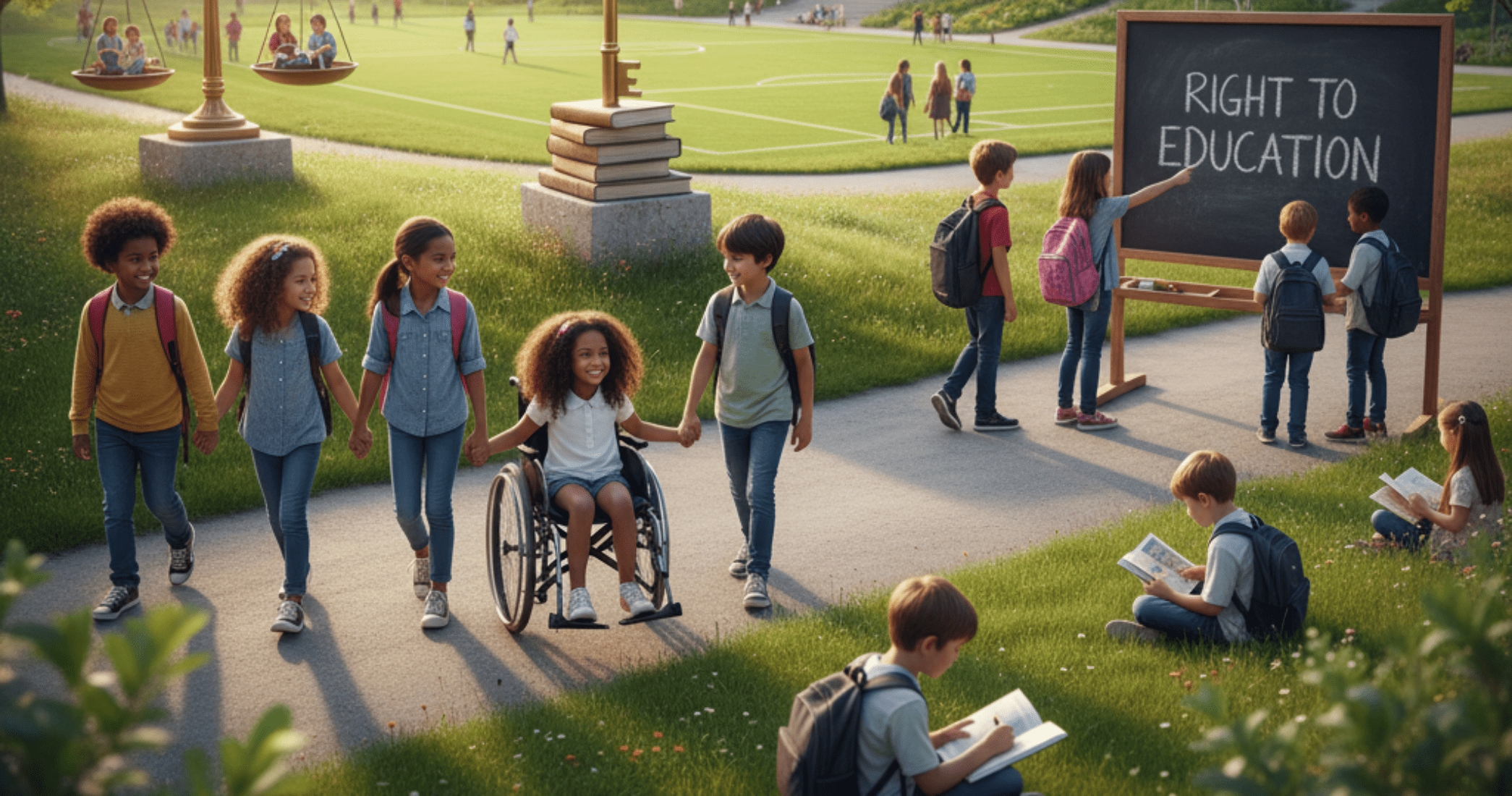
Education is more than just classrooms and books. It is the foundation for a progressive, democratic society. Access to quality education in India was once only available to a select few. This changed after the Right to Education Act. India has taken a major step in ensuring that all children, no matter their background, have the chance to grow and learn. The Right to Education (RTE ) has changed the way that we look at schooling, equity and responsibility within the education sector. What does this actually mean? Why is it so important? And what are the responsibilities that it places on government, schools and society as a whole. Let’s get started. Understanding the Right to Education of Indian Children The right to education guarantees that children aged 6-14 receive a free and compulsory educational experience. In 2009, India became one of few countries where education was made a legal right. To better understand let’s begin with the RTE full form in education Right of Children to Free and Compulsory Schooling. It is a simple phrase that comes with a great responsibility: providing an education inclusive for all children, especially those from marginalized groups. The Right to Education Act also mandates that no child be denied admission to school on the basis of caste, religion, gender, or economic status. Inclusion is the key to a more equal society. Why Education is Important Education is more than just literacy, it’s empowerment. Lack of education can prevent children from achieving financial independence, employment and making informed decisions. The Right to Education seeks to close this gap through equal opportunities. RTE is essential for many reasons. Bridging Inequality: This reduces social inequality by providing equal learning opportunities to all children, rich or not. Economic empowerment : A well-educated population contributes to the growth and development of a nation. Social inclusion Education promotes tolerance, inclusivity and equality. Foundation of rights awareness : Children are taught their rights and responsibilities at a very young age. The Right to Education Act, which focuses on access, has opened the door for millions of kids to dream without boundaries. Objectives Of RTE Act The objectives of RTE Act 2009 go far beyond opening the school gates. Its vision is to create a solid educational foundation, while also ensuring quality and inclusivity. Some of the major objectives include: All children between 6 and 14 years old are entitled to free education. Eliminating discrimination from schools and classrooms Assuring minimum infrastructure, such as safe classrooms and drinking water. To ensure that students receive individualized attention, maintain the ratio of pupils to teachers. Promote child-centric learning rather than rote memorization. Ensure quality education by ensuring that teachers are trained. These objectives emphasize that the right to education does not just concern access, but also quality and equity. Responsibilities under the Right to Education It is not enough to pass a law; it must be implemented effectively. The Right to Education Act assigns responsibility to multiple stakeholders. 1. The role of the government It is the state’s primary responsibility to make sure that schools are properly equipped, have well-trained teachers, and are funded to operate effectively. 2. The role of schools Private schools must reserve 25% of their seats for children who come from the economically weaker sections. The private schools must also avoid screening tests and capitation fees. 3. Parents’ role It is the parents’ responsibility to enroll and encourage their children’s regular attendance. Many parents from rural and poor urban communities are unaware of their children’s right to education. 4. The Role of Society Civil society platforms and organizations like vidyalay.org often support awareness campaigns and educational initiatives that complement government efforts. The Act makes education a collective effort by dividing responsibilities. Challenges to Implementation The Right to Education has a transformative effect, but it is not always easy to implement. Some schools still lack proper infrastructure. Teacher shortages, insufficient monitoring and dropouts are still pressing concerns. In addition, the RTE full form in education is not widely known in India. It is equally important to bridge this information gap as it is to build classrooms. The Right to Education: Benefits Despite its challenges, Right to Education Act delivered significant benefits. Millions of previously excluded children are now in school. The social acceptance of equal educational opportunities has increased. Some of the main benefits include: Increased enrollment for girls and children from underprivileged groups. An increase in literacy rates across all states Focus on holistic and inclusive development. Parents need to be more aware of their rights as parents. Implementing the objectives of RTE Act 2009 effectively will result in a society that is more empowered and equitably distributed. Strengthening RTE The Right to Education has been a milestone, but must evolve to meet changing needs. The next steps are to improve teacher training, update curricula and integrate technology into classrooms. vidyalay.org plays an important role in spreading awareness and providing educational materials. India can continue to benefit from the Right to Education Act by collaborating with government, NGOs and digital platforms. Final Thoughts The Right to Education Act does not only represent a law, but a promise. The Right to Education Act is a promise that all children in India will have equal access to education, growth, and knowledge. Understanding the RTE full form in education and the objectives of RTE Act, 2009 as well as the challenges that it assigns will help us to appreciate the importance of education for national progress. India’s future depends on our ability to uphold this right. It is not only the responsibility of the government to ensure quality education for everyone, but also that of society collectively. When implemented in true spirit, Right to Education has the potential to transform the lives of individuals and the future of a nation. FAQs 1. What is the Right to Education Act? The Right to Education Act in India guarantees free and mandatory education to children aged between 6-14. This act promotes inclusivity, and
Why Raising Awareness on Girl Child Education Is Key to Gender Equality
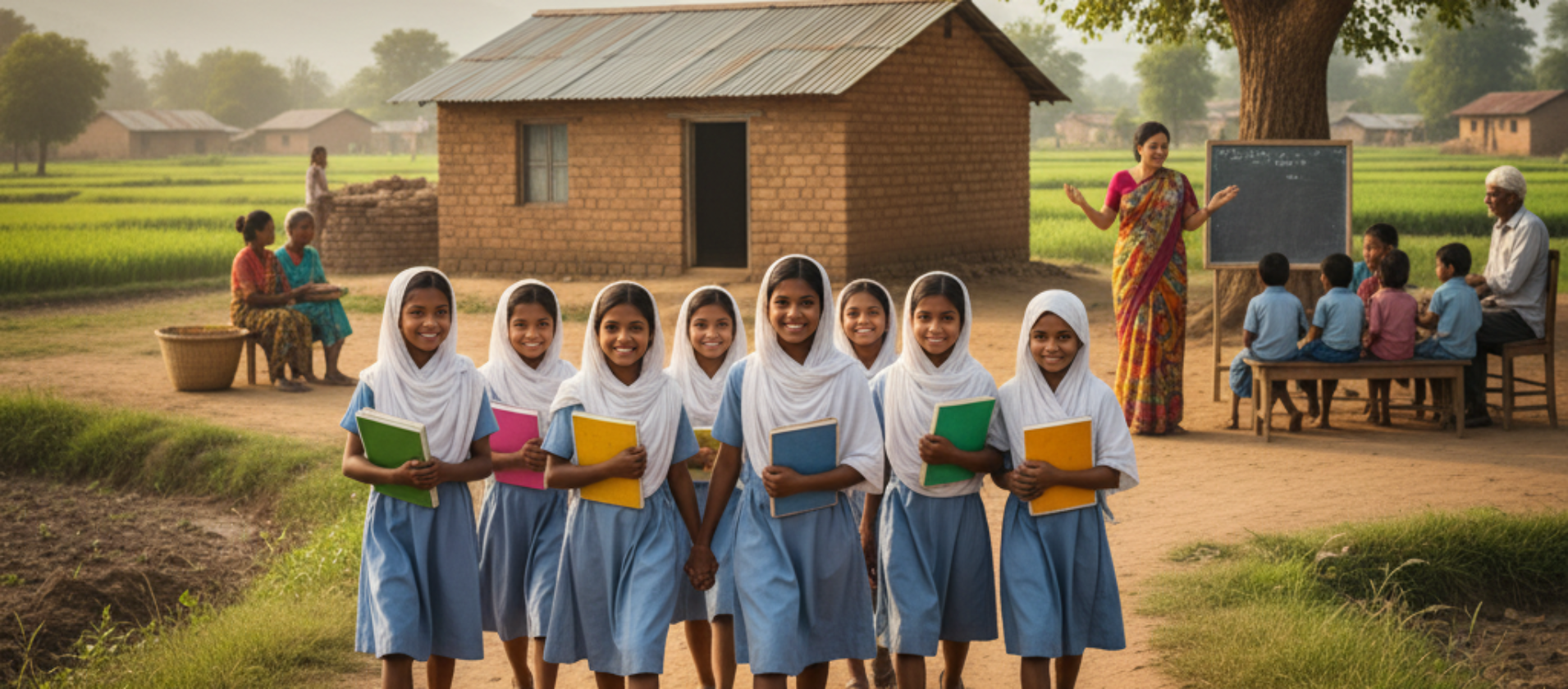
Gender equality is recognized as a key pillar in building a sustainable and just society. Education is at the core of this vision. When we speak of progress, raising awareness about girl child education is not only a matter of fairness but also a necessity for economic, cultural, and social development. Millions of girls face barriers to learning due to poverty and cultural norms; they also lack access to quality education. To close the gender gap, it is essential to address these barriers through education. The Link Between Education and Gender Equality Education is the basis for equal opportunity. Girls who attend school are better able to end cycles of poverty and advocate for their rights. They can also participate in the decision-making process. Education is the key to gender equality because it levels the playing field Girls who finish their education are more likely to delay marriage and have better career prospects. They also raise healthier families. They gain more than just confidence. They also acquire agency and challenge the traditional structures that limit women.It is because of this ripple effect that the importance of girls’ education cannot be overstated Girls’ Barriers to Education In many places, girls still lack opportunities to learn. Families tend to prioritize the education of boys, leaving girls with more household duties.The situation is made worse by the lack of sanitation in schools, dangerous travel routes, and financial constraints. Cultural norms play an essential role. Awareness campaigns are vital in societies where the education of girls is viewed as inappropriate or unnecessary. They help change attitudes and enable parents and communities to see the value of girls’ education. Raising Awareness: What It Means The first step towards change is awareness. Building schools is not enough if families and communities don’t support the girls who attend them. Societies can dismantle stereotypes by raising awareness of the benefits of education for girls. When awareness campaigns feature stories of women who have achieved success through education, they inspire families to reconsider their outdated beliefs. Local organizations, schools and digital platforms can help. Online initiatives like vidyalaya.org demonstrate how technology can be used to bring educational awareness and resources beyond the traditional classroom Benefits of Girl Child Education Gender equality has a strong economic component. Educated girls become women who contribute meaningfully to society . According to studies, nations with higher rates of female literacy have greater economic growth. Women’s equal participation in the workforce increases productivity and household income .This strengthens communities and improves a nation’s economy. Raising awareness helps people understand that girl child education isn’t charity but an investment with lifelong benefits Empowering girls to shape the future Education is more than just teaching literacy and numeracy. It equips girls with critical thinking and leadership skills that prepare them to fight inequality. When girls know their rights and are equipped with the tools to enforce them, they can become change agents in their community. Development Skills for Girls In addition to educating girls, it is crucial that they also acquire practical skills to prepare them for their future. Skill-building is essential to ensuring that girls can thrive in the modern economy. The following are the key skills that girls learn through education: Digital Literacy – Bridging the digital divide and opening up global opportunities. Problem-solving – encouraging innovation and resilience. Communication and Leadership: Prepare them for decision-making roles. Independence: The freedom to make decisions about goals, careers, and life paths Families and communities can see that girls’ education encompasses more than just academic learning. It is also about preparing them to contribute confidently and productively to society. Role of technology in spreading awareness Technology has revolutionized the way that awareness is raised. Social media campaigns, online learning resources and virtual classrooms help to reach out to even the most remote regions. Digital platforms such as vidyalaya.org help overcome these barriers by offering safe, accessible online learning from home They offer resources that overcome barriers of geography and stigma. Globally, the widespread use of smartphones and the internet has made it easier to spread awareness about the importance and value of girls’ education. Videos, success stories, and data-driven campaigns can inspire action and influence policies. Challenges of Awareness Campaigns The challenges are still there, despite the progress. In conservative societies where tradition is strong, awareness campaigns often meet with resistance. Funding may be lacking for consistent initiatives. Without proper monitoring, campaigns may raise awareness but fail to translate into actual enrollment increases. For campaigns to be successful, they must be inclusive, long-term, and community-driven. Parents, religious and political leaders, and local influencers can help ensure that awareness messages are more effective and have greater impact. Education as a path to equality and justice Without a focus on girls’ education, achieving the global vision of gender equality cannot be realized. Education gives girls dignity, independence and the opportunity to fight systemic discrimination. When girls have equal access to education, they can participate in all areas of life – from politics and economics to culture and scientific fields. Global initiatives, local NGOs, and schools must work together to ensure that awareness campaigns become part of a larger, sustained social justice movement rather than temporary efforts. Societies can create an inclusive environment by prioritising the education of girls. Conclusion Raising awareness about girl child education is not just a campaign; it’s a move towards equality. Societies can achieve gender equality by challenging outdated norms and showing families tangible benefits from education. To have gender equality in a society , every girl must be allowed to grow and learn. Platforms like vidyalay.org show how collective efforts can help support this vision. Education gives girls a chance to have a voice and a sense of identity. Gender equality is a reality when communities, governments and individuals work together to raise awareness. Education can empower one girl and inspire generations, proving that real progress starts in the classroom. FAQs 1. Why does girl education matter for society? Girls’ education promotes gender
The Importance of Quality Education in Achieving Sustainable Development
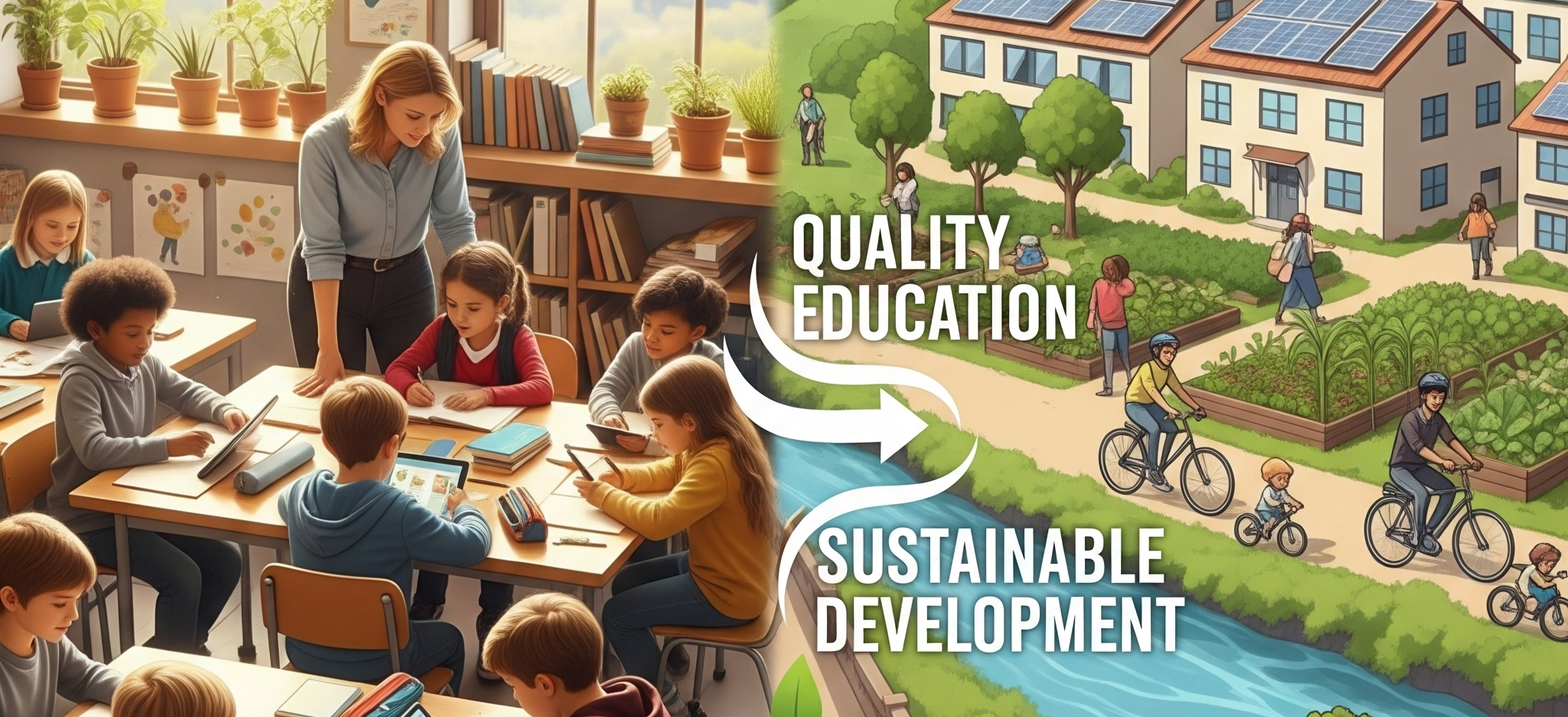
Education has always been the primary driver of progress, and understanding why education is essential is crucial. In today’s world, the role of education in sustainable development is inextricably linked to building sustainable societies, developing future leaders, and ensuring equal opportunities for all. Quality education is crucial for long-term growth and is a key pillar of the Sustainable Development Goals framework. It forms the foundation for a nation’s social, economic, and cultural development. Why Quality Education Is Important for Sustainable Development The role of education in sustainable development entails meeting current needs without jeopardising the future. To realise this vision, people must have the knowledge, values, and skills to drive innovation while preserving social and environmental balance. In this case, quality education is critical. This is because it teaches not only academic knowledge but also critical thinking, problem-solving, and responsibility skills, all of which are required for society to thrive. Children who receive quality education learn more than just math and science. They also learn how to make decisions that affect both their community and the environment. Schools promote inclusion and holistic development, which helps shape citizens who value sustainability and equity. This explains why we need education, not only to achieve academic success but also to cultivate values and skills that preserve social and ecological balance. Promoting Economic Growth through Education A strong economy cannot exist in the absence of a skilled and educated workforce. The role of education in sustainable development is to improve employment in the country and productivity while encouraging entrepreneurship. For countries that invest heavily in education, the result can be significant GDP growth and innovation. Workers with an educational background are more innovative, can quickly adapt to new technology, and are better prepared to meet global challenges. According to research, each additional year of education can increase an individual’s earning potential while also benefiting the overall economy. Therefore, education benefits both individuals and the economy as a whole. This shows why we need education in order to create a workforce that is capable of supporting innovation, entrepreneurship, and long-term growth. Empowerment and Social Equity Reduced inequalities are one of the most important aspects of education. Education for sustainable development can help to bridge the divide between different segments of society. When children from disadvantaged backgrounds have equal access to education, they will have the same opportunities for success. Education is essential, particularly for women. According to research, educated women are more likely to contribute to community development and make decisions. also have a better chance of keeping their family healthy. This avalanche effect shows how education is critical to achieving social equality and sustainable growth. Education and Environmental Awareness Humans who are aware of environmental issues and challenges will contribute positively to our planet’s future. Climate change, biodiversity loss, and global warming are issues that require widespread attention. High-quality education incorporates environmental studies, sustainability, and global citizenship into the learning process Schools prepare students to become environmentally conscious citizens of tomorrow by teaching them about renewable energy, conservation, and responsible consumption. Online resources such as vidyalay.org play a crucial role emphasising the importance of providing urban and rural students with access to learning platforms that promote environmental awareness. Developing Skills for a Sustainable Future Education for sustainable systems must adapt in order to teach students how to collaborate across industries, solve real-world problems, innovate responsibly, and work together. Quality education fosters the following essential skills: Critical thinking and problem solving – Equipping students to face necessary challenges. Digital literacy refers to preparing people for a technology-driven economy. Collaboration enables teamwork among people from various backgrounds Adaptability gives learners the ability to adapt to rapidly changing environments. These skills are essential for creating sustainable communities that rely on innovation and collaboration. Improving Access to Technology for Quality Education Technology has transformed education. Digital learning platforms allow students to access high-quality resources even from remote locations. Online classes, smart classrooms, and eLearning modules have all helped to bridge the gap that previously prevented many children from accessing a basic education. NGO’s like Vidyalay.org demonstrate how technology can democratize education for underprivileged populations. Digital tools can promote long-term growth in individuals and societies by making resources more affordable and accessible. Challenges in Providing Quality Education Despite the benefits, there are some challenges. Millions of children lack basic infrastructure and access to qualified teachers. Rural areas are frequently underfunded, while urban areas may be overcrowded and provide unequal opportunities. Another issue is that traditional curricula do not align with the skills required in modern society. Students who do not receive up-to-date education may be unprepared for long-term development. Closing these gaps will require global cooperation, policy changes, and community-driven initiatives aligned with the sustainable development goals quality education target Education is a global responsibility The United Nations has a number of priorities. Sustainable Development Goals quality Education, making it the most important global objective. To reach this objective, governments, non-governmental organizations (NGOs), and educators must collaborate. Building schools is important, but creating educational systems that prioritize lifelong learning and sustainability is equally essential To provide equal access to education for all children, international organizations and local groups must work together. Inclusive solutions like Vidyalay.org become increasingly essential for successfully reaching global goals Conclusion Nobody can deny that quality education is an important factor in achieving sustainable development. Education is the common thread that connects all aspects of sustainability, including economic growth, social justice, environmental awareness, and skill development. A world that invests in its students invests in its own future. Societies can positively influence future generations by ensuring that every individual has the opportunity to learn, grow, and innovate. Education is more than just a way to achieve personal success. Education is the foundation for a sustainable and equitable world. FAQ’s 1. Why is quality education important for sustainable development? Quality education is important because it equips individuals with academic knowledge, critical reasoning, problem-solving, and responsibility skills. It promotes social inclusion, environmental consciousness, and decision-making abilities. All