Education is advancing rapidly as new teaching techniques and learning methods are being developed to meet the needs of each student. Most likely to be among about alternatives to traditional schools, ie, educational cafes, which provide an alternative to the traditional school system.
With the growing number of questions from parents, students, and educators about the effectiveness of a one-size-fits-all education, comparing learning outcomes between these two models is essential.
This blog discusses how traditional schools and education cafes influence students’ performance, engagement, and ability to make informed choices about the future.
Understanding Education Cafes: A Modern Approach to Learning
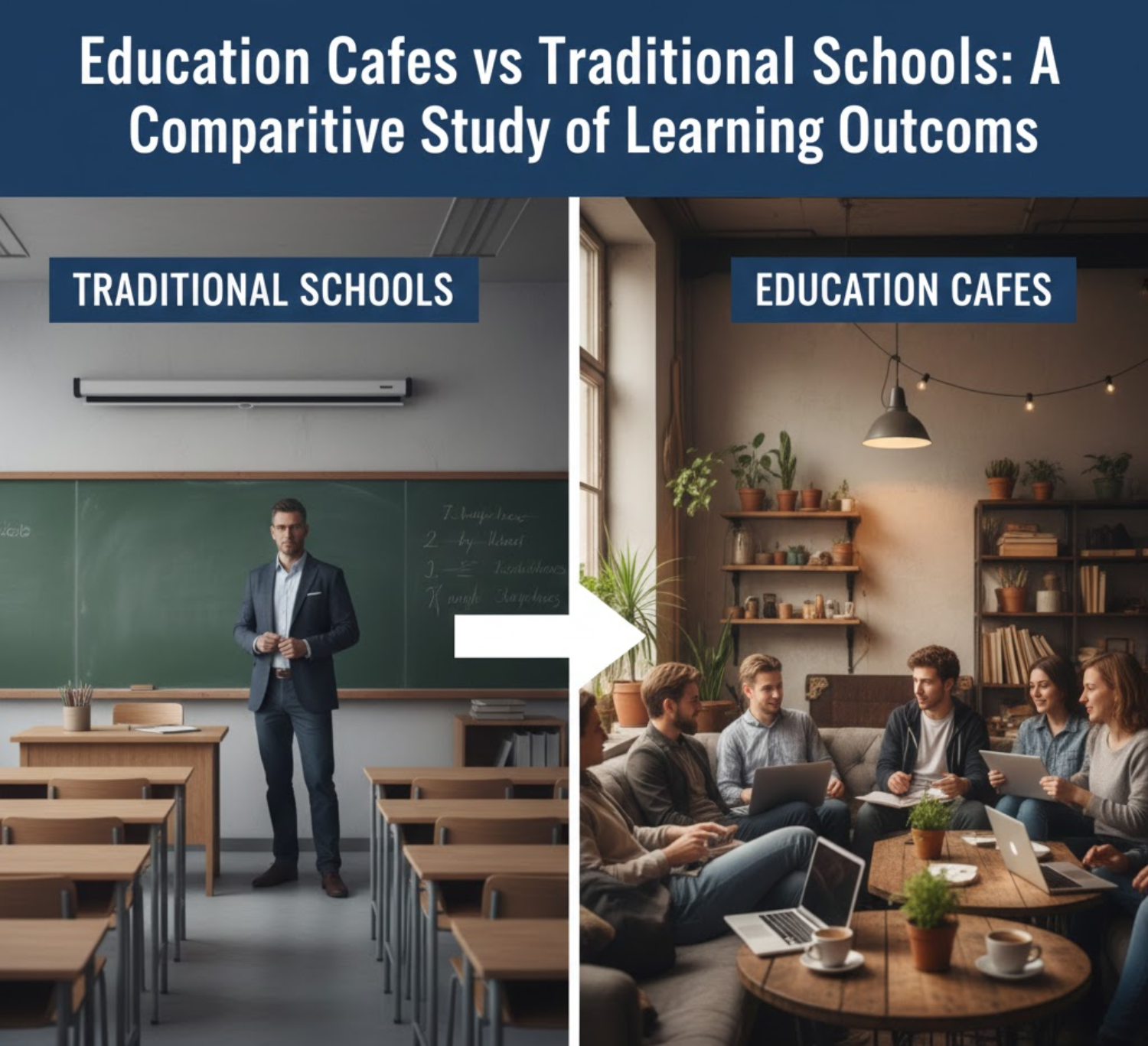
Educational cafes are creative spaces that encourage learning and community outside the classroom. Picture a welcoming cafe where students gather in small groups to complete projects and have relaxed conversations with instructors over coffee or food. The atmosphere is casual, yet organized, providing opportunities for learning, life skills development, and creative exploration.
At an educational café, learning is shaped by each individual’s needs instead of a predetermined program. Students often participate in workshops, discussions, and projects that help them improve classroom skills and develop academic knowledge.
Traditional Schools: Structure, Stability, and Academic Rigor
Traditional schools have served as the basis of formal education for a long time. The structure of traditional schools is familiar, and students attend classes in accordance with a predetermined timetable and advance through a prescribed curriculum taught by qualified teachers. Academic performance is assessed by exams, assignments, and grades, along with clearly defined benchmarks for success at every scale.
This approach gives security and stability, aiding in the development of the ability to manage time and organize. Traditional schools also provide additional curricular sports, extracurricular events, and a clear path for higher learning. The emphasis on tests and rote learning may restrict creativity and apprehension, particularly for students whose abilities are not related to academics.
Education Cafes vs Traditional Schools: Key Differences at a Glance
Here’s a side-by-side comparison to highlight the main differences in learning outcomes and experiences:
Feature | Education Cafes | Traditional Schools |
Learning Approach | Student-driven, hands-on | Teacher-led, structured |
Environment | Relaxed, collaborative, informal | Formal, classroom-based |
Curriculum | Flexible, customized to student interests | Standardized, government-set |
Assessment Methods | Project-based, ongoing feedback | Exams, standardized testing |
Social Interaction | Peer learning, community involvement | Peer groups, limited collaboration |
Technology Integration | Digital tools, online resources | Varies, often limited |
Schedule | Flexible, self-paced | Fixed, time-bound |
Learning Outcomes: What Do Students Really Gain? Engagement and Motivation
One of the most significant differences between traditional and education cafe schools is the degree of involvement from students. In education cafes, students can decide on subjects and techniques that interest their interest, resulting in greater interest, higher comprehension, and greater retention rates. Students are more likely to be proactive and ask questions, as well as go into the subject more deeply.
In contrast, many traditional schools fail to engage all students, particularly those who are excluded from the school curriculum. Pressure to pass tests and earn good grades or marks deters the student’s curiosity and imagination.
Personalization and Individual Growth
Education cafes shine in personalizing education. Each student’s journey to education is influenced by their passions as well as their strengths, and their speed. Mentors offer individual feedback to help students overcome their difficulties and recognize their accomplishments. This approach leads to greater self-awareness, confidence and readiness in the workplace.
At a traditional institution, every student progresses equally regardless of their unique requirements. Some students are successful while others are left behind or are ignored. The system doesn’t allow plenty of time to concentrate on certain strengths or learning obstacles.
Skill Development: Beyond Academics
Educational cafes are not only focused on academic subjects, but on the fundamental life skills. They are focused on collaboration as well as problem-solving, teamwork, and adaptability skills that are highly sought-after by the workplace of today. Through tackling real-world challenges and working in various groups, students develop their capabilities.
Traditional schools give students the chance to enhance abilities through extracurricular activities, but the main emphasis is still on academic achievement. Students may be left out of opportunities that promote the holistic development of students.
Why Education Cafes Are the Future of Learning
The popularity of education cafes is growing because they overcome the limitations of traditional education and adapt to the demands of modern times. What makes them different:
- Flexible learning: Students learn at their own pace, which allows the to learn the subject instead of learning it by heart.
- Innovative and creative projects that are open-ended stimulate imagination and creativity.
- Collaboration between community members, Partnerships with local organisations and companies can improve learning experiences.
- Students who are high-engagement are more enthusiastic and engaged about their studies.
- Relevance to real-world situations: The lessons are based on the real world, making learning pertinent.
The Role of Technology and Community
Education Cafe embraces technology through the integration of online tools, digital courses, and international resources. This method bridges the gap between accessibility and gives students the digital literacy that they need to be successful in the future. It also encourages participation from the community through the involvement of parents as well as professionals and local organisations to the process of learning.
Although traditional schools are working to adopt technology, the pace of change may be slow. Classroom technology is usually dependent on training and resources, so a student’s experience may differ.
Nonprofits Leading Change in Education
A lot of education cafes and progressive schools work with groups like education NGOs in India, such as Vidyalaya.org. These non-profits help both models by offering grants, resources, and new programs.
Through empowering educators and students, they help to bridge the gap between innovation and tradition and ensure that students of all backgrounds can succeed.
FAQs
1. How do education cafes improve learning outcomes compared to traditional schools?
Education cafes offer individualized learning and hands-on experiences that improve the students’ engagement and comprehension. This can result in better attainment rates than traditional education offered in traditional schools.
2. Can education cafes prepare students for exams and higher education?
Yes, many cafés cater to education, design their curriculum to include exam preparation, and be college-ready. This approach is flexible and will ensure that students achieve the highest results in their studies and prepare for academic issues in the future.
3. Are education cafes recognized by educational authorities and valid for future prospects?
Recognition can be different; however, most cafes collaborate with accrediting organizations and non-governmental organizations like Vidyalaya.org to ensure their credibility. This enhances the quality of education and makes sure that students are able to continue their studies.
4. What role do education NGOs in India play in supporting these models?
Education NGO’s in India provide mentorship, support and scholarship opportunities for traditional and cafes of education schools. They aid in improving learning outcomes by making sure that high-quality education is available.
Conclusion
Traditional schools and cafes for education both have strengths distinctive to these two types of schools. Traditional schools provide the academic structure and discipline that traditional schools offer. Education cafes encourage students to enhance their creative and abilities in the real world.
If they are aware of the various aspects of what they get from learning, parents and students can make choices that are aligned with their goals and needs. If you require assistance or guidance, take an interest in the materials that are provided by education NGOs in India, such as Vidyalaya.org.