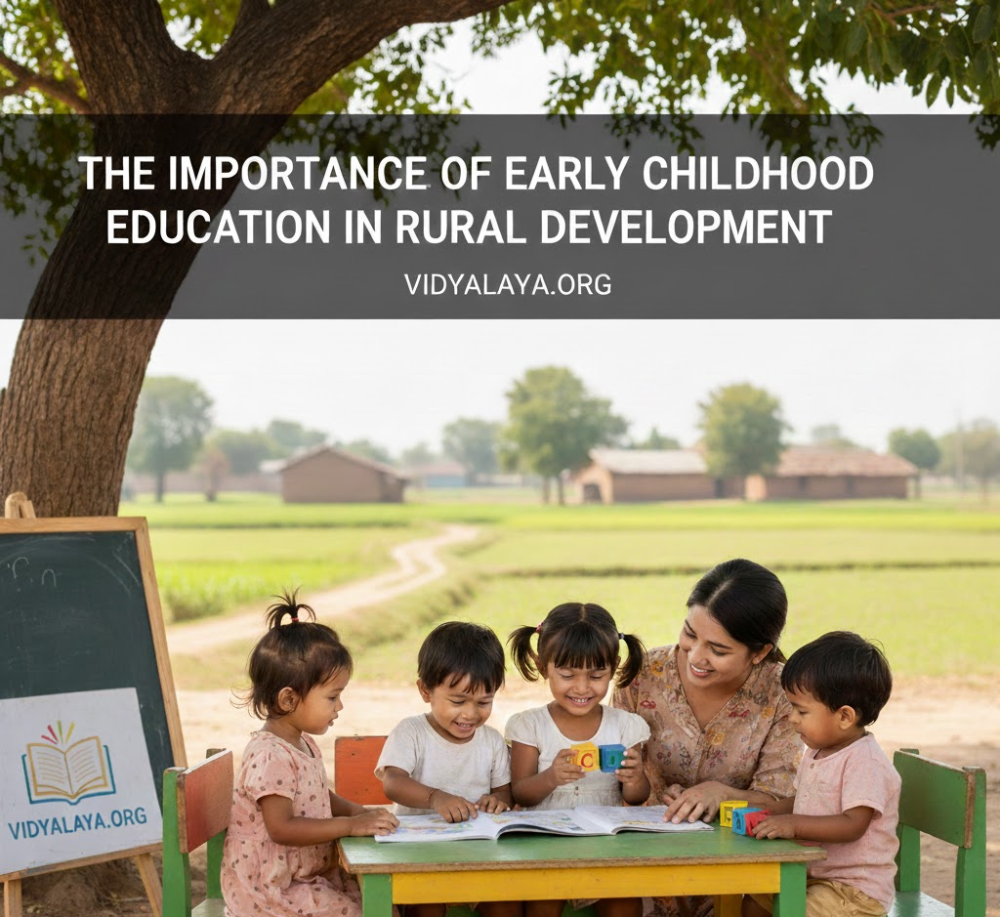
Growing up in rural India often means that children attend school for the first time without having the necessary skills, confidence, and social familiarity. Many spend time in an unorganised environment without structured learning, an opportunity to develop curiosity, language, and basic problem-solving skills.
That’s where early childhood education in India becomes essential. The kids going to preschools or Anganwadi centres in rural areas gain foundational learning, social skills, and confidence.
By reading this blog, you will comprehend how preschool education, rural programs, child development programs, and ECCE importance shape rural growth and provide children with a strong start in life.
What is Early Childhood Education India and ECCE?
Early childhood education in India is the formal education system for children aged 3-6 years before they are enrolled in primary school. It includes preschool education, play-based learning, and basic health provisions. Such programs offer children activities that strengthen cognitive, social, emotional, and physical skills.
ECCE means Early Childhood Care and Education, which combines education, care, health, nutrition, and early stimulation for children. ECCE ensures that children develop naturally, preparing them for school and life. These kinds of experiences are crucial for the development of strong foundational learning, thus providing children with the necessary tools for their academic and social success.
For example, a child participating in group storytelling or interactive counting games will receive language and numeracy skills, as well as cooperation and attention skills. These situations are the basics of lifelong learning.
How Does Preschool Education in Rural Programs Improve Child Outcomes?
Preschool education rural programs is extremely important to children living in less advantaged areas, as they provide
Early Academic Readiness:
Play-based learning introduces children to letters, numbers, shapes, and simple concepts, thus becoming school-ready. Children who attend these programs are often more confident reading simple words and doing basic math problems in Grade 1
Health and Nutrition Support:
Many rural centres provide meals, health check-ups, and hygiene awareness services, helping children become healthy and strong. This also reduces absenteeism caused by illness.
Social and Emotional Development:
Children are taught to cooperate, share, and communicate, making them socially confident and emotionally mature. These skills help them adjust better in school and social environments.
Equal Opportunity:
Child development programs are designed in such a way that they open up the possibilities of early learning for children from different socio-economic backgrounds, reducing the gap and helping to promote rural development
Just a few hours per week in preschool education rural programs can create a big difference in the level of school readiness and early learning outcomes. Children who receive solid foundational learning are likely to perform better
Why ECCE's importance matters for rural growth
The ECCE’s importance cannot be overlooked. It is the first step where children understand about learning, social-emotional skills, and cognitive abilities that are essential for lifelong learning.
In India, over 80 million children are enrolled in ECCE and early childhood programs across rural and urban areas. Children get to learn through structured learning, group activities, and guided play help children develop critical skills early. For example, through interactive activities such as counting with beads, building blocks, or storytelling, children enhance their memory, attention, and problem-solving skills.
ECCE importance extends beyond academics: it makes children healthier, develops better social skills, and makes them more confident. Kids learn cooperation, patience, and empathy, which are traits that help not only them but also their families. Strong ECCE programs in rural areas can reduce school dropouts and improve learning outcomes for years to come.
How Early Childhood Education India Shapes Rural Communities
When children have access to early childhood education in India, the benefits extend to the entire community:
- Better School Readiness: Children enter school confident, reducing dropout rates and minimising early learning gaps.
- Healthier Growth: Nutrition and early health monitoring lead to stronger, healthier children who are more attentive and active in school.
- Social Skills and Community Values: Group learning promotes cooperation, empathy, and communication skills, which children carry into adulthood.
- Economic and Social Development: Educated children grow into capable adults, contributing productively to rural communities.
A strong early childhood education system also reduces inequality. Children from disadvantaged families gain the same early learning opportunities as those from better-off households, creating long-term social equity. Over time, this strengthens rural economies and community resilience.
What Are the Current Trends in Rural Preschool Education?
Modern rural preschool programs focus on:
- Multi-Functional Learning Spaces: Facilities efficiently combine learning, play, and nutrition, ensuring that every hour that a child spends contributes to his/her growth.
- Community Engagement: Parents and local leaders are actively involved in supporting child development programs, thereby sustaining learning and accountability.
- Technology and Story-Based Learning: Even simple digital devices, storytelling, and interactive charts help children to understand concepts quickly and make learning enjoyable.
- Emphasis on Foundational Learning: Teachers focus on literacy, numeracy, and life skills to prepare children for primary education.
These trends make early childhood education in India make it possible for more children from rural areas to benefit from the system. Engaging learning activities keep children motivated, thus lifelong curiosity and love of school are developed.
How to strengthen rural preschool education programs
To expand access and quality:
- Make sure that every village has at least one early learning centre
- Train teachers to deliver interactive, child-centred education that prioritises foundational learning
- Help parents understand the value of ECCE and involve them in learning activities.
- Ensure child development programs have clear and measurable learning outcomes.
- Promote inclusive access so every child benefits, regardless of socio-economic background.
Even a series of small, consistent changes can have a significant impact on early learning experiences and help children become successful both academically and personally.
Conclusion
Early childhood education in India is not just schooling but a major part of the foundation for rural development. When children attend preschool education rural programs, take part in child development programs, and get the benefit of ECCE, they, in fact, develop the abilities, self-assurance, and inquisitiveness that are necessary for their survival.
Investing in foundational learning improves children’s chances of school success, strengthens communities, and helps reduce inequality. Rural India will be able to foster an entire generation that will be able to excel academically, socially, and economically if it realises ECCE importance and continues to support early learning.
FAQs
Q: What age group does early childhood education India cover?
Early childhood education in India is usually geared to kids of 3–6 years of age. The main focus is on the first steps of learning, developing speaking skills, and socialising. That prepares the children for primary school nicely and easily.
Q: Why is preschool education rural essential?
Preschool education rural program is one of the best ways to support early childhood education in India. They give children a structured learning environment and social interaction, which is a perfect start for the underserved communities. The earliest exposure to education leads to better self-esteem and school readiness.
Q: How do child development programs support rural children?
Child development programs, through play-based learning, nutrition, and health, are the main drivers of early childhood education in India. They extend the children’s first learning of the world, and they develop social skills. Kids who get this kind of education enter school more prepared and with a higher level of self-confidence.
Q: What makes ECCE importance critical for rural growth?
ECCE’s importance is the factor that makes early childhood education in India the development of the cognitive, social, and emotional skills of the child. It has a positive effect on school performance and learning later in life. Quality early education is a safe place for children, and it is a powerful vehicle for rural community progress.