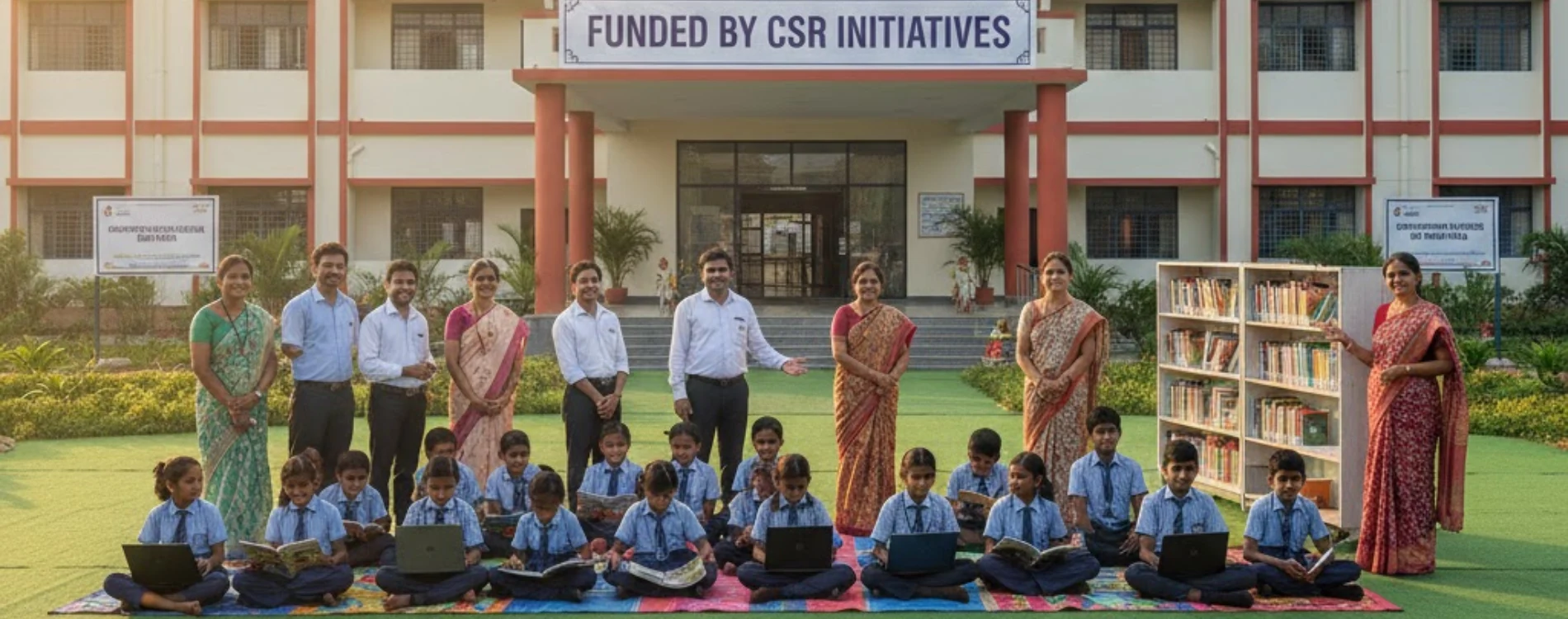
India’s education system is being transformed, yet millions of students still struggle with bad infrastructure, old materials, and limited access to technology. As CSR education funding grows every year annually, companies are placing education at the centre of their social goals.
However, the real solution lies in long-term CSR investments that don’t just support classrooms but create opportunities for the entire communities.
This blog explains that Indian corporates are leading the way for a meaningful social change, why this shift matters today, and how understanding these initiatives will help you appreciate will make you realize the real influence of CSR in educational development.
What CSR Education Funding Really Means Today
CSR in India is strictly regulated. As per the Companies Act, 2013, eligible companies have to mandatorily invest 2% of their average net profits in social development, including education.
Hence, CSR education funding refers to financial support that companies direct toward improving learning outcomes, building infrastructure, facilitating digital access, and sponsoring student support programs.
And the numbers speak for themselves.
According to the Ministry of Corporate Affairs, CSR spending over the years on education by 30–35% of total CSR spending, thus being the single largest sector for almost a decade.
This shows a clear priority: corporate India considers education as a bedrock of economic and social development.
Why Corporate Education Initiatives in India Are Growing So Fast
Businesses today have come to realise that education isn’t just charity, but rather a long-term investment in the talent pipeline. This is the main reason behind the rise of corporate education initiatives in India across various states.
Companies are participating in programs such as:
- Building and upgrading government schools
- Providing smart classrooms
- Funding digital learning tools
- Supporting teacher training
- Creating mentorship and scholarship pathways
The reason is very straightforward. An educated society is one that eventually leads to the creation of stronger markets, better talent, and healthier economies. As India has one of the world’s largest school-age populations, corporate involvement creates real, measurable impact.
How CSR Education Projects Solve Real Problems
A majority of CSR education projects are centred around the immediate needs of the classroom, such as books, uniforms, and basic school repairs, but a new wave of projects brings systemic improvements.
Here’s how they are solving the most critical gaps:
1. Digital Accessibility
Few rural households have access to digital devices. CSR programs are now providing tablets, smart classes, digital libraries, and online platforms to bridge this divide.
2. Teacher Upskilling
To raise the quality of education, India needs continuous teacher training to improve learning outcomes. Many CSR programs collaborate with academic institutions to facilitate teacher accreditation, e-learning, and leadership courses
3. Infrastructure Development
Improved sanitation, clean drinking water, hygienic classrooms, and electricity are basic facilities that many schools still lack. CSR steps in to upgrade these facilities, making a measurable difference in student attendance.
4. Skill Development for Youth
Many CSR programs enhance the job-readiness of students with coding labs, spoken English training, financial literacy, and vocational workshops. These programs help students prepare for higher studies and employment.
These CSR education projects directly touch millions of students, creating a wider ripple effect in local communities.
How Business Education Partnerships Create Smarter Learning Models
The most vibrant and engaging change we can talk about is the rise of business education partnerships a collaborative model where corporates work with NGOs, EdTech providers, and government schools to deliver structured, long-term solutions.
These partnerships allow companies to:
- Employ EdTech tools for distance learning
- Lead the creation of content that meets curriculum goals
- Support schools for multi-year development
- Establish local learning centres
- Sponsor outcome-based education programs
The transition from short-term charity to strategic collaboration is improving accountability and enhancing learning outcomes.
One example is the rising trend of using digital content in the classroom. It allows students to learn at their own pace and gives teachers access to better teaching material. When companies team up with experts, education becomes more consistent and inclusive.
The Role of Private Sector Education Support in Rural and Urban India
India’s education problems are different in each place. Rural schools lack adequate buildings and facilities, while urban schools face overcrowding and a lack of personalised learning. That is the reason why private sector education support is necessary. Corporations bring money, proper planning, and technology-based solutions to both settings.
Few significant data-backed changes demonstrate the effectiveness of this support:
- CSR spending on education has grown by more than 35% over the last five years.
- More than 70% of CSR-supported schools report better attendance after the upgrade of the infrastructure.
- Digital learning initiatives funded by corporates have raised learning levels by 15–20% in several state-led pilot programs.
These outcomes show how private sector involvement is strengthening India’s education system in measurable ways.
Why CSR Education Funding Will Matter Even More in the Future
As India’s demographic becomes younger, the necessity for quality education is escalating. Corporate Social Responsibility can be instrumental in facilitating the government’s endeavours, creating digital access and ensuring that students from the less privileged communities have the same opportunities as others
Companies are not only handing over the money; they are building ecosystems. This includes digital content, smart classrooms, specialised training, and data-backed models to measure student growth.
Therefore,CSR education funding is now one of The most significant and engaging change is.
Conclusion
CSR should not be viewed as merely a business requirement; rather, it is a major factor in the transformation of the Indian education system. When companies invest in classrooms, teachers, digital tools, and infrastructure, they unlock opportunities that change lives. These developments have been made possible by the increasing corporate education interventions in India, carefully planned CSR education programs, deepening business-education collaborations, and steady private sector education funding that in turn, have opened the doors of quality education to millions of students.
If you wish to support accessible digital education, explore platforms that make learning reachable for every child. Join the change at vidyalaya.org
FAQs
How does CSR education funding improve learning outcomes?
CSR education funding improves learning outcomes by upgrading classrooms, adding digital tools, and supporting teacher training. When companies focus on long-term programs, they get better learning environments, updated study material, and consistent academic support.
What types of CSR education projects are most common in India?
The worthiest CSR education projects to be considered are the creation and implementation of smart classrooms, digital labs, school infrastructure, and teacher training. Besides these, corporates also fund scholarships, supply learning materials, and support skill-based programs that prepare students for higher studies and employment.
Why are business education partnerships becoming important for schools?
Business education partnerships strengthen a school through access to distant resources such as expertise, technology, and financial support. When corporate collaborations with NGOs and EdTech companies create a vibrant environment, and, long-term programs that improve teaching quality and student learning.
How is private sector education support shaping India’s future?
Private sector education support in India is progressing faster; schools are better equipped, expanded teacher training is implemented, and equal access to digital learning tools is ensured. With businesses contributing resources and innovation, as a result, children, teenagers in these areas are receiving quality education, which is a stepping stone in the path to holistic development and better opportunities to learn and grow.