
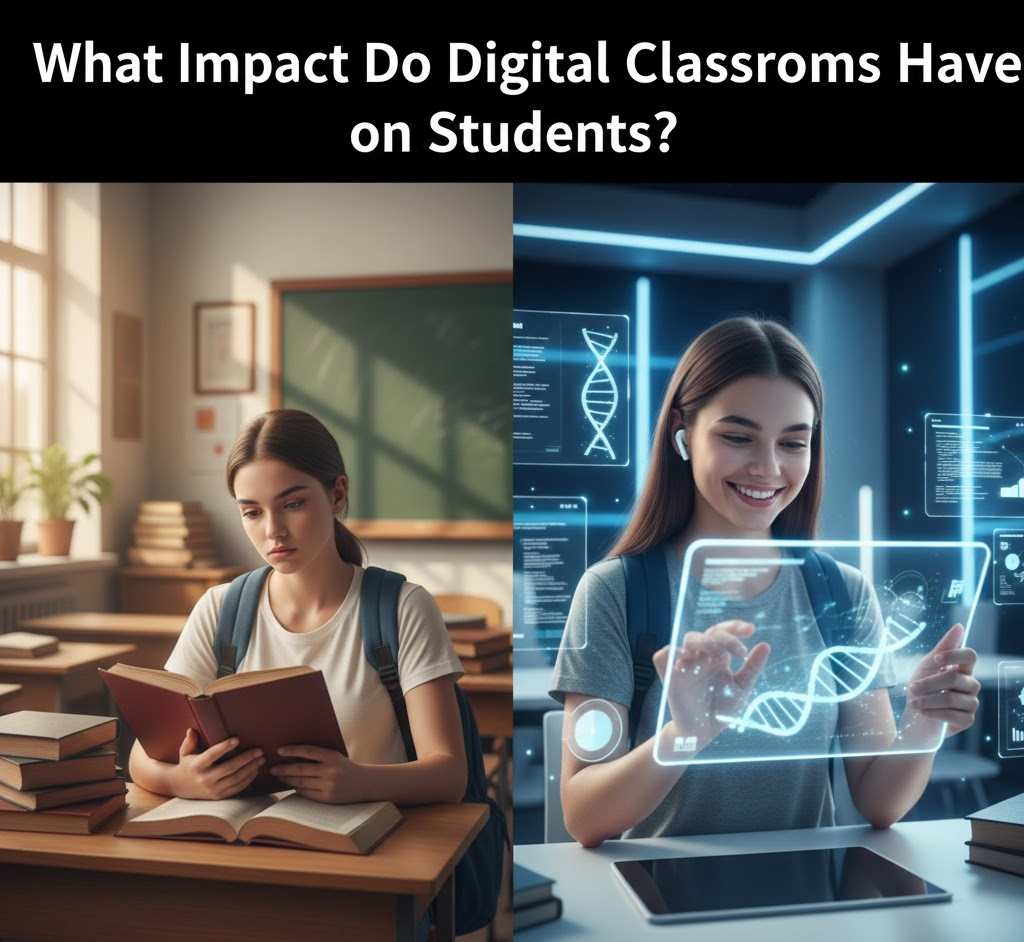
The way in which education is developed in this age of digital technology is revolutionary. The days of learning were conducted via chalkboards and textbooks. Digital classrooms today have changed the way that students develop, interact, and learn.
What can digital learning offer students? Let us have a look and learn how digital classrooms can impact how students learn to comprehend concepts, stay focused, remain motivated, and perform better academically.
Understanding the Impact of Digital Classrooms on Students
The digital classroom is powered by technology, allowing students to access their lessons, lesson materials, notes, and even the materials they need online. Digital classrooms are having a significant impact on students, transforming the learning environment and opening new possibilities.
This is the guideline for everything, from the process to the extent of student involvement.
How Digital Classrooms Improve Student Engagement
Engaging students is an essential aspect of every class. Interactive tools such as videos or quizzes, as well as live polls, can make learning more enjoyable.
Chat boxes, for instance, offer instant feedback and collaborative capabilities, while virtual classrooms encourage students to be involved in the learning process. When students are engaged in the virtual classroom, their enthusiasm and interest are enhanced. Engagement is not just about having fun; it is also about creating an environment that fosters learning.
Accessibility and Flexibility: Making Learning Available to All
However, one of the most significant impacts digital classrooms have made on students is accessibility. Digital classrooms break down barriers. No matter if a student is in a remote area or a modern city, all they need is an Internet connection.
Flexibility is an additional benefit. Recorded lessons can be replayed multiple times, allowing students to pause and review sections they do not understand at their own pace. This lets students learn at different paces and keep their progress on track without feeling they are lagging.
Personalized Learning: Tailoring Education for Every Student
Every student is not the same. Digital classrooms recognize this and provide individualized learning experiences. Students can choose items that meet their needs and their strengths and areas to improve.
The benefits of digital learning classrooms for children are evident when they take adaptive assessments and receive personalised feedback. Teachers can track their pupils’ progress and provide support when needed. This type of support is usually individualized and can lead to better academic performance and more confidence among students.
Bridging the Gap Between Teachers and Technology
The effectiveness of digital classrooms depends not only on students but also on teachers. Teachers are adapting to the latest technology, and the effects of digital classrooms on students are becoming increasingly evident.
Digital tools can help teachers monitor their progress, offer instant feedback, and make learning more fun. Training and online resources help teachers stay up to date and create a better learning environment for all.
Challenges Faced by Students in Digital Classrooms
Although the benefits are impressive, the effect of digital classrooms on students can be detrimental. There are a few issues that need to be addressed
- Technical issues: Slow internet or outdated devices can hinder learning.
- Distraction: The web is awash with distractions: social games on the internet, as well as notifications and games.
- Students may be isolated. Some students are not interested in face-to-face interactions or aspects of social interaction in traditional classrooms.
- The Digital Divide is that students are unable to access technology in the same way or to find a quiet place to work.
The identification and resolution of these issues are essential to maximizing the positive impact on students in digital classrooms.
Real-World Skills: Preparing Students for the Future
It is not only about convenience, but it is also about helping students prepare for the world of work. The effects of digital classrooms on students extend beyond the classroom to crucial life skills, such as navigating the digital age, managing time, and developing self-control.
Students are taught to use online platforms and collaboration tools, and to manage their time. These abilities will be helpful in the future for further learning and, beyond that, for making digital classrooms not just a trend but, in actuality, the next step in the new learning environment.
The Role of Education NGOs and Community Support
The effect of a digital classroom on students depends on the community’s work. There are organizations, such as educational NGOs in India, that help fill gaps in digitalization and provide the resources needed so that no child is left behind.
To learn more about their programs, visit vidyalaya.org. Their dedication to equal access and high-quality education enables thousands of students to benefit from online learning environments
Key Takeaways: The Impact of Digital Classrooms on Students
- Learn actively using engaging learning instruments.
- Provide flexibility and accessibility to make education more inclusive.
- Personalized learning can be tailored to your individual requirements.
- Training students for the digital future. Essential life abilities
- Be prepared for challenges such as interruptions in access, distractions, and fatigue from online use.
FAQs
1. What are the differences between digital classrooms with traditional ones?
Digital classrooms offer more flexibility and personalization of learning than traditional classrooms. Digital classrooms are a great way to build students’ skills, not only those related to their subjects but also in engaging with digital media.
2. What are the challenges students face in digital classrooms?
Students may face technology-related issues or distractions. They may also feel isolated. It is crucial to tackle these issues to improve the positive impact of digital classrooms on students.
3. Are digital classrooms equally beneficial to all students?
The effect of digital classrooms on students varies depending on technological capabilities and internet access. Education-related organizations can fill in the gaps to ensure that every student is benefiting.
4. How do digital classrooms support students' future careers?
The effect of digital classrooms on students is observed in the development of digital skills, including time management, and in the acquisition of the abilities needed to succeed in today’s workplace.
Final Thoughts: Embracing the Digital Shift in Education
Students’ experiences in digital classes are immense and continue to grow. Although there are challenges, the benefits, such as engagement, accessibility, customized learning, and capabilities that will be useful in the future, promise an improved future for education. While technology continues to advance in the classroom, it will help students succeed in a rapidly changing world.
To ensure that no children are left behind, organisations such as education NGOs in India, such as vidyalaya.org, are at the forefront of inclusive, efficient education. Join the movement and be part of the revolution!