
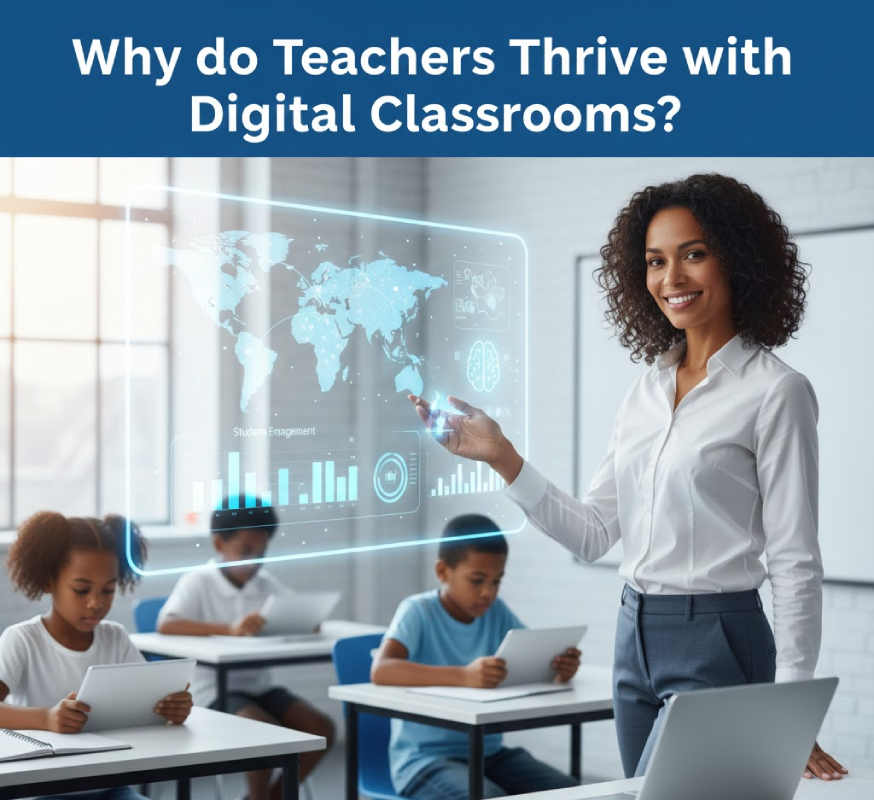
Education has undergone a rapid transformation, and right at the heart of this change lies the rise of digital classrooms. Gone are those days when technology was viewed as an addition; today, it forms the basis for vibrant, interactive, and effective teaching. But why do teachers thrive in digital classrooms?
In this blog, we will see how this evolution empowers educators, enhances learning, and creates a more connected educational experience.
Embracing Flexibility: The Core of Digital Classrooms
One of the biggest advantages of the digital classroom is its flexibility. Teachers don’t need to follow strict plans or physical classrooms. With digital platforms, teaching plans, and sharing resources, as well as interactions with students go effortlessly. Digital classrooms enable teachers to:
- They should plan classes that are appropriate to their requirements and the requirements of the students
- Instantly share resources, such as videos, interactive tests, and other resources.
- Track student progress in real-time. This makes it simple to adjust lessons according to your needs
This flexibility does more than just save time, but allows teachers to concentrate on what is crucial in their teaching, as well as mentoring and inspiring.
Personalised learning for every student
Digital classrooms allow teachers to accommodate different learning styles and paces. Teachers can make use of interactive tools to design distinct lesson plans, making sure that students are not uninvolved. Instead of one-size-fits-all, all digital platforms permit teachers to:
- Give tasks that are individualized in accordance with the strengths of the student and weaknesses
- Utilize multimedia tools to engage learners of auditory, visual, and Kinesthetic learners
- Follow each student’s progress and provide prompt feedback
Teachers who have personalized instruction can improve engagement and outcomes, allowing every student to achieve their full potential.
Streamlined communication and collaboration
Communication is the basis of an effective education. Digital classrooms make teacher-student, parent-teacher, as well as teacher-teacher collaboration more efficient than ever before. Through chat rooms, messaging platforms and video calls, everybody stays in touch. Teachers are thriving by being able to:
- Respond to student inquiries immediately
- Group projects can be organized easily
- Inform parents about how things are going and about upcoming events.
This atmosphere of connection creates a sense of belonging and the ability to support each other and both are crucial to a flourishing classroom.
Effortless resource management
The days of shifting papers as well as carrying large textbooks. Digital classrooms facilitate resource management, which makes the teaching process less stressful as well as organised. Here’s how:
- Keep all lesson plans, assignments and grades in one location
- Explore a wealth of online materials
- Make sure to share updates or any new resources with students in a matter of seconds
Teachers will be able to spend less time on administration and spend more time on creativity and teaching.
More engagement through interactive tools
Traditional classrooms can be difficult to keep students’ attention. Digital classrooms permit lessons to be made more engaging. Teachers can make use of:
- Interactive surveys and quizzes
- Gamified lessons
- Virtual labs and simulations, and simulators
- Real-world problem-solving activities
These tools transform the experience of learning into active participation and make each lesson memorable and effective.
Supporting professional growth
Digital classrooms do more than aid students. They also assist teachers in improving their skills. These platforms offer instructors the opportunity to take professional education courses, webinars, as well as an international community of educators. Teachers can:
- Discover new ways to teach
- Keep up-to-date on the most recent trends in education.
- Share your experience and the best practices with your colleagues.
This kind of development keeps educators engaged and at the top of their game.
Overcoming Barriers: Making Education More Inclusive
Perhaps one of the most beneficial advantages in digital learning classrooms is the inclusion. This means that teachers are able to reach out to areas that are not accessible as well as accommodate students who have disabilities, and provide the accessibility of high-quality education. Teachers are thriving because they bring about a positive change in the lives of their students, regardless of the location of their students.
If you are passionate about inclusive education, join an education NGO in India like Vidyalaya.org, working to bridge educational gaps and promote digital learning in every community
Nurturing Global Ties
Digital classrooms break geographical boundaries, allowing students and teachers to talk with experts around the world. This global exposure helps learning through diversity and cross-cultural experiences.
Encouraging Lifelong Learning
Access to online resources, webinars, and global communities encourages both students and teachers to become lifelong learners. Digital tools present new opportunities for exploring interests, developing additional skills, and staying up-to-date with knowledge that evolves.
FAQ's
1. Why do teachers thrive with digital classrooms?
Digital classrooms work for teachers because they offer flexibility, personalized learning, and efficiency in resource management. They make teaching more engaging and less stressful, hence improving the experiences of both teachers and students.
2. How do digital classrooms support personalized learning?
Digital classrooms let teachers adapt lessons to each student their strengths, needs, and learning styles. This leads to better learning outcomes and engagement for every student.
3. Are digital classrooms efficient in all disciplines?
Yes, digital classrooms can be adapted to accommodate an array of topics, ranging from mathematics and sciences to languages. Many interactive methods and tools can help students understand even the most difficult questions in a comprehensible and engaging manner for students.
4. How can NGOs help promote digital education in India?
NGOs like Vidyalaya.org make a difference by providing resources, training, and support for teachers and students in underserved communities. They bridge the digital gap and ensure quality education for all.
Ready to Transform Your Classroom?
Learning with digital technology can help teachers in their pursuit of excellence, as well as help students reach their goals. For educators, school administrators, or students, this is the right time to take advantage of this revolutionary model. Are you ready to be part of the revolution? Join an education NGO in India and be part of this digital revolution today!
If you’re seeking additional sources or want to get involved, visit Vidyalaya.org and join the movement for an effective and inclusive education. Let’s build classrooms that are thriving by working together!