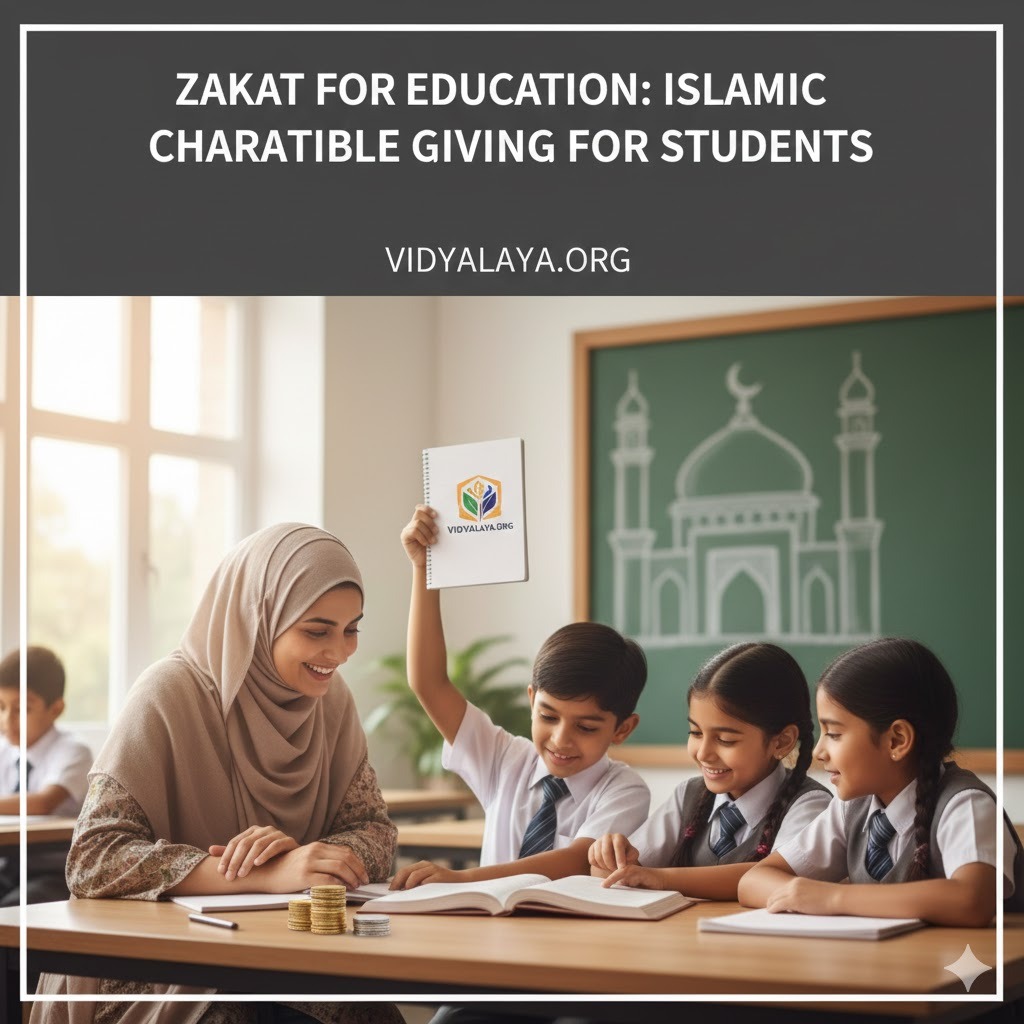
Think of a child with ambitions to attend school, study hard, and create a future for himself, yet is unable to continue due to the family’s inability to pay fees, buy books, or even procure basic supplies. This is the reality faced by millions of students. In such cases, zakat for education means more than charity; it’s a lifeline. It helps students stay in school, acquire key skills, and move toward self-sufficiency while honouring a major religious work.
Communities are increasingly noticing that education-focused zakat can transform lives. It is not just about paying the child’s fees, it’s about giving dignity, opportunity, and hope for those who are in need.
If you’ve ever wondered how zakat-eligible education projects connect with education, this blog will explain it all in simple, actionable terms.
What Is Zakat for Education and How Does It Work?
Zakat for Education refers to using zakat funds to assist students who meet specific eligibility criteria under Islamic law, such as the poor or needy. Unlike general donations, these funds are channelled toward providing learning opportunities covering tuition, books, uniforms, devices, or transport.
It unites two significant objectives:
- Religious fulfilment: Funds reach the deserving beneficiaries
- Practical impact: Students receive tangible support to achieve academic success.
When you support a Zakat-eligible education project, you are not only providing funds but also equipping a child with what they need to rise to their full potential. Many donors today opt for Islamic donation education India programs in order to make sure that their Zakat creates some meaningful and measurable impact.
Why Zakat for Education Matters Today
Education is one of the biggest powerful tools for breaking cycles of poverty. Still, too many families struggle to pay for school fees, books, uniforms, and digital learning. This is where zakat for poor children’s education plays an important role. It ensures that a child continues learning while providing a fair opportunity for a better future.
Here’s why this form of Islamic giving is increasingly important:
1. It supports the most vulnerable students
Many children drop out due to financial issues. By providing zakat for education, donors help these students receive an education, focus on learning, and develop skills that will serve them for life.
2. It turns faith into action
Islamic donation holds the highest value when it leads to a visible, positive impact. Choosing Islamic donation education India initiatives helps donors transform faith into practical support that changes lives.
3. It strengthens communities
Donating zakat for child education programs goes beyond helping children. It also strengthens families and the entire community, all while adhering to the values of religion. Education helps build long-term independence and economic stability.
4. It addresses modern educational needs
Students today often require internet access, digital devices or online learning materials. Programs that focus on Islamic charity education in India help bridge the gap by ensuring that students take full advantage of modern education.
How Zakat-Based Educational Support Works
A responsible zakat-eligible education project ensures that funds are utilised effectively to reach out to students in desperate need. The usual procedure includes:
Clear Eligibility Checks
Students are screened to ensure they meet Zakat eligibility requirements, which include financial need or poverty. The proper verification process is used to ensure that donations are made according to Islamic principles.
Assessing Educational Needs
Students may need uniforms, school supplies, books or other tools. Based on the requirements of the students, Zakat donations will be a positive and targeted impact.
Direct and Transparent Distribution
The funds are directly given to guardians or students to ensure dignity and prevent any type of fraud. Programs focusing on zakat for poor children’s education emphasise transparency, which means that donors know exactly how the funds are utilised.
Ongoing Support
Continuous follow-up ensure that students benefit most from the zakat, whether for online learning, tuition, or other skill-building programs
What are the Core Principles of Zakat for Education
Zakat for education is guided by three key principles
1. Preserving Dignity
Support should empower students, not make them feel dependent. Respectful handling allows children to focus on learning and growth.
2. Accountability and Transparency
Donors and recipients should cross-check the fund usage. Proper documentation and monitoring are essential in a zakat eligible education project.
3. Long-Term Empowerment
Zakat for poor children education is about more than temporary relief. The goal is lasting learning and skill development, ensuring children have the best chance of success.
Practical Examples of Zakat for Education
- Funds are given to students from low-income families for tuition, books, and necessary devices.
- Online learning access is supported for continuous education.
- Programs in line with Islamic donation education India use structured approaches in monitoring the students’ progress.
People who opt for donate zakat for child education often observe long-term improvements in children’s confidence and academic outcomes. By focusing on actual needs, zakat contributions can ensure that students not only are in school but are successful academically.
Why Zakat for Education Matters for Donors
Through Zakat for Education, every rupee is used to create meaningful change in a way, which helps students to learn and grow.
Your donation can be used to:
- Cover the tuition fees of a child if the child is dropping out of school
- Provide books and learning materials to low-income families
- Offer access by providing online learning tools and resources
- Empower the entire community through education
Even small help create a large, lasting impact. By supporting Islamic charity education India, you ensure that your zakat brings about a real change not only today but also in the future
Start creating a powerful impact on students’ lives by supporting meaningful educational initiatives like vidyalaya.org. Every donation enables a child to receive education and become the best version of themselves
FAQs About Zakat for Education
1. Can I use my zakat for education instead of general charity?
The zakat of education is indeed permissible as long as the student is qualified. It offers long-term benefits as well as helps meet the needs of learning.
2. Who qualifies to receive zakat for poor children education?
Students have to fall into the Islamic criteria for eligibility that include those who are needy or those who are poor. A verification ensures that your contribution is able to reach the people who really need help.
3. Can I donate zakat for child education in India through verified programs?
Yes, some programs focus on Islamic donation education in India, making sure that the funds are specifically earmarked to fund education, including books, tuition and teaching digital tools.
4. How can I identify a trustworthy zakat-eligible education project?
Make sure you have clear proof and transparent distribution of funds, with a clear focus on student demands. A properly-run zakat-eligible education project makes sure that each donation has a positive impact on education.