
How Educational Scholarships Are Changing Lives in Rural India

Education has long been the cornerstone of empowerment. But for millions of rural Indian children, it is often a distant fantasy. Access to quality education is a daily battle due to limited resources, poor infrastructure and economic constraints. In the face of these challenges, education scholarships in India are a lifeline that helps bright students overcome their circumstances and reach their potential. The promise of education scholarships in rural India Many students in rural India walk long distances to get to school. They study under dim light after helping out their families on the farm. Financial aid education gives hope to such children. Scholarships can cover tuition, books, uniforms and even transportation, so that children can continue learning without burdening the rest of their family. The increasing network of education funding opportunities has changed the way rural education is perceived. No longer is it about privilege, but rather about potential. Each scholarship is a step towards building a more literate and stronger nation. Understanding educational scholarships in India Education Scholarships India includes a wide range of initiatives that are designed to help students who come from less privileged backgrounds. Governments, private foundations and NGOs offer them. These scholarships have multiple purposes: they recognize talent, provide financial stability and encourage students to remain in school. These schemes, which range from national-level initiatives like the National Means-cum-Merit Scholarship down to state-based and NGO-based programs, play an important role in nurturing the future generation of leaders and thinkers. Through education funding opportunities programs, rural students get the same exposure to academics as their urban peers. This narrows the education gap which has existed for decades. Why scholarships matter for rural students Education is often pushed aside by rural families who are struggling to survive on modest incomes. That’s where merit scholarship for rural students can make a difference; they not only help remove financial barriers but also boost motivation and confidence. Scholarships allow deserving students to continue their education without having to drop out because of poverty. They also show the community that education is a powerful tool that can transform lives and inspire others. It’s not just about the individual; it’s also about generations. One child who receives scholarship support can lift an entire family from poverty. Scholarship programs making an impact Numerous initiatives in India are changing the rural education narrative. In order to bridge the gap, government schemes such as the PM Scholarship Scheme and Inspire Scholarship have played a key role. Organizations like Vidyalay.org, of the most important education NGOs in India play a crucial role in connecting students to resources. They focus not only on funding, but also on community involvement, mentorship and awareness. The growing support network for the positive Scholarship programs’ impact shows how positive it is on individuals and communities. How financial aid education transforms rural lives Financial Aid Education is more than just a way to fund education — it also creates equal opportunities. Aiding a student reduces the economic burden on parents and makes them more confident in their education as an investment. Scholarships are a great way to protect girls from early marriage and child labor. Scholarships open the door to higher education and vocational training that lead to sustainable income and independent living. Scholarship recipients have transformed entire villages when they return to rural communities as teachers, engineers, or social workers. This is a testament to the impact of scholarship programs can have on rural society. The role of NGOs and community participation NGOs such as Vidyalaya.org recognized as the best NGO for child education in India work to provide scholarships at the local level. They help identify students who deserve scholarships, raise awareness, and streamline the application process. These organizations work with schools and governments to ensure accountability and transparency in the distribution of funds. They also encourage leadership, self-confidence and social responsibility in young learners. The reach of education funding opportunities increases when local communities are involved. This ensures that the help reaches those who need it most. How to apply for educational scholarships in India Students and parents can find the best scholarship for them if they know where to search. A quick guide for getting started. Search verified education scholarships India at government and NGO portals. Early collection of documents related to income and academics is important. Apply early to maximise your chances. Keep track of updates through local education offices, NGO initiatives and other sources. Students from remote villages can benefit from these education funding opportunities with persistence and awareness. Challenges and the road ahead Many students are still unaware of scholarships, despite visible progress. This is due to a lack of connectivity or awareness. Rural schools are often faced with obstacles like poor internet access and inadequate documentation systems. For these issues to be overcome, it is essential that we have ongoing awareness campaigns, workshops in schools, and digital literacy programs. Inclusion is the key to the future of scholarship programs’ impact. No talented student should be left behind because of geography or background. Conclusion The real power of education scholarships India lies in their ability to quietly but profoundly change lives. When a student from a village receives financial aid to earn a degree, that’s a win for the whole community. The initiatives of NGOs such as Vidyalaya.org that support education NGOs in India remind us that education, unlike charity, is a human right. The first step to building a more educated and empowered India is to support and promote scholarship programs. FAQs On Educational Scholarships 1. What are the top education scholarships in India for rural students? Several education scholarships in India, such as NMMS and Inspire, or NGO-led initiatives, help rural learners. They provide financial assistance, mentorship and resources for talented students who come from poor backgrounds. 2. What does merit scholarships for rural students support mean? Merit Scholarships reward rural students reward academic excellence and motivation. Children from families with limited financial resources can continue their education without interruption. The
School Infrastructure in Rural India: Current State and Solutions
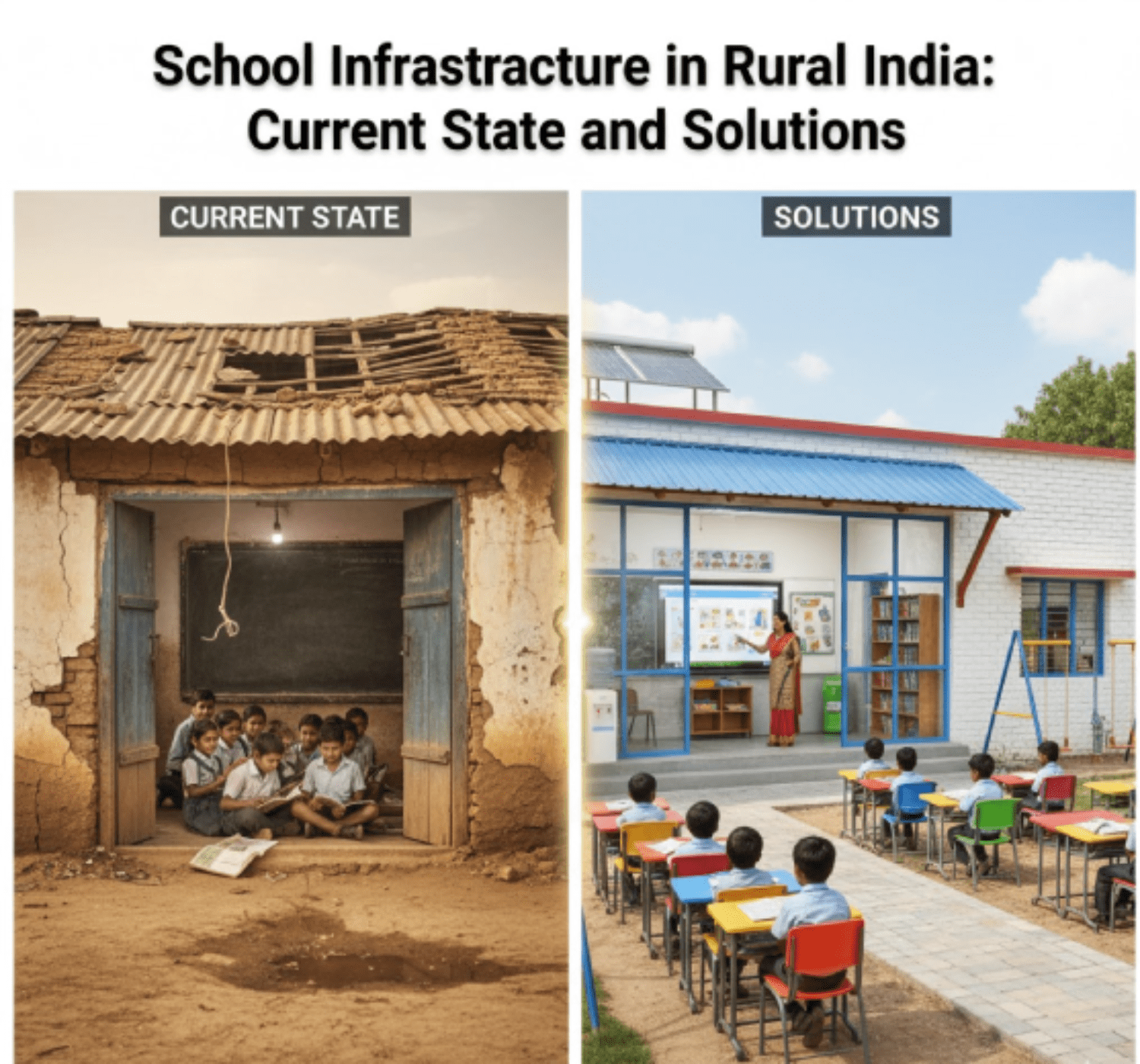
India’s education system is often described in terms of policies, reforms, and technological advancements. Rural school infrastructure India is one factor that affects learning. Schools without toilets or classrooms without roofs directly impact learningInfrastructure is more than cement and bricks . It is the foundation upon which millions of rural children’s dreams rest This article examines the current status of rural school infrastructure.It highlights the gaps in school building conditions and suggests practical solutions for school development needs. Current State of Rural School Infrastructure in India India has made significant investments in education over the past two decades.The government has increased enrollment rates through schemes such as Sarva Shiksha Abhiyan and Samagra Shiksha Abhiyan. However, infrastructure remains unevenly distributed. Some schools have upgraded classrooms and digital laboratories, but many still lack the basic facilities rural schools need, such as safe drinking water, toilets with electricity, and appropriate flooring. The Ministry of Education has revealed that more than 30 percent of schools in some states are in poor school building conditions. This makes it difficult for students to learn in an environment where they feel safe and motivated. The education infrastructure problems that rural India faces are highlighted by the lack of libraries and overcrowded classes, as well as leaking roofs during the monsoon season. School Building Conditions: Ground Reality The state of the school buildings speaks volumes about neglect and inequality. In rural areas, temporary classrooms constructed with tin or mud are still common. There are many schools that do not have boundary fences, exposing children to danger. School building conditions have a direct impact on attendance and dropout rates. Children in classrooms that are poorly constructed often miss class during the harsh summer or when it rains heavily. When the infrastructure is not adequate, teachers also find it hard to teach. In rural education, improving structural stability, ventilation, and space are among the most urgent school development needs in rural education Basic Facilities Rural Schools Should Provide Infrastructure is not just the classroom. It is an ecosystem of facilities which facilitates effective teaching and learning. The following are some of the most important basic infrastructure rural schools should have: Toilets that work for both girls and boys. Lack of sanitation is a major factor in the higher dropout rates for girls. Rural schools are concerned about the safety of drinking water. Many rural schools rely on hand-pump systems or don’t have clean water available at all. Electricity and Lighting: Without electricity, digital education or simple evening study sessions are impossible. Playgrounds and activity zones – Recreational activities are essential to physical and mental development. Children’s curiosity and practical skills are developed in libraries and laboratories. Education Infrastructure Problems: Holding back Progress In rural areas,education infrastructure problems persist despite policy initiatives. Inadequate funding, delays in implementation, and a lack of community participation are the main causes for many issues. The situation is made worse by teacher absenteeism, high student-to-teacher ratios, and teacher absences. Some states have space problems, and schools are forced to share buildings or operate multiple shifts within the same facility. Rural children are also unable to compete in a world increasingly dominated by technology because of a lack of digital infrastructure. These gaps highlight the urgent school development needs that must be addressed to prevent further inequality. Community participation and local solutions Participation of the community is a powerful tool to overcome challenges in rural school infrastructure India. Villagers and local panchayats can play an important role in maintaining and upgrading buildings and facilities. The success stories of Kerala and Himachal Pradesh show that when communities are involved, school building conditions significantly improve. Smaller interventions, such as rainwater harvesting or low-cost digital classes, can help transform the basic facilities rural schools need. These examples show how ground-level projects, combined with government assistance, can have a long-term effect. Policy Measures to Strengthen Infrastructure Government intervention remains crucial. It is not enough to fund the construction, but policies must also include maintenance and monitoring. By strengthening schemes under the Samagrashiksha Abhiyan and encouraging private partnerships as well as ensuring that every rupee spent is transparent, education infrastructure problems can be addressed more effectively. Sustainability is also a key issue in policy. Solar power, energy-efficient materials, and designs that use solar power can help reduce costs in rural areas and promote long-term infrastructure development. Only by aligning policies to school development needs can rural children feel included. The Road Ahead India must prioritize school development needs in both terms of size and depth. Not only should we build new classrooms, but also ensure that the infrastructure is safe. It is important to create a child-friendly environment where learning can be inspiring and not burdensome. By upgrading school building conditions and providing clean drinking water, modern sanitation, as well as digital tools, the rural-urban divide could be bridged. The investments we make today will determine if future generations see education as a right or continue to struggle against physical barriers to learning. Conclusion Rural school infrastructure in India is at a crossroads.. The condition of School conditions reflect deep inequalities, despite increased access to education. Poor school building conditions and the lack of basic facilities rural schools should have threaten to undermine progress. However, solutions exist.India can meet its urgent school development needs through stronger policies, community involvement, and sustained investment.This requires not grandiose promises but concrete action to make classrooms safe, inspiring, and inclusive FAQS 1. What is the state of rural education infrastructure in India today? In state of rural school infrastructure in India is not uniform. Some schools have upgraded their facilities but many lack electricity, safe classrooms and sanitation. This creates barriers to learning. 2. Why is it important to have school buildings in rural areas? School Building conditions have a direct impact on attendance, safety, and learning outcomes. When it rains or is hot, poorly constructed classrooms can disrupt the lessons. This discourages children from regularly attending. 3. What are the basic needs of rural
Community Learning Centres: How Villages Can Support Online Education Cafes
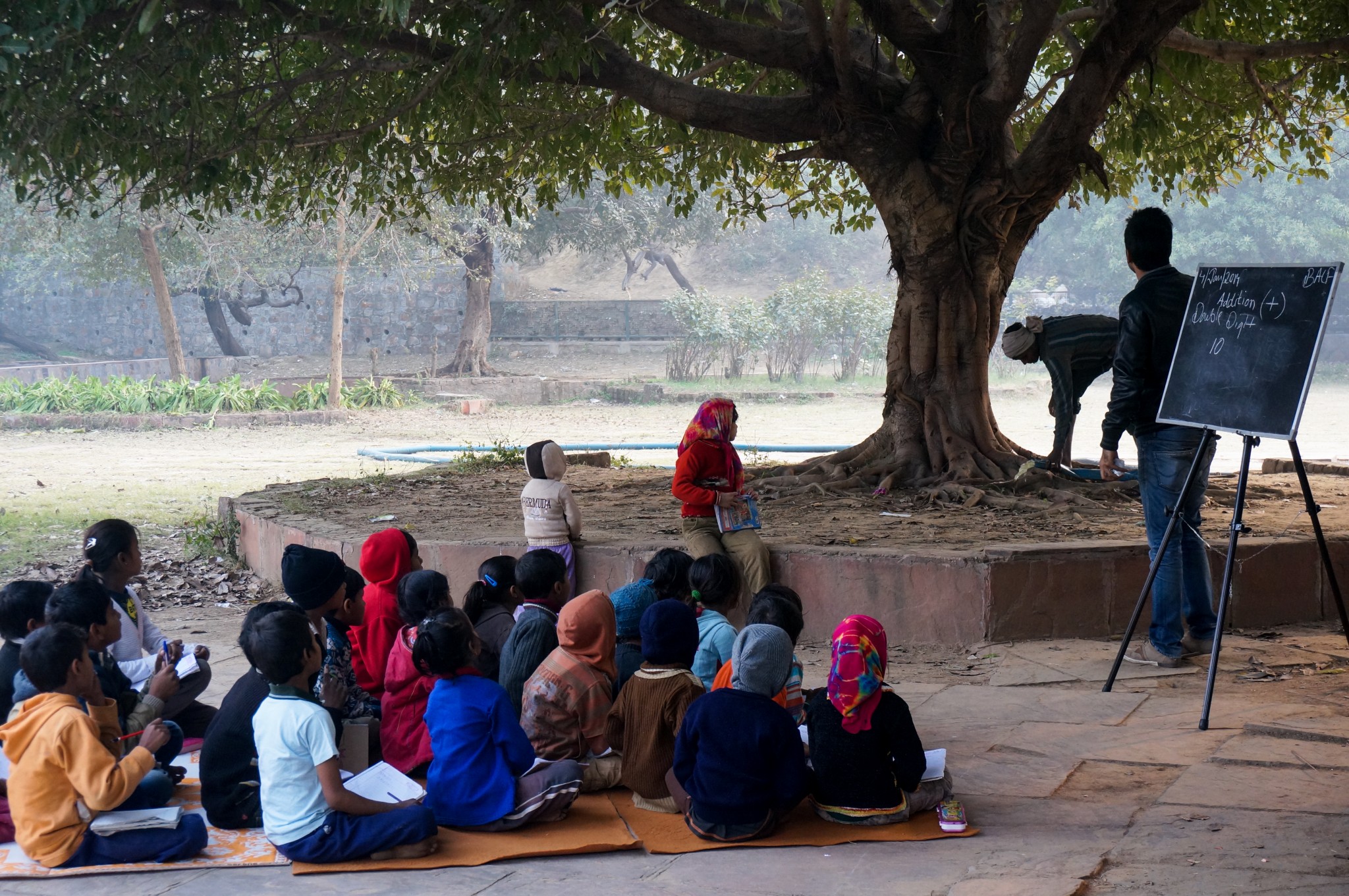
Digital education is not only for the elite or large cities. India’s most remote villages are now embracing digital learning, as smartphones and internet signals have reached these areas. Access to technology is not always a guarantee of effective learning. Many homes share a single device. While internet connectivity is readily available, power failures can occur frequently. When children are juggling daily chores with big dreams, structured learning is often neglected. Community Learning Centres are a game changer. These shared-learning hubs empower entire communities through digital access. They foster skills and increase productivity for all learners. In this blog, we will examine how community learning centres can transform rural education and what is required to establish one that truly makes a difference. What is a Community Learning Centre (CLC)? The community learning centres provide shared infrastructure, including computers with internet capability, digital boards and learning materials. The villagers can access online education in a structured environment. These centres, which are usually located in schools, Panchayat Bhavans, or other donated locations, bridge the digital divide by: Enhance learning with digital tools Mentorship Creating an environment of collaboration for group learning Promoting a culture that promotes curiosity and lifelong education Why are village learning centres needed? Online education is flexible, and it offers many resources. Rural areas, however, present several obstacles to its potential. Poor Internet connectivity in many homes Lack of digital devices (laptops/tablets/smartphones) Parents, students, and teachers have limited digital literacy There is no dedicated home study area Community learning centres play a vital role in inclusive education by addressing these issues collectively. Benefits of Community Learning Centres for Rural India Community learning centres can be a powerful way to empower villages and support online education. Access Devices and Internet Thanks to the shared infrastructure, students do not need to buy a smartphone or laptop. High-speed internet allows you to enjoy video classes and educational platforms. Structured learning Environment CLCs are a great alternative to the noisy and distracting environment of a home. They provide a calm, focused area that is very similar to a classroom. You can follow timetables to ensure that the learning process is consistent. On-site mentors or facilitators Trained volunteers or teachers can assist students in their digital skills and answer any questions. This is especially helpful for students who come from a first-generation family and do not have the support of their parents. Group learning and peer study Promotes collaboration, discussion and motivation among learners. It is a great way to develop communication and social skills that are often neglected in rural education. Adult and Youth Skills Development In addition to academic subjects, CLCs also offer workshops in digital literacy, career counselling, and vocational skills. The skills you acquire can help improve your productivity and job opportunities. Community engagement and parents’ involvement Parents are more likely to encourage their kids at home when they see the benefits of education. When the centre is owned by the local community, it creates a shared responsibility to nurture the local talent. How to Set up a Community Learning Centre in a Village A CLC can be created without a large amount of money. It takes planning, partnerships, and community will to create a CLC that works. Locate a suitable area Community Learning Centres can be established in a school, a village or a house. Make certain the area is well ventilated, clean, and has enough seating. Arrange Basic Infrastructure You can start by buying refurbished laptops, tablets, and desktops. Internet – Make sure that you have a good Wi-Fi dongle or connection. Power: If you live in an area where power outages are common, a backup option such as solar panels and inverters is essential. Collaboration between EdTech platforms and NGOs Partner with educational NGOs that offer free online or digital courses Khan Academy and AAS Vidyalaya are examples. Some CSR departments fund community learning initiatives. Nominate local coordinators or facilitators. A dedicated person from the village can manage the centre. They will schedule sessions and guide learners. It will improve the efficiency of operations and build trust. Promotion within the Community Hold village meetings to introduce the concept. Spreading the word is easy by engaging teachers, parents, youth leaders and local officials. Monitor, Improve, Extend Collect feedback regularly from users. Create new programs to meet demand, such as digital marketing and spoken English. Replicate the model in nearby villages. How to improve the effectiveness of community learning centres Use local languages and culturally relevant examples to keep your content local. Incorporate life skills into your curriculum. Time management, communication, and financial literacy all play a vital role. Reward regular learners for their consistency. By mixing age groups, you can encourage mentoring between students. Keep a record of your progress. Keep track of your progress. The role of local teachers in strengthening community learning centres Local educators are essential to the success and sustainability of Community Learning Centers. These teachers act as facilitators by guiding students in digital content, explaining complex concepts. By engaging the villages in the process, they can bridge the gap between traditional and online education. How digital literacy can improve entire villages Digital Literacy is essential for online learning. Community Learning Centers can host workshops on basic computer use, internet safety, and how to navigate educational platform. Digital literacy is a key factor in enhancing the education outcomes of villager, particularly women and youth. It also enhances social and economic development. Conclusion: Building an Intelligent Village Together Education is not the sole domain of urban elites. The Community Learning Centers provide a sustainable solution to online education for India’s rural areas. They also offer academic support and help with digital empowerment, skill development and future readiness. Each village that establishes community learning centres invests in their own people. With every child or adult who learns through it, they will be one step further to ending ignorance and poverty.
Benefits Of Creating Digital Classrooms In Schools
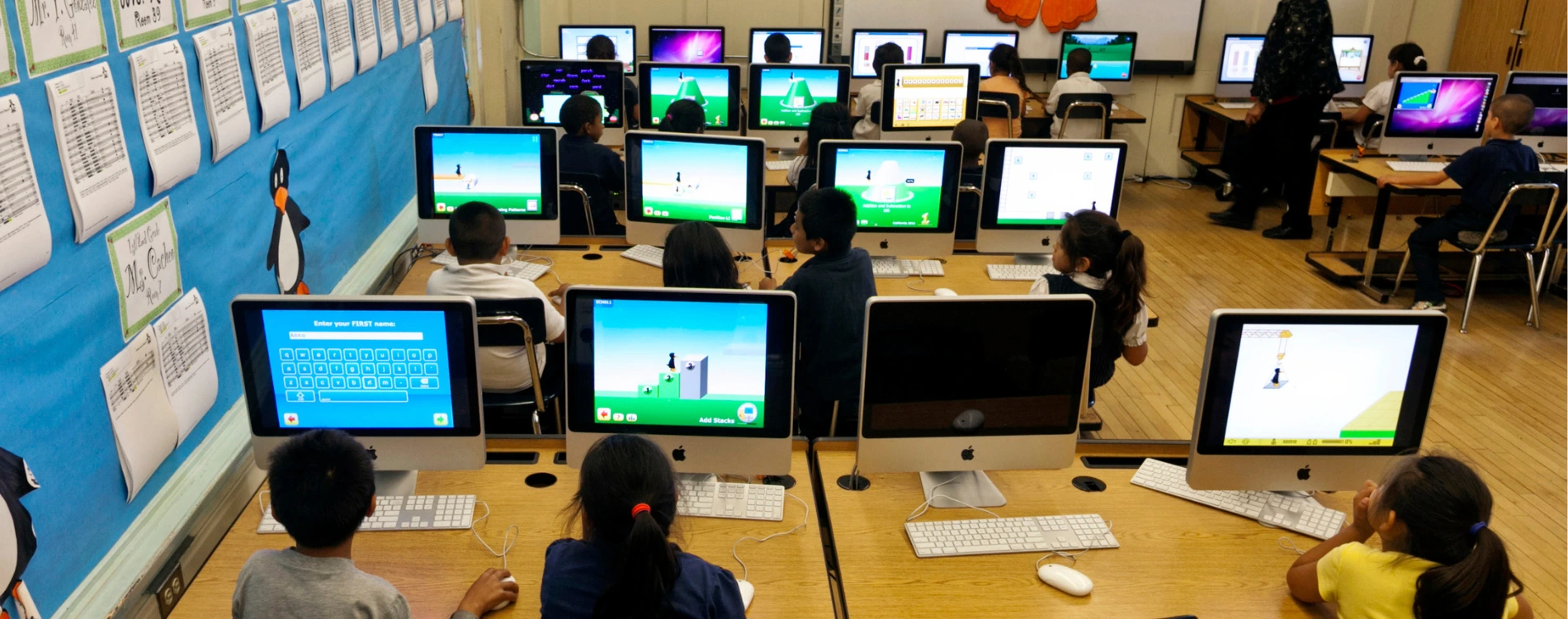
Benefits of Creating Digital Classrooms in Schools In the rapidly changing education landscape, digital classrooms have become a game-changer, holding immense potential for students and teachers. Although the conventional teaching environments have a role to play, the incorporation of digital tools in the classroom enhances the entire learning process to a great extent. By offering flexible learning prospects to enable innovative and engaging lesson plans, digital classrooms are transforming the way education takes place. This blog delves into the different advantages of establishing digital classrooms in schools. 1. Increased Access To Learning Resources One of the most notable benefits of digital classes is the ability to access learning materials with such ease. Gone are the times when the students were dependent on textbooks and printed handouts. With digital classes, e-books, internet-based articles, videos, and simulations that can be interacted with, all come at the touch of a button. A. Diversity Of Learning Styles Students will be able to access content in a variety of media: text, audio, video, and interactive modules, so that learning doesn’t rely on a single medium. This accommodates different students with different learning styles, whether visual, auditory, or kinesthetic. B. Instant Updates In an e-classroom, the resources get updated in real time, so students remain aware of the most current knowledge. New resources, new assignments, and new announcements get uploaded in seconds by the instructor,s so everyone stays informed. 2. Flexibility And Convenience Digital classroom environments enable students to learn at the time and in the manner that suits them best, offering a degree of flexibility that might not be possible in traditional classroom environments. A. Self-Paced Learning Students may repeat reviewing a lesson, rewinding videos, or retaking a quiz as many times as necessary to grasp a concept. Such self-directed learning benefits the students who need additional time to comprehend challenging subjects. B. Learning Anytime, Anywhere Digital classrooms dissolve time and location barriers. Students can take classes or watch lessons from anywhere at home, on vacation, or from another country. This allows education to be more accessible and inclusive to more people. 3. Enhancing Student Engagement Traditional classroom environments sometimes lag in holding students’ interest, particularly with long lectures or tedious instruction. Digital courses bring in several different interactive aspects that will maintain the interest and motivation of students. A. Interactive Tools Digital classroom environments offer such tools as quizzes, polls, discussion boards, and live chat, all of which allow active participation from students. Such tools enhance the dynamic nature of learning and get students actively involved with the material and each other. B. Gamified Learning Some digital tools provide gamified learning, transforming the lessons into challenges or games. The gamified feature of such tools makes learning interesting and encourages students to learn more actively. 4. Personalized Learning Experience All students have different learning requirements, and digital classrooms make it possible to adapt the lesson plans and resources to such personalized needs. Through the use of adaptive learning technologies, the lesson plans can be adapted to the specific requirements of each learner. A. Tailored Learning Pathways Digital classes use the power of analytics and evaluation tools to monitor the progress of every learner and make suggestions to improve areas of weakness. This enables instructors to establish customized pathways of learning, so students don’t get left behind and struggle to catch up. B. At Their Own Pace Students benefit from the liberty of learning at whatever pace they prefer in a digital classroom. Whether they must go slower and repeat concepts or accelerate through something they grasp quickly, the adaptability serves to support the style in which they learn. 5. Improved Student-Teacher Communication Interaction between students and teachers plays a critical role in building a successful learning ecosystem. Digital classrooms enable students and teachers to remain connected and work together with greater ease. A. Immediate Feedback Feedback in a traditional classroom may be delayed at times. With digital platforms, however, the instructor can give instant feedback on quizzes, projects, and homework. Such timely feedback enables the students to know where they have gone wrong and improve promptly. B. Open Channels Of Discussion Digital classes usually feature forums, email services, and direct messaging capabilities, offering numerous avenues for students to contact the instructors. This can promote more open communication and make students more at ease asking questions or seeking clarification. 6. Cost-Effective Education Digital classrooms not only provide advanced learning tools but also contribute significantly to reducing the costs associated with traditional education. With the ability to replace paper-based materials, physical textbooks, and even classroom infrastructure, schools can drastically lower their operational expenses. A. Reduction In Paper Usage One of the most notable cost-saving benefits is the reduction in paper usage. By transitioning to digital formats, schools can move away from printed materials such as textbooks, worksheets, and assignments. This not only cuts down on costs but also promotes sustainability by minimizing paper consumption, which is crucial in today’s environmentally-conscious world. B. Lower Infrastructure Costs In a traditional school setup, a significant portion of the budget is allocated to maintaining physical classroom spaces, purchasing furniture, and managing equipment. With digital classrooms, schools can reduce their reliance on costly infrastructure. Virtual assessments, online learning modules, and even virtual field trips can replace in-person activities, enabling schools to deliver high-quality education without the need for extensive physical resources. 7. Encouraging Collaboration And Teamwork Digital classrooms play a key role in fostering collaboration among students, even beyond regular school hours. Through online tools, students can easily collaborate on group projects, share resources, and engage in interactive discussions, ensuring that teamwork and peer learning are at the core of the learning experience. A. Virtual Group Work Platforms that support collaborative learning, such as shared documents, virtual whiteboards, and discussion boards, enable students to work together on assignments or projects in real-time, regardless of their physical location. This collaborative approach helps students build essential skills like communication, problem-solving, and critical thinking, which are vital for