What Is the Highest Literacy Rate in India?

Literacy is a cornerstone for development. It’s a tool to empower individuals and strengthen nations. Literacy in India is more than just reading and writing. It’s also about access, awareness, opportunities, and knowledge. India has made great progress in spreading education to rural and urban areas. One question remains: What is the highest literacy rate in India, and what does that reveal about the progress of the country? Explore how literacy is defined and which states are leading the way. Also, learn why it’s important to understand this number. Understanding the definition of literacy rate It is important to understand how to define the definition of literacy rate prior to entering the ranking. In India the country, anyone who is seven and over who is able to write and read in any language that is understood is considered to be literate. The literacy rate is a measure of how many people are educated in a group of people aged seven and over. The literacy rate represents the education level of an entire nation, and also the efficiency of the education system and the policies of the government. What Is the Literacy Rate in India Today? According to the most recent data from the national census, the total literacy rate in India is about 80.9 percent among those aged seven and over. This is an impressive improvement, especially in rural areas, which were not able to catch up with urban areas. The breakdown: Literacy among women is about 74.6% Literacy of males is about 87.2% Literacy rate in urban areas is around 88.9% The literacy rate of rural areas is around 77.5% The figures, though positive, do not eliminate the gap that remains in the urban and rural communities and between females and males. India’s primary goal in education is to close the gaps. States with the Highest Literacy Rate in India The northeastern region and the southern region have consistently had the highest literacy rate in India. These states have heavily invested in education, teacher-training, and community involvement. Here’s a look at the frontrunners: Mizoram 98.2%Mizoram, a small but progressive state in India, now has the highest rate of literacy. This success was made possible by community-led initiatives in education, dedicated teachers and an equal focus on men and women. Lakshadweep – 97.3%Union Territory’s high rate of literacy can be attributed in part to a strong education infrastructure and the local participation. Nagaland 95.7%Nagaland’s high literacy rate has been maintained by a combination of focused educational reforms, strong missionary schools and strong education. Kerala – 96.3%Kerala’s inclusive and accessible educational system continues to be hailed by many as a benchmark. It has inspired literacy movements in India. Meghalaya – 93.5%Meghalaya has moved up to the top five thanks to the government’s and community’s efforts. On the other side of the spectrum are states such as Andhra Pradesh and Rajasthan, where literacy rates remain below 75%. There, factors like poverty, social standards, and lack of infrastructure continue to impact educational outcomes. Why Some States Excel in Literacy This high rate of literacy is not just a result of statistics. It’s a mindset. The states that prioritize education as a shared responsibility and not only a government-run program are leading the way today. The following are key contributing factors: Implementation of effective school enrollment drives. Adult education and strong female literacy programs. Participation of the community through self-help groups, NGOs and other organizations. Early adoption of digital learning in rural and semi-urban areas. Kerala, Mizoram and Lakshadweep provide excellent examples of how small populations can achieve universal literacy when they are supported by strong policies. Challenges Faced by Low-Literacy States A few states are still struggling to catch up despite progress. The growth of literacy is slowed by large populations, rural settlements scattered across the country, and socioeconomic barriers. The following are the major challenges: Gender disparity and school attendance. Teachers in remote areas are short of qualified teachers. Financial constraints are a major cause of early school abandonment. Access to digital learning resources is limited. How we address these challenges in the next few years will determine whether or not we reach our goal of nationwide literacy, especially in economically-weak regions. The Role of NGOs and Social Organisations Civil society and non-profit organisations play an equally important role in raising literacy levels. Government programs are essential, but they’re not the only ones. NGOs that focus on education reach communities where the formal system often fails to penetrate. Organizations such as Vidyalaya.org provide resources, training and community-based programmes to help support the education of children in underprivileged areas. Many education NGOs in India helped to bridge learning gaps, improve attendance and empower women with literacy. The best NGOs for child education in India focus not only on basic reading and writing, but also on holistic teaching helping children to dream beyond the classroom. Why Knowing the Highest Literacy Rate Matters It’s not just trivial to ask which state has the highest literacy rate in India. This is a reflection on what works and what doesn’t in education policy. These high literacy states serve as benchmarks to show how investments in infrastructure, teachers and social inclusion can have a lasting impact. These models can be used to guide national strategies and help low-performing areas design more effective literacy campaigns. Literacy is about more than just a percentage. It’s also the foundation of equality, innovation and empowerment. Key Data Insights India’s total literacy rate: 80.9% Highest literacy: Mizoram (98.2%) Urban literacy: 88.9% | Rural literacy: 77.5% Male literacy: 87.2% | Female literacy: 74.6% States needing focus: Andhra Pradesh, Bihar, Rajasthan The Road Ahead India’s journey to complete literacy is not yet over, but its progress is impressive. The combination of policy reforms and digital inclusion as well as community involvement is helping to create a nation that is more educated and equitably distributed. Collaboration is key to achieving the dream of 100% literacy. This collaboration will be between governments, non-governmental organizations, and those
How Poverty Affects Education: Understanding the Barriers to Learning
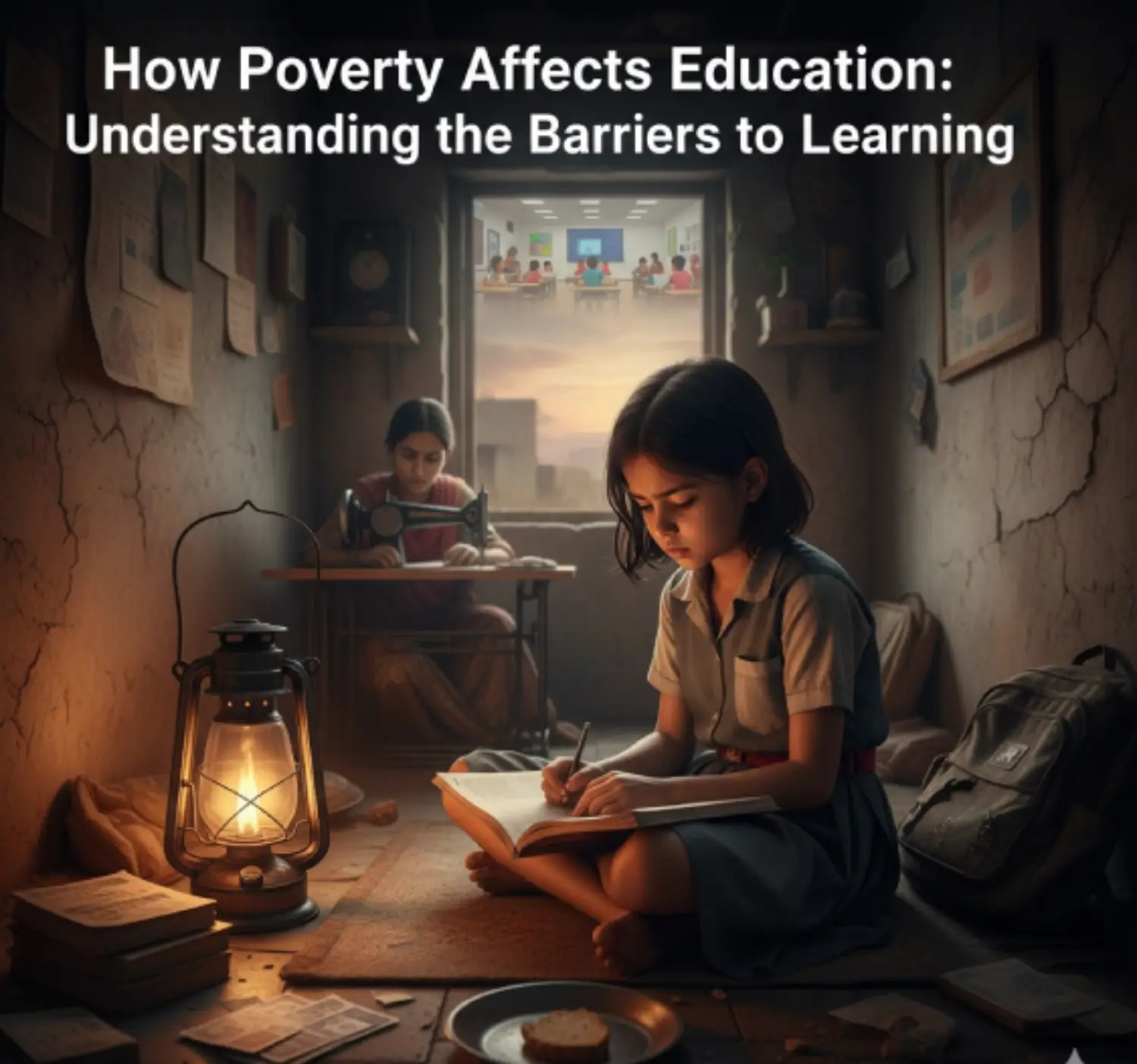
Education is often referred to as the great equalizer. However, in reality, it is not available to all. Millions of Indian children struggle to get a good education due to poverty. In India, the relationship between poverty and education is complex. Financial struggles impact every aspect of learning – from attending school to remaining motivated to complete studies It is a vicious cycle: Without education, children are trapped in low-income situations, and without financial assistance, they can’t access quality education. To create equal opportunities, it’s important to examine the barriers and challenges that exist, as well as possible solutions, to overcome the deep-rooted links between poverty and education in India. Understanding socio-economic barriers to education Socioeconomic barriers to education include all obstacles that children from low-income families face when trying to access learning opportunities. They include costs for transportation, uniforms, school supplies. Families often place immediate survival above long-term learning. Parents often pull their children out of the classroom to earn money, which is one of the main causes of education inequality. The gap between rich and poor students continues to grow Child labor and its impact on education In India, the impact of child labor on education is significant. To support their families, millions of children are forced to work in low-paying jobs. Once a child starts working, it becomes extremely difficult to return Instead of learning math, science, or reading, children spend hours in the fields, in factories, or doing domestic work. Not only are they deprived of formal education, but their chances of escaping poverty in the future are also diminished. In India, tackling child labor is crucial to breaking the cycle of poverty and poor access to education in India. Student Economics: Challenges and Opportunities Many families consider sending their children to school a luxury. The economic challenges students face are many, ranging from the hidden costs of education to a lack of digital resources. Even though public education is free, extra expenses like books, transportation, and exam fees can create financial stress.. These challenges intensified during the pandemic. Children from wealthy households were able to continue their classes online while poorer students did not have access to devices or the internet.These structural gaps highlighted and showed how education inequality keeps repeating. Hidden Costs of Learning Hidden costs are one of the greatest obstacles to bridging the gap between poverty and education in India. Indirect expenses deter many families, even though policies aim to provide free education. These costs include: Costs of uniforms, study materials, and other school supplies Exam fees and extra coaching Transportation costs for students commuting from rural areas The loss of household income when children attend school These socioeconomic barriers to education are largely responsible for the high dropout rate in India, preventing many children from completing their education. Causes of Educational Inequality The roots of inequality run deeper than money.The causes of educational inequality include poor educational infrastructure, a shortage of qualified teachers, and unequal distribution between rural and urban schools. Many rural schools lack electricity, safe drinking water, or adequate classrooms. Inadequate sanitation facilities are a major reason for female students to drop out. These systemic issues widen the gap, making rural children more susceptible to the effects of poverty and education in India. Role of government and policy Government initiatives such as the Right to Education Act and midday meal programs address these challenges. The provision of meals improved attendance, while free books and scholarships helped to reduce costs. However, the impact of these policies is limited if they do not also address socioeconomic barriers to education. For long-term success, it is essential to have stronger monitoring systems, better teacher training, and more community involvement Platforms like Vidyalaya.org can help by providing school management systems to improve transparency and access in education. Benefiting both teachers and students. Participation of the Community and Non-Governmental Organizations Government initiatives cannot solve the deep-seated issues of education and poverty alone. Local communities and NGOs play a crucial role. Community-based learning programs, vocational training, and sponsorships to help low-income kids have been impressive. By pooling resources and encouraging community involvement, grassroots initiatives combat basic educational inequalities causes They also ensure children don’t fall through the cracks. Supported by organizations such as Vidyalaya.org, many digital learning projects help to expand access in underprivileged areas. Breaking the cycle of poverty through education Breaking the cycle of poverty requires addressing child labor education impact, affordable schooling, and reducing dropouts. Education can transform families and entire communities. But this transformation requires structural and social changes. Solutions include localized teaching in regional languages, digital access, and vocational training. To have a long-term effect, it is important to empower families to view education as a positive investment and not merely a burden. FAQs on How Poverty Affects Education 1. What is the impact of poverty on education in India? Poverty limits access to education, increases dropout rates, and limits opportunities. The connection between poverty and education in India demonstrates how economic hardship directly affects learning. 2. What are the main socioeconomic obstacles to education? The most significant socioeconomic barriers to education are financial difficulties, lack of infrastructure, and hidden costs of schooling, as well as poor nutrition. All of these factors lower academic performance. 3. How does child labor affect education? The Child Labor Education Impact has a severe impact on children. They are taken away from the classroom and forced to work, preventing them from achieving academic success. 4. What are the main causes of educational inequality in India? Uneven resource distribution, teacher shortages, rural-urban divides, and inadequate facilities in marginalized areas are the main educational inequality causes Poverty limits access to education, increases dropout rates, and limits opportunities. The connection between poverty and education in India demonstrates how economic hardship directly affects learning. The most significant socioeconomic barriers to education are financial difficulties, lack of infrastructure, and hidden costs of schooling, as well as poor nutrition. All of these factors lower academic performance. The Child Labor Education
How CSR Efforts Are Revolutionizing Indian Education

Education has long been recognized as one of the most important pillars of social and economic growth. In India, differences in education between cities and villages, boys and girls, and rich and poor have made Corporate Social Responsibility (CSR) an important force for change. CSR activities have moved from compliance and sponsorship to being the drivers of scalable, sustainable, and impactful transformation in the Indian education sector. Education Has Emerged as a Major Area of Focus For CSR in India. The Companies Act, 2013, marked a major turning point in CSR for India. Now that companies have to give 2% of their average profits to social causes, education naturally became a top priority. This isn’t just because education is important for the country’s growth, but also because there are still many challenges in India’s education system, like poor infrastructure, low learning levels, high dropout rates, and a growing digital divide. Supporting education helps CSR programs create lasting positive change in society, whether it’s by improving early learning, teaching digital skills, or helping youth develop job-ready skills. From Infrastructure To Impact: The Changing Csr Strategy Early CSR in education is supposed to involve building schools, donating materials, or funding scholarships. Although all these remain significant, the narrative has transformed. CSR programs nowadays focus on learning outcomes, equity, and sustainability. Modern interventions are increasingly aimed at Strengthening the foundations in reading and numeracy Bridging the gaps in learning via remedial programs Incorporating digital tools and interactive material into the classroom Supporting self-directed, personalized learning environments This transformation indicates a more profound insight: quality and relevance, not just access, are as critical. Empowering Educators And Local Communities One of the most significant CSR-driven education program changes is the focus on enabling teachers and communities. Lack of qualified teachers and the absence of community participation weaken the performance and attendance of students in most areas. Teacher training programs sponsored by CSR now emphasize Blended education and digital learning Strategies for classroom innovation and student engagement Peer learning and knowledge-sharing networks In parallel, community-led models are gaining ground where parents, school management committees, and local volunteers play active roles in tracking attendance, promoting girls’ education, and running after-school support programs. This kind of local involvement helps build trust, a sense of ownership, and long-term success Addressing The Digital Divide In Education The COVID-19 crisis exposed the harsh digital divide in Indian education. Millions of students could not access the digital classroom because they did not have the devices, connectivity, or digital competence. CSR programs responded rapidly by pivoting to promote digital inclusion, now a foundation in post-pandemic education recovery. Key initiatives include: Tablet, smartphone, and internet dongle distribution The development of community digital learning centers Curation of digital content in regional languages to enhance accessibility Educating students and teachers on the efficient use of digital platforms These interventions are supporting a transition from school-based learning to Anytime, Anywhere Learning enabling students to learn at their own speed, anywhere in the world. Inclusive Education: Reaching The Unreached CSR initiatives also target equity and inclusion; providing education to people who have been traditionally marginalized. Such target groups include: Girls from rural and tribal communities Children with disabilities Migrant laborers’ children Street children and dropouts By targeting particular barriers, be it concerns regarding safety, stigma, lack of resources, or lack of school facilities; CSR-funded programs are contributing to the mainstreaming of these children into the education system. Such measures entail: Safe transportation and clean toilet facilities for everyone. Special education and assistive technologies for children with special needs Bridge courses to re-enter formal education for school dropouts Linking Education To Livelihood: Vocational And Life Skills Training Education in the modern world is not just all about academic achievement; it also needs to equip students to take on life and work. CSR-funded skilling programs have begun to incorporate vocational training and life skills into school-level education, particularly in rural and semi-urban areas. They focus on: Carpentry, computer skills, and dressmaking are among the job-oriented skills Soft skills such as communication, teamwork, and financial education Exposure to career tracks through internships, workshops, and mentorship By connecting education to employability, such programs provide a pathway from learning to livelihood, especially for youth in economically weaker sections. Measuring The Impact And Sustaining It One of the issues CSR programs continue to struggle with is measuring long-term impact. More programs remain in pilot phases or run in limited geographies. Yet, increasingly more programs now apply evidence-based approaches, using data to quantify: Rates of attendance and retention Better reading and math abilities Transition into higher education or employment Further, the emphasis begins to be placed increasingly on developing sustainable ecosystems. This encompasses: Empowering local teachers and workers to conduct the programs on their own Fostering public-private partnerships to achieve scale Linking CSR efforts to government education missions such as Samagra Shiksha Technology, Innovation, And Future Potential Corporate social responsibility in education is not limited to the conventional models anymore. With the quick development of technologies, vast opportunities exist to utilize AI-driven personalized learning systems Gamified applications for foundational knowledge Virtual labs and simulations in science education Local e-learning sites for regional access The objective is to make education more inclusive, engaging, and ready for the future, particularly for students in underprivileged communities. Conclusion: CSR As A Catalyst For Educational Change Corporate Social Responsibility (CSR) is no longer just about making one-time donations or small gestures. In India today, it’s become a powerful force driving real change in education—bringing new ideas, helping to include everyone, and making a bigger impact. Even though there are still challenges, like tracking progress, expanding efforts, and working with government systems, things are moving in the right direction. With more dedication, teamwork, and public involvement, CSR has the potential to keep transforming the education system in India. Every computer lab setup, every teacher trained, and every child back in school is a step closer to a more educated and fair
Collaborating With Corporates: How Businesses Can Support Community Education
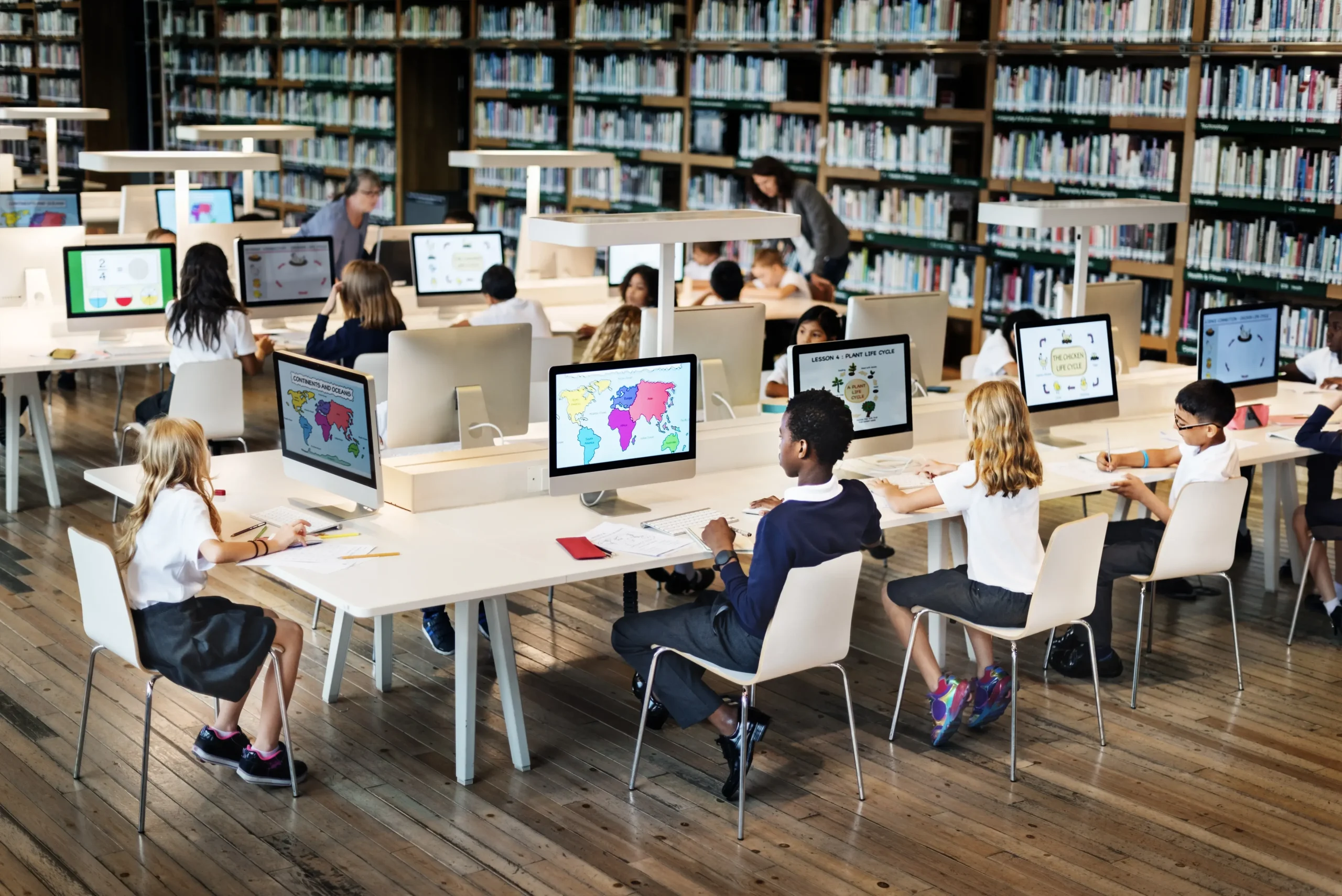
In today’s rapidly evolving educational landscape, collaboration between corporations and educational institutions has become increasingly vital. Businesses possess the resources, expertise, and reach to make significant contributions to community education, fostering societal development and creating a more skilled workforce. Corporate engagement in education is not just a philanthropic gesture but also a strategic investment in the future of the economy and workforce. The Imperative For Corporate Involvement Education serves as the cornerstone of societal progress, yet many communities, especially in developing regions, face challenges such as inadequate infrastructure, limited access to quality teaching, and insufficient learning materials. Corporate involvement can bridge these gaps, ensuring that education is both accessible and of high quality. When businesses contribute to education, they help build a society with better employment opportunities, innovation, and sustainable growth. Forms Of Corporate Support Corporations can play a pivotal role in enhancing community education through various initiatives: Financial Contributions: Direct funding can aid in constructing schools, providing scholarships, and supplying essential learning materials. Many corporations allocate a portion of their CSR budgets to educational initiatives, including online education in school, funding projects that support underprivileged students and enhance digital learning opportunities. Employee Volunteering: Encouraging staff to volunteer as mentors or tutors can offer students valuable insights and guidance. Employees with expertise in various fields can contribute by teaching specialized subjects, providing career counseling, or mentoring students from disadvantaged backgrounds. Infrastructure Development: Assisting in building and maintaining educational facilities enhances the learning environment. Companies can invest in school construction, provide classroom equipment, or fund science and computer labs to improve learning conditions. Technology Integration: Providing technological tools and training can modernize education, making it more engaging and effective. Many businesses donate laptops, tablets, or internet access to schools, enabling digital learning and bridging the digital divide. Industry-Academic Partnerships: Businesses can collaborate with educational institutions to create industry-relevant curricula, internships, and skill-based training programs. This approach ensures that students are better prepared for the job market with practical knowledge and hands-on experience. Case Studies Of Successful Collaborations Several companies have successfully implemented educational initiatives, positively impacting communities. Here are some notable examples: Larsen & Toubro (L&T): L&T’s STEM Education program, ‘Engineering Futures,’ has reached over 38,000 students across 205 schools, equipping them with knowledge in science, technology, engineering, and math. This initiative ensures that students from economically weaker sections gain exposure to modern STEM education. P&G India’s Shiksha Initiative: This program has impacted over 3.5 million children by enhancing educational infrastructure and empowering marginalized communities through education. Through partnerships with NGOs and local governments, P&G helps build classrooms, provide learning materials, and train teachers. Infosys Foundation: Infosys has been instrumental in funding the development of digital classrooms, promoting coding and programming skills among students, and supporting educational institutions in rural areas. Benefits To Corporations Engaging in community education initiatives not only fulfills corporate social responsibility but also provides tangible benefits to businesses: Enhances Brand Reputation: Demonstrates a commitment to societal well-being, leading to increased brand loyalty and trust among consumers and stakeholders. Develops Future Talent: Investing in education cultivates a skilled workforce, ensuring a steady pipeline of talented professionals who are equipped with relevant skills and industry knowledge. Strengthens Community Relations: Builds trust and goodwill within the community, fostering long-term relationships and potential business opportunities. Fosters Innovation: Exposure to educational initiatives often inspires companies to develop new products, services, and solutions catering to the education sector. Challenges In Corporate-Education Collaboration While corporate involvement in education has numerous benefits, certain challenges must be addressed: Sustainability of Initiatives: Short-term projects may provide temporary relief but do not lead to long-lasting change. Companies must focus on sustainable, scalable models that ensure continued impact. Alignment with Educational Needs: Businesses need to collaborate closely with educators and policymakers to ensure that their contributions align with actual community needs rather than being driven solely by corporate agendas. Measuring Impact: Establishing clear metrics to assess the effectiveness of educational initiatives can help companies refine their strategies and maximize impact. The Way Forward For corporate-education collaborations to be truly impactful, businesses must adopt a long-term, strategic approach. This includes: Partnering with governments, NGOs, and academic institutions to create well-rounded educational programs. Encouraging cross-sector collaborations where multiple companies join forces to address broader educational challenges. Leveraging technology and digital learning solutions to reach a wider audience and ensure quality education for all. Conclusion Corporate collaboration in community education is a symbiotic relationship that fosters societal growth and business development. By investing in education, businesses can create a lasting impact, paving the way for a brighter, more equitable future. As more companies recognize the importance of supporting education, the potential for transformative change increases, ensuring that knowledge and learning become accessible to all.
Innovative CSR Approaches to Support Underprivileged Students in the Digital Age
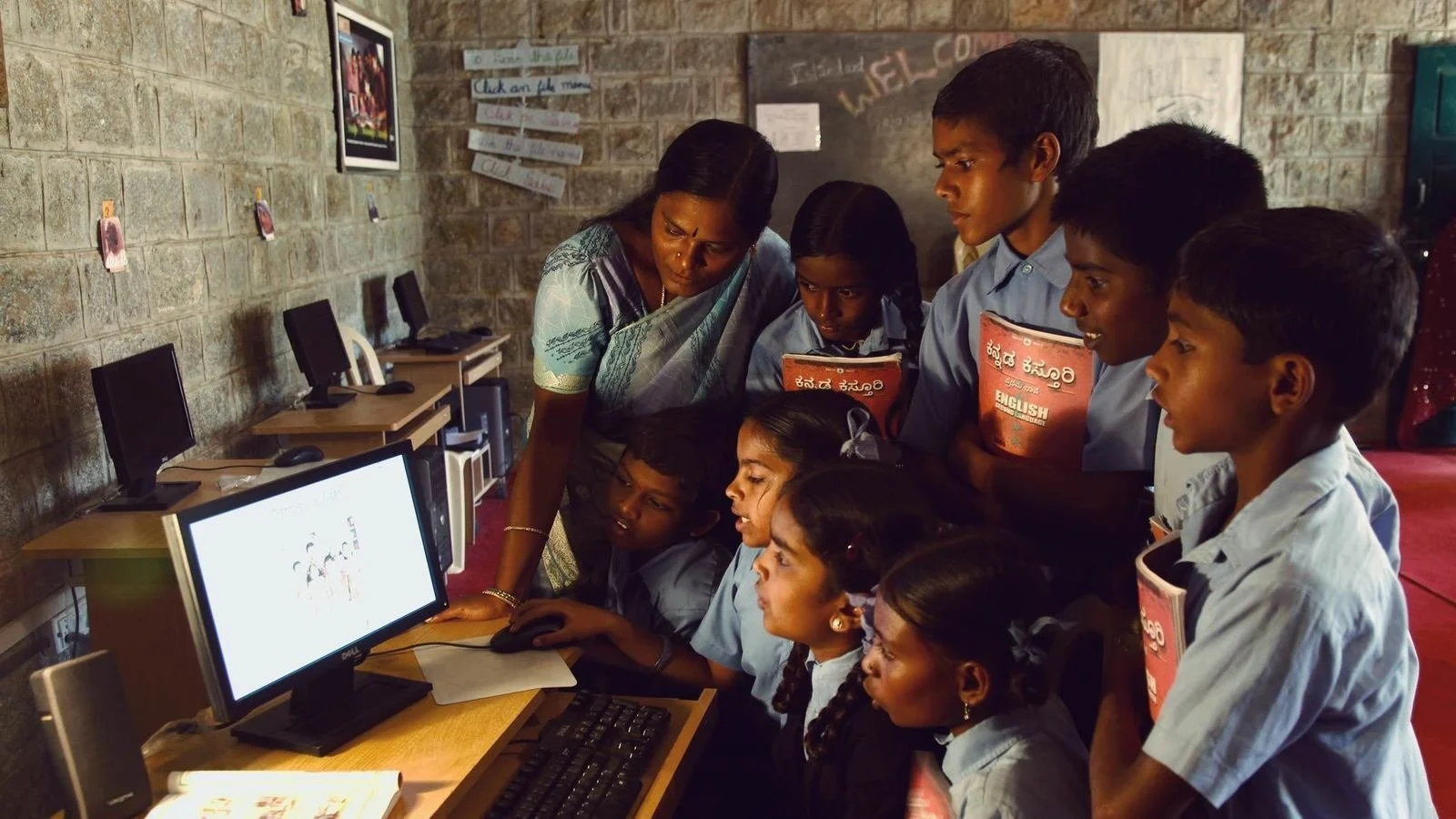
Education is a fundamental right, yet millions of underprivileged students in India struggle to access quality learning opportunities. With the rise of digital education, technology has the potential to bridge this gap. However, financial constraints, lack of digital infrastructure, and inadequate training remain significant barriers. Corporate Social Responsibility (CSR) initiatives have emerged as a powerful tool to support these students by integrating innovative approaches that leverage technology, infrastructure development, and skill-building programs. Companies across sectors are making substantial contributions to ensure that education reaches the most vulnerable sections of society, creating a brighter future for underprivileged students. The Role of CSR in Digital Education for Underprivileged Students With rapid digital transformation, traditional education models are evolving. CSR initiatives are playing a crucial role in making education more accessible and inclusive. Companies are investing in smart classrooms, e-learning platforms, digital devices, and teacher training to equip students with the necessary skills for the digital age. Key areas where CSR is making a difference include: Providing Digital Infrastructure: Establishing smart classrooms, distributing devices, and ensuring internet connectivity. Developing E-Learning Content: Creating localized, multilingual, and interactive educational resources. Training Teachers and Students: Conducting digital literacy programs to enhance learning outcomes. Financial Aid and Scholarships: Supporting students with tuition fees, books, and online course subscriptions. Innovative CSR Approaches Transforming Education 1. Smart Classrooms and Digital Learning Solutions One of the most impactful CSR initiatives is the introduction of smart classrooms in government and low-income private schools. Companies such as Infosys Foundation, TCS, and Wipro have been instrumental in setting up digital learning platforms that provide access to quality educational resources. For example, the Tata Trusts’ ‘Connected Learning Initiative (CLIx)’ integrates technology into classrooms to enhance learning experiences. These digital classrooms use multimedia content, interactive modules, and AI-based learning tools to engage students more effectively. 2. Free Digital Devices and Internet Connectivity Many underprivileged students lack access to smartphones, tablets, and laptops, making online education a challenge. CSR programs by companies like Samsung, Google India, and Dell Foundation focus on distributing digital devices and ensuring internet connectivity in remote areas. Initiatives like Google’s ‘Internet Saathi’ program have empowered thousands of students, especially girls, by providing internet access and digital literacy training in rural India. 3. Developing Multilingual E-Learning Content Language barriers often prevent students from accessing quality education. Many CSR programs are addressing this by developing multilingual and localized e-learning content. For example, the Reliance Foundation’s Education for All initiative has partnered with e-learning platforms to create educational content in regional languages, making learning accessible for students who are not fluent in English. 4. Teacher Training and Digital Literacy Programs Teachers play a critical role in ensuring the effectiveness of digital education. Several CSR initiatives focus on training teachers in digital pedagogy, helping them integrate technology into their teaching methods. Organizations like the Azim Premji Foundation and Microsoft’s ‘Project Shiksha’ provide teacher training programs to improve digital literacy and effective use of technology in classrooms. Through these programs, educators learn to use e-learning tools, interactive applications, and AI-powered analytics to track student progress and personalize learning experiences. 5. Scholarships and Financial Assistance for Online Education The economic impact of the digital divide is significant, with many students unable to afford online courses and digital learning tools. CSR-driven scholarship programs and financial assistance schemes help bridge this gap. Corporations such as HDFC Bank, ICICI Foundation, and Infosys Foundation provide financial aid to students from economically weaker sections, ensuring that financial constraints do not hinder their education. 6. Mobile Learning and Community Digital Centers For students in remote areas with limited school infrastructure, mobile learning initiatives and community digital centers serve as an alternative mode of education. CSR-backed programs such as the L&T CSR Digital Learning Vans bring educational content directly to students, especially in rural areas. These mobile classrooms are equipped with digital learning kits, projectors, and internet connectivity to enable learning in places where traditional schools are not available. Impact of CSR-Driven Digital Education Initiatives The impact of CSR initiatives in supporting underprivileged students in the digital age has been profound. Some of the key benefits include: Improved Learning Outcomes: Access to digital tools and smart classrooms enhances comprehension and engagement. Increased Enrollment and Retention: Schools equipped with digital learning solutions have witnessed higher attendance rates. Empowerment of Girls and Marginalized Communities: Digital education has provided new opportunities for students from disadvantaged backgrounds. Skill Development for the Future Workforce: Digital literacy programs help students develop critical thinking, coding, and problem-solving skills, preparing them for the future job market. Challenges and the Way Forward Despite the success of CSR initiatives, several challenges remain, including limited access to electricity, resistance to digital adoption, and the need for long-term sustainability. To ensure the continued success of CSR-driven digital education programs, the following steps must be taken: Stronger Public-Private Partnerships: Collaboration between governments, corporations, and NGOs can scale up digital education programs. Investment in Localized Digital Content: Creating region-specific e-learning materials will make education more inclusive. Ensuring Affordable Internet Access: Expanding connectivity in rural areas is essential for digital learning to reach every student. Continuous Training for Educators: Regular teacher training programs must be conducted to keep up with evolving digital tools and methodologies. Conclusion Corporate Social Responsibility initiatives have become a driving force in transforming education for underprivileged students in the digital age. By providing smart classrooms, digital devices, scholarships, and teacher training, companies are not only fulfilling their CSR obligations but also making a lasting impact on the future of education in India. As technology continues to reshape the learning landscape, CSR-driven digital education programs will play a crucial role in ensuring that every child, regardless of their socio-economic background, has access to quality education. By fostering collaboration and innovation, these initiatives can help bridge the educational divide and create a more equitable learning environment for all.
How CSR Initiatives Are Transforming Education In India: A Game Changer For Future Generations

Corporate Social Responsibility (CSR) has emerged as a important force in reshaping India’s educational landscape. By channeling resources and expertise into the education sector, corporations are not only fulfilling their ethical responsibility but also promoting social growth. This article delves into the multifaceted impact of CSR initiatives on education in India, highlighting key programs, challenges, and the transformative potential for future generations. The Growing Role Of CSR In Education CSR initiatives in the education sector involve companies allocating resources to improve learning opportunities for underprivileged children, enhance school infrastructure, and introduce skill-based programs. The Indian government has played a crucial role in this transformation by making it mandatory for companies with a net profit above ₹5 crore to spend 2% of their average net profits on CSR activities, including education. This policy has encouraged businesses to take proactive steps toward educational development. Companies such as Tata Group, Infosys Foundation, and HDFC Bank have led revolutionary initiatives to uplift education in India. From building schools and providing scholarships to supporting digital literacy and vocational training, these organizations are transform the educational landscape. Their efforts are particularly impactful in rural and underserved areas, where government resources are rarely insufficient. Why CSR In Education Is A Game Changer CSR initiatives in education do more than just provide access to learning. they empower individuals, create equal opportunities, and contribute to nation-building. When companies invest in education, they are not only fulfilling their corporate responsibility but also tailoring the workforce of tomorrow. By combining learning gaps, improving infrastructure, and introducing skill-based education, CSR is laying the foundation for a more educated and empowered India. As corporate involvement in education continues to grow, the future looks promising for millions of students across India. With sustained efforts and strategic investments, CSR in education is indeed a game changer for the nation’s future generations. State-Wise CSR Spending On Education (Fy 2014-15 To Fy 2022-23): Corporate Social Responsibility (CSR) initiatives have significantly impacted India’s education sector, with spending patterns changing across different states. A state wise breakdown of CSR education spending reveals that certain states have consistently attracted higher investments, reflecting both corporate presence and regional developmental needs. Sr. No State/UT FY 2014-15 FY 2015-16 FY 2016-17 FY 2017-18 FY 2018-19 FY 2019-20 FY 2020-21 FY 2021-22 FY 2022-23 1 Maharashtra 724.59 1196.34 1483.91 1277.81 1839.73 1985.82 3464.81 5380.41 5497.32 2 Karnataka 277.1 344.4 379.7 546.5 798.4 1181.2 717.7 1033.8 1164.2 3 Gujarat 1461.6 1604.26 2008.42 550.86 683.95 701.07 1461.6 1604.26 2008.42 4 Andhra Pradesh 182.99 266.96 316.68 208.35 186.65 204.74 155.18 176.89 361.44 5 Tamil Nadu 1174.07 1432.06 1562.48 290.67 239.73 351.6 1174.07 1432.06 1562.48 6 Uttar Pradesh 907.32 1339.18 1152 375.51 427.68 656.42 907.32 1339.18 1152 7 Assam 79.37 116.84 86.69 103.67 81.85 130.21 97.17 147.79 126.89 8 Arunachal Pradesh 1.1 0.17 10.25 10.05 6.8 12.31 5.27 2.48 5.22 9 Andaman and Nicobar 0 0.33 0.05 0.08 0 0 0.05 4.78 0.95 Observations: Maharashtra has consistently received the highest CSR funds in education, with spending increasing from ₹724.59 crores in FY 2014-15 to ₹5,497.32 crores in FY 2022-23. Karnataka and Gujarat have also attracted substantial CSR investments, reflecting their status as major corporate hubs. States like Andhra Pradesh, Tamil Nadu, and Uttar Pradesh have seen fluctuating but generally increasing CSR contributions towards education over the years. Corporate Social Responsibility In The Education Sector Corporate Social Responsibility (CSR) has emerged as a transformative force in India’s education sector, bridging gaps in accessibility, infrastructure, and quality of learning. Education is a fundamental right, yet millions of children, particularly in rural and underprivileged communities, lack access to quality schooling. Recognizing this, corporations are increasingly investing in educational initiatives that run long-term social impact. CSR initiatives cover a wide spectrum, including building schools, funding scholarships, training teachers, integrating technology into classrooms, and promoting skill-based learning. These efforts align with Sustainable Development Goal, which focuses on ensuring inclusive, equitable, and quality education for all. Several corporate giants have made significant contributions to education in India. The Tata Group, for example, has established premier institutions like the Indian Institute of Science (IISc) and Tata Institute of Fundamental Research (TIFR). Additionally, programs such as “Masti Ki Pathshala”, which supports street children, and “Titan Kanya”, which empowers girls through education, reflect Tata’s commitment to inclusive learning. Similarly, the Infosys Foundation has played a key role in improving education accessibility for marginalized communities. Their initiatives focus on STEM learning in rural areas, girl child education, and linking education with employability. The foundation also collaborates with various organizations to upskill women in technology and support midday meal schemes, ensuring better retention rates in schools. CSR Spending On Education Initiatives (INR Crores) Sr. No Year Scholarships (INR Crores) School Infrastructure (INR Crores) Teacher Training (INR Crores) Digital Learning (INR Crores) Total CSR in Education (INR Crores) 1 2016-17 1200 2300 950 750 5200 2 2017-18 1400 2500 1100 950 5950 3 2018-19 1600 2900 1200 1200 6900 4 2019-20 1750 3200 1350 1400 7700 5 2020-21 1500 2800 1250 1600 7150 6 2021-22 1600 3000 1400 1800 7800 7 2022-23 1850 3500 1600 2100 9050 Observations: School Infrastructure consistently receives the highest share of CSR funding, reflecting a strong corporate focus on building and improving school facilities. Digital Learning has seen a sharp increase in CSR allocations since 2019-20, driven by the pandemic and the need for online education. Scholarships have maintained steady growth, ensuring financial support for students from underprivileged backgrounds. Teacher Training programs have been receiving increased funding, recognizing the importance of improving the quality of education. The Role Of CSR In Promoting Skill-Based Education In today’s dynamic job market, skill-based education has become a necessity. Traditional academic institutes often fail to equip students with practical, industry-relevant skills, creating a gap between education and employment. To address this, CSR initiatives are increasingly promoting job-related training, technical education, and entrepreneurship programs. Public Sector Undertakings (PSUs) and private corporations have been instrumental in funding professional training institutes, establishing skill development centers, and supporting apprenticeship programs. Between 2019
Empowering Rural Education: Csr Initiatives Transforming India’s Learning Landscape
Education is the foundation of progress, yet millions of children in rural India struggle to access quality learning due to infrastructural challenges, lack of trained teachers, and limited digital resources. To bridge this gap, corporate social responsibility (CSR) initiatives have become instrumental in empowering rural education. Companies across various sectors are investing in innovative solutions to improve access to learning, enhance teaching quality, and integrate digital tools into rural classrooms. These CSR-driven efforts are transforming India’s learning landscape and ensuring that every child has an opportunity to learn and grow. The Need For Csr In Rural Education Rural education in India faces numerous challenges, including: Limited infrastructure: Many schools lack basic amenities such as classrooms, electricity, and sanitation facilities. Shortage of qualified teachers: Rural schools often have untrained educators, leading to poor learning outcomes. Low digital literacy: The lack of access to digital tools and the internet hinders students from keeping up with modern education standards. High dropout rates: Socioeconomic conditions force many children to drop out of school to support their families. CSR initiatives play a crucial role in addressing these issues by providing financial support, technological advancements, and skill development programs that empower students and teachers alike. Key Csr Initiatives Driving Rural Education 1. Digital Classrooms and E-Learning Programs Many companies are leveraging technology to introduce smart classrooms in rural schools. Organizations like TATA Trusts, Infosys Foundation, and Wipro are providing digital learning tools, smart class apps, and online educational content to enhance students’ understanding of subjects. E-learning platforms supported by CSR projects enable students to access high-quality educational content, even in remote locations. Programs such as Diksha, an initiative by the Indian government, offer digital resources for teachers and students, making learning more interactive and engaging. 2. Infrastructure Development Several CSR projects focus on improving school infrastructure in rural areas. This includes the construction of classrooms, provision of clean drinking water, installation of sanitation facilities, and development of playgrounds. These improvements create a more conducive learning environment and encourage higher student retention rates. For instance, the Reliance Foundation has invested in building better school facilities and ensuring access to clean water, significantly improving the attendance and health of students. 3. Teacher Training and Capacity Building A well-trained teacher is the backbone of quality education. CSR programs like the Adopt-a-School initiative by various corporations focus on teacher training and skill enhancement. Training workshops help educators develop innovative teaching methodologies, integrate technology into their lessons, and improve student engagement. Organizations such as the Azim Premji Foundation work extensively to train teachers in rural areas, ensuring that they have the necessary skills to provide high-quality education. 4. Scholarship Programs and Financial Assistance Many underprivileged children drop out of school due to financial constraints. CSR-driven scholarship programs offer financial aid to meritorious students, enabling them to continue their education without burdening their families. Corporations like HDFC Bank Parivartan and Infosys Foundation have launched scholarships to support students from economically weaker sections, empowering them with access to better learning opportunities. 5. Mobile Schools and Community Learning Centers In areas where access to schools is a challenge, mobile schools and community learning centers are making education accessible. These innovative CSR projects bring classrooms to children through buses equipped with teaching tools, digital resources, and trained educators. Companies like L&T and Mahindra Group have initiated mobile learning programs, ensuring that children in remote areas receive the education they deserve. Impact Of Csr In Rural Education CSR initiatives have played a transformative role in uplifting rural education in India. Some key impacts include: Increased Enrollment: The availability of digital tools and better infrastructure has encouraged more students to enroll in schools. Improved Learning Outcomes: Digital education and smart classrooms have enhanced students’ understanding of subjects. Higher Retention Rates: Better school facilities and financial support programs have reduced dropout rates. Empowered Teachers: Training programs have equipped educators with modern teaching skills. Challenges And The Way Forward Despite the success of CSR initiatives, challenges remain, including limited internet connectivity, resistance to digital adoption, and the need for sustained funding. To ensure long-term success, collaboration between corporations, the government, and NGOs is essential. Policymakers should incentivize CSR efforts in rural education and encourage businesses to invest in long-term projects. Additionally, the adoption of hybrid learning models, combining traditional and digital education, can ensure that rural students benefit from the best of both worlds. Conclusion Empowering rural education through CSR initiatives is not just a corporate obligation; it is a step toward building a stronger and more equitable society. By investing in digital classrooms, infrastructure, teacher training, and scholarship programs, companies are making a lasting impact on India’s education system. The transformation of rural education is underway, and with continued CSR involvement, the dream of quality education for every child in India can become a reality. As more companies join hands in this mission, the future of rural education looks brighter than ever.