
What Is the True Purpose of Education?

Education’s purpose extends far beyond degrees and career preparation—its true value lies in developing human potential. While headlines are often focused on measurable outcomes such as salary or prestige, the goal of education goes much deeper: it gives us the ability to think, question, empathize, and adapt. Education is fundamentally about creating better people, not just workers. Explore how the importance of education affects society, personal development, and the future. 1. Building Critical Thinkers Education should cultivate analytical and critical thinking abilities. True learning goes beyond memorization to interpretation: asking why this theorem works or understanding its consequences. By helping students develop critical evaluation skills rather than accepting information at face value, education serves a deeper purpose: that of developing lasting judgment. 2. Instilling moral and social values Education teaches us more than just facts and formulas. It teaches us about ethics, responsibility, and empathy. In classrooms and discussions, children are taught about justice, fairness, and mutual respect. The importance of education is extended to the nurturing of compassionate communities. Individuals who are educated tend to be more aware of social issues such as inequality and environmental degradation and more likely to act for the greater good. 3. Fostering Creativity & Adaptability In the rapidly changing world of today, the purpose of education is to promote skills that encourage flexibility and innovation. Modern learners must have the ability to think creatively to solve problems that we’ve never imagined. Schools should foster curiosity and encourage students to view failure as an opportunity to learn. To prepare for future jobs, we must cultivate minds capable of adapting, inventing, and leading with imagination. 4. Empowering Economic Independence Access to quality education is a key determinant in whether rural or disadvantaged people experience long-term poverty or economic empowerment; education provides opportunities for skilled labor, entrepreneurial endeavors, and digital technologies for income generation. Students can achieve financial independence through platforms such as Vidyalaya.org, which seek to remove educational barriers in India and address rural education challenges. 5. Encouraging Lifelong Learning Education doesn’t end after graduation; rather, it cultivates a lifelong curiosity. Purpose of education is to instill a habit of continual learning—well-educated minds always remain on the lookout for new experiences through books, online courses, or workshops. Learning is a lifelong pursuit that helps individuals adapt to changes such as career transitions or global disruptions. Education becomes a way of thinking rather than just an activity to do on stage. 6. Cultivating Citizenship and Community Education fosters participation and responsibility by helping citizens vote, discuss, and shape communities. Furthermore, educating people enables them to become effective contributors in society while engaging meaningfully with society’s issues. This goal reinforces that the importance of education isn’t solely meant for individual achievement but plays an integral role in building an inclusive and democratic society. Key Benefits of Education Here are some of the contributions that education can make to individual and social well-being. Empathy and values form the basis of ethical strength. Creativity flourishes in imaginative minds. Economic upskilling is essential to financial freedom. Lifelong Learning: Development does not end when school doors close. Active Citizenship: Informed individuals are the catalyst of change. How to Embrace This True Purpose: Schools & Educators Project-based learning is gradually replacing lecture-style education. Encourage debate, dialogue, and creative expression Include lessons on empathy, social justice, and ethics. Parents & Mentors Encourage curiosity through questions, stories, and real-world links. Character development is more essential than grades. Experience learning with children to discover ways they can model it for others. Students & Self-Learners Keep your curiosity alive: read widely, pose frequent queries, and conduct experiments. Blend structured learning with hobbies and personal interests for optimal success. Consider what matters to you and how education can support that journey. Final Thoughts What is the real purpose of education? Not only is it important to fill up notebooks, but also to develop empathy, critical thought, resilience, creativity, and social responsibility. This is the basis for a fulfilling life and a vibrant society. The importance is not just about economic success. It’s also about fostering hearts, minds, and communities. By viewing education with a richer perspective, we can move beyond simply passing exams and embrace learning as an adventure that will last a lifetime. Education is not about getting answers but rather about asking the right questions. Visit vidyalaya.org to learn how educational innovations can transform lives, particularly in underprivileged communities. This platform is dedicated to making education accessible to all children. FAQs Q1. What is the true purpose of education? Education’s true purpose lies not only in academic achievement but also in developing critical thinking, emotional intelligence, creativity, and social awareness. Q2. Why is the importance of education often emphasised in society? Education has long been recognised for its many advantages: giving individuals knowledge and the means to make better decisions while simultaneously decreasing poverty, increasing equality, and building a more caring society. Q3. In what ways can education break barriers to learning in rural India? Education reduces rural learning barriers through reducing poverty, closing gender and caste disparities, improving job prospects, and promoting informed decisions. It empowers rural communities to overcome economic and social challenges while promoting equality and sustainable growth. Q4. How can schools align with the real purpose of education? Schools can align themselves with the goal of education by adopting project-based learning, teaching ethics, and encouraging inquiry alongside academic rigor.
The Current State of Education Inequality in Rural India: Why Your Donation Matters
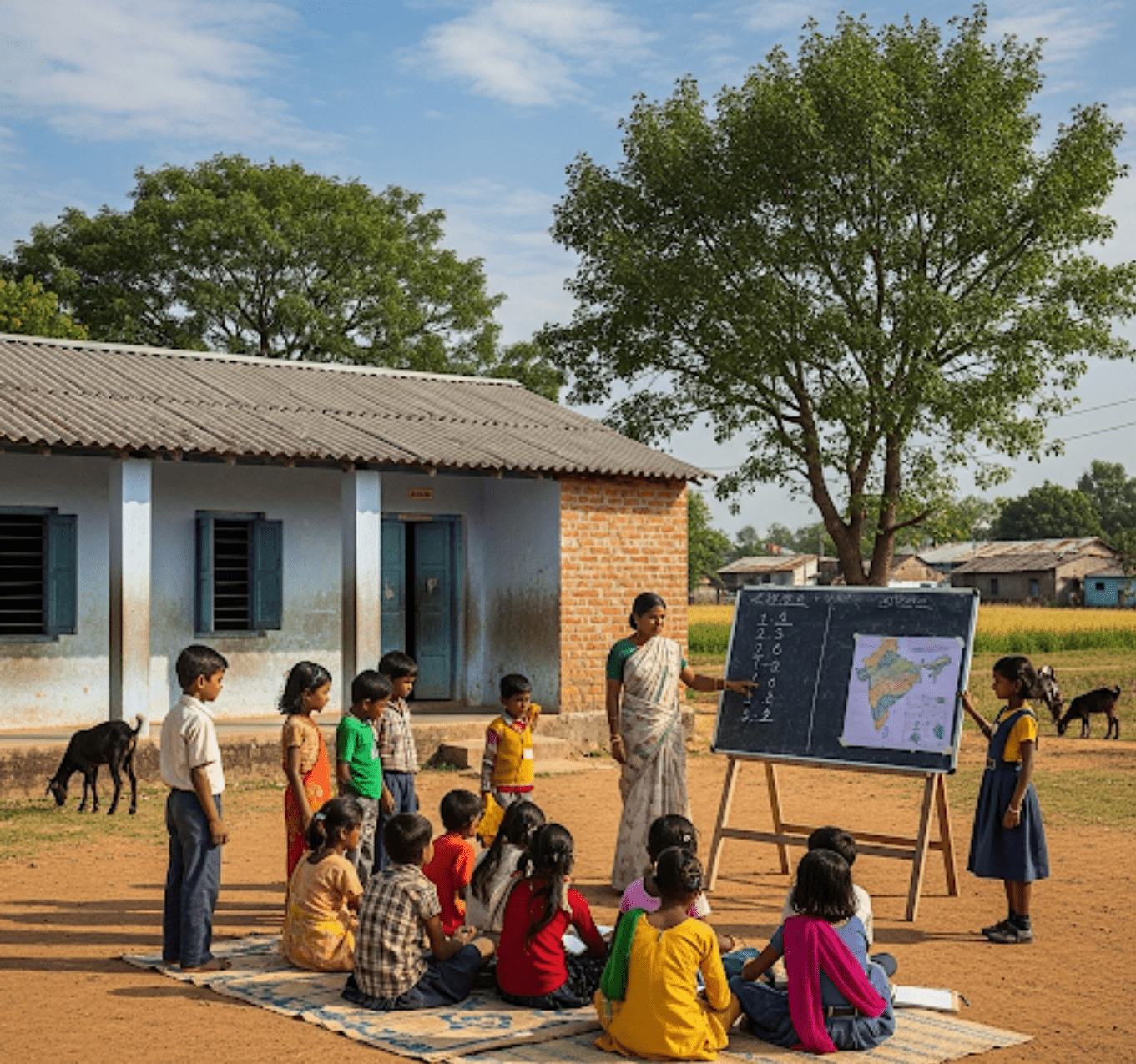
India’s rural communities possess tremendous potential, with eager young minds ready to learn and rich cultural traditions that value knowledge. However, a persistent educational divide threatens to limit opportunities for millions of children. Amid all of this promise, there is one stark reality: a long-standing educational gap. Rural students continue to face outdated textbooks, poor infrastructure, and a shortage of qualified teachers. You can make a difference by taking steps to reduce education disparities in rural India. Why Rural India’s Education is Falling Behind Rural India’s educational system is in decline due to a mix of social and systemic factors. Many schools are lacking basic infrastructure, such as clean toilets and sufficient lighting. The classrooms are also uninspiring. Lack of qualified teachers exacerbates the problem. Unfilled vacancies and high absence rates are common. Families in rural areas are often forced to make difficult financial decisions, which can force their children to choose between work and school. Students also have language problems because the textbooks are either in Hindi or English, and they speak their dialects. As the digital divide widens, students are increasingly isolated from modern educational tools and opportunities. Infrastructure Drought You may find cracked walls or ceilings with leaks or even a classroom that lacks fans or lighting. Without proper infrastructure, education becomes significantly more challenging, hindering both learning outcomes and regular attendance. This not only hampers learning but also discourages girls from attending school regularly Teachers Shortage & Missed Classrooms A lack of well-trained and motivated teachers is another pressing issue. In many remote areas, there are vacancies for teacher positions, or the ones hired are not qualified. Students experience disrupted learning continuity, resulting in slower academic progress Child Labor & Economic Pressures In rural households, children are seen as a means of earning money. School is put on hold when there’s work to be done. One day missed in class could mean a lifetime of opportunities. Language and Learning Barriers In villages, children usually speak the local dialect at home. The school curriculum is usually in Hindi or English, which the children cannot fully understand. It creates a communication gap, but also a lack of motivation and confidence. Growing Digital Divide Urban students are now learning through smartboards, videos, and online platforms. Rural children are left out of digital education. It’s not just about access to technology; it’s also about future preparedness. Rural students are left behind in a digitally driven job market if they don’t have access to technology. Why Your Donation Can Make a Difference Every dollar can make a difference. Donations to verified educational NGOs will directly impact the quality of education for India’s most underserved regions. Here are some ways your contribution can make a real difference: Build and Restore Schools: Improve basic infrastructure walls, toilets, fans, and safe drinking water. Give rural classrooms digital tools: Tablets, projectors, and offline learning modules are available for rural classrooms. Support Teachers: Provide training and salary to high-quality teachers. Sponsor a Child’s Needs: Help cover the cost of uniforms, books, and healthy meals for children so they can concentrate on their studies. Supporting established rural education organizations like vidyalaya.org is more than just a donation of money. You’re also giving the gift of opportunity. Donations that Turn into Action The most effective way to support rural education is in partnership with local organizations that understand the needs of the area. Vidyalaya.org can play a crucial role in this regard. Partner with impact-driven NGOs. Understand local barriers and collaborate with them directly. Select Specific Projects. Want to fund a school library, teacher salaries, or girls’ scholarships? You can choose the projects you want to fund on platforms like vidyalaya.org. Volunteer or mentor: Your time and professional skills will make an impact, even if you cannot contribute financially. Real Impact: What Research Shows According to studies by organizations like Pratham and government data, targeted educational interventions have shown measurable results. Infrastructure improvements combined with teacher training can increase student engagement and learning outcomes significantly when implemented systematically over time Rural Education has a ripple effect Rural education has many benefits that extend beyond the classroom. Community Upliftment: Educated children become informed community leaders and change makers. Economic Growth: Better job prospects and higher earnings are linked to literacy and basic skills. Empowered Girls—Education can delay early marriages and encourage financial independence in girls. Literate parents prioritize education and start a cycle that will last generations. Your Call to Action It’s not just about buying tablets or funding buildings. It’s all about restoring hope, restoring self-confidence, and enabling dreams. Donating to platforms such as vidyalaya.org is a great way for you to: Investing in the futures of the most vulnerable children Empowering Communities to Lift Themselves Through Education Helping India bridge its education divide, one village at a time Your contribution, no matter how small, can change lives. Today is the day to take action. Because your donation doesn’t just support education—it inspires transformation. Final Thoughts Rural India is not lacking in intelligence or ambition, but it lacks opportunity. Here’s where you can assist. Each step, whether you’re funding a toilet or training a teacher, will bring a child closer to a brighter future. Your efforts will be directed to the most needy areas with a platform such as vidyalaya.org. FAQs on Facing Rural Education Challenges in India 1. Why is rural India experiencing such high levels of education inequality? Rural areas still have a poor quality of education because of a lack in school infrastructure, fewer teachers available, social and economic pressures, as well as the digital divide. 2. What is the cost of adopting a rural school? The cost can range from Rs 1 lakh up to Rs 5 lakh, depending on the location and type of project. Many websites like vidyalaya.org offer transparent breakdowns of each initiative. 3. Can rural education donations be tax-deductible? Donations made to NGOs that are registered according to Section 8OG can be deducted from your taxes. This is a
Role Of Government Initiatives In Promoting Digital Education In India
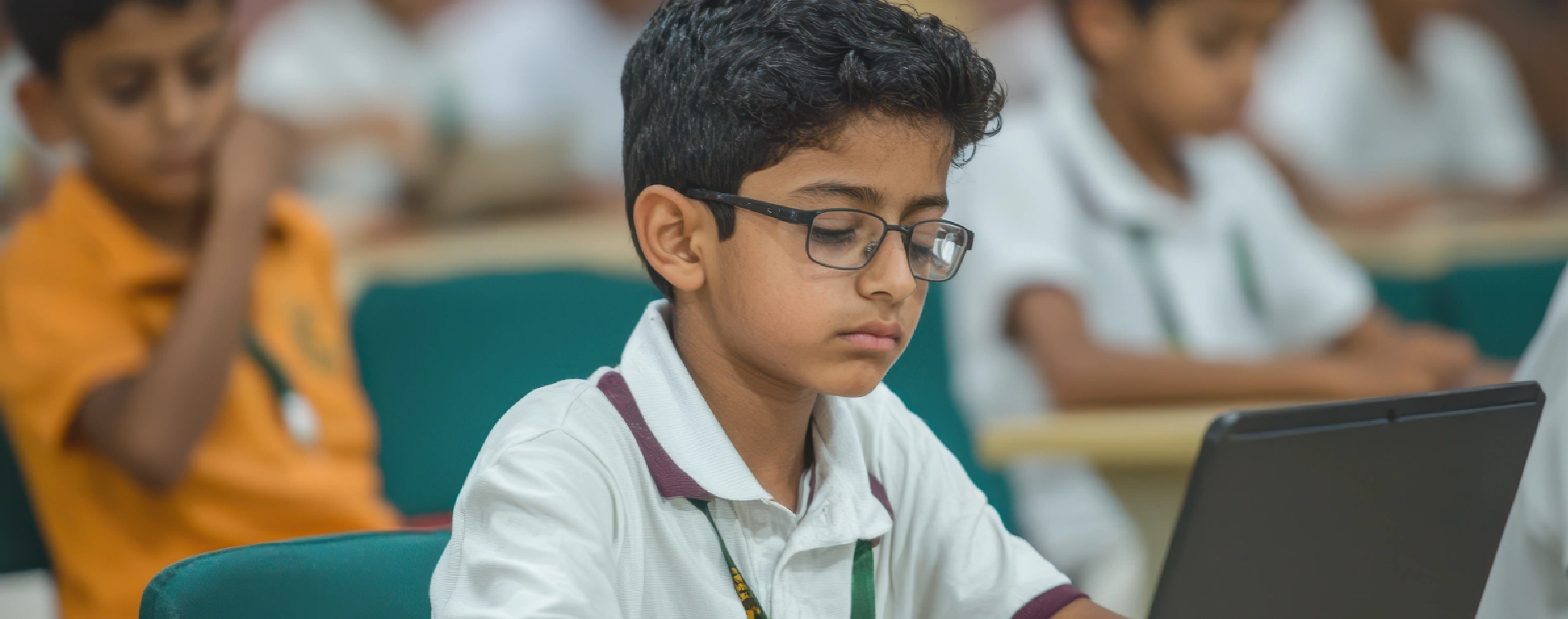
Education is the foundation of a country’s progress, and with the emergence of digital technology, India is seeing a revolution in learning. But how does this transition occur? The Indian government has played an important role in ensuring that digital education reaches every part of the country. Learning has been more accessible than ever thanks to a variety of programs, platforms, and initiatives. Let’s look at how the government’s initiatives are changing the future of education in India. What is Digital Education? Digital education refers to the integration of technology-driven tools and platforms to enhance teaching and learning experiences. It surrounds various digital resources such as e-learning platforms, virtual classrooms, interactive applications, video lectures, and AI-powered education solutions. These technologies provide students and teachers with seamless access to high-quality learning materials, promoting a more dynamic and effective educational environment. By using the power of the internet, cloud computing, and artificial intelligence (AI), digital education enables flexible, inclusive, and accessible learning opportunities that go beyond traditional classroom settings. It allows students to learn at their own pace, access global resources, and engage with interactive content that enhances comprehension and retention. Teachers, on the other hand, benefit from advanced analytics, automation tools, and AI-driven insights to personalize learning experiences for each student. E-Education User Distribution in India Category Users (Millions) Percentage L-12 Online Learners 35 29% Higher Education Enrollments 25 21% Skill-Based & Certification 60 50% Importance Of Digital Education In India India is home to over 1.4 billion people, with a large percentage residing in rural and semi-urban areas. Due to infrastructure challenges, limited access to qualified teachers, and economic disparities, digital education in India has become a necessity to bridge the education gap. Below are the key reasons as to why it is essential: Bridging The Educational Divide Traditional classrooms often fail to reach remote villages. Digital education in India removes these geographical barriers by offering online courses and study materials accessible from anywhere. Enhancing Skill Development The rise of digital technologies has created a demand for professionals skilled in coding, artificial intelligence, data analytics, and other emerging fields. Digital platforms provide affordable skill-development programs. Affordable And Scalable Education Traditional education requires physical infrastructure, textbooks, and trained faculty. In difference, e-education in digital India enables mass learning at a significantly lower cost, reducing financial strain on students. Interactive And Engaging Learning Methods Gamification, virtual reality (VR), augmented reality (AR), and AI-driven personalized learning make education more engaging, increasing student retention and understanding. Supporting Government Initiatives Digital education in India aligns with the Digital India mission, ensuring educational equity by making resources available across diverse socio-economic backgrounds. Digital Education Statistics in India Sr. No Category Statistics Source 1 Total Schools in India 14.72 lakh (1.472 million) PIB 2 Total Students 24.8 crore (248 million) PIB 3 Total Teachers 98 lakh (9.8 million) PIB 4 Schools with Computers 57.2% (up from 38.5% in 2019-20) PIB 5 Schools with Internet 53.9% (up from 22.3% in 2019-20) PIB 6 Urban Households with Internet 42% NSO 7 Rural Households with Internet 15% NSO 8 Internet Access by State Delhi – 55%, Kerala & Himachal Pradesh – 50%+, Odisha – 10% Officers Pulse 9 Digital Initiatives SWAYAM – Free online courses, DIKSHA – 7,080+ digital textbooks in 101 Indian & 7 foreign languages Govt. Sources 10 Challenges Rural-urban digital divide, lack of internet in schools, limited access to devices Various Studies Advantages of Digital Education in India The Government of India has launched multiple initiatives under the Digital India umbrella to promote e-education in Digital India. Here are some of the most prominent programs: 01. Breaking Geographical Barriers Digital education provides access to quality learning for students in remote areas through smartphones, tablets, and initiatives like SWAYAM, DIKSHA, and e-Pathshala. It also supports students with disabilities through assistive technologies. 02. Flexible & Personalized Learning Unlike traditional classrooms, digital education allows self-paced learning, benefiting working professionals, homemakers, and competitive exam aspirants. AI-driven platforms personalize study plans to improve learning outcomes. 03. Cost-Effective Education By offering free or low-cost courses, e-books, and recorded lectures, digital education reduces expenses related to tuition, transport, and coaching. 04. Real-Time Assessment & Feedback AI-driven tools enable instant grading, performance analysis, and personalized study recommendations, ensuring continuous improvement. 05. Interactive & Engaging Learning Multimedia content, gamification, VR/AR tools, and collaborative platforms enhance comprehension, retention, and critical thinking. 06. Eco-Friendly Learning Paperless education reduces deforestation, carbon emissions, and energy consumption, promoting sustainability. Digital education is transforming India’s learning landscape, making education more inclusive, flexible, and future-ready. Aim And Goals Of Digital Education In India The Digital Education initiative in India, under the broader framework of Digital India, aims to create an inclusive, technology-driven learning ecosystem that empowers students nationwide. The primary objectives include: Universal Access to Education Ensuring that students from all demographics, including rural and remote areas, have access to high-quality digital learning resources. Encouraging Self-Learning Promoting the use of MOOCs (Massive Open Online Courses) and e-learning platforms to cultivate independent learning habits, fostering a culture of continuous education and skill development. Reducing Urban-Rural Education Gap Expanding digital infrastructure and connectivity to ensure equitable learning opportunities for students in underserved regions. Skill Enhancement for Employment Aligning educational courses with industry requirements by offering specialized training in fields like artificial intelligence (AI), machine learning (ML), blockchain, and cloud computing to enhance employability. Integration of Advanced Technology in Education Using advanced technologies such as AI, Virtual Reality (VR), and Augmented Reality (AR) to create immersive learning experiences and improve understanding. Key Government Initiatives For Digital Education In India The Government of India has launched multiple initiatives under the Digital India umbrella to promote e-education in Digital India. Here are some of the most prominent programs: 01. Diksha -Interactive e-learning materials in multiple languages. -Digital textbooks, lesson plans, and assessments for students and teachers. 02. E-Pathshala Developed by NCERT, this platform offers: -Digital textbooks, audiobooks, and videos across multiple languages. -Accessibility in offline mode, ensuring learning without internet dependency. 03. Vidyadaan -Encourages educators, experts, and